

Thursday, November 5, 2026
  • News
    • Latest News
    • Breaking News
    • Fact Check
    • Investigations
    • Explainers
  • Politics
    • Global Politics
    • Elections
    • Government & Policy
    • Diplomacy
    • Conflicts & Security
    • Political Analysis
  • Business
    • Global Economy
    • Markets
    • Technology
    • Startups
    • Energy
    • Finance
  • World News
    • Americas
    • Asia
    • Asia Pacific
    • Africa
    • Europe
    • Middle East
  • Africa
    • Central Africa
    • East Africa
    • West Africa
    • Southern Africa
  • Health
    • Global Health
    • Public Health
    • Health Policy
    • Medical Research
    • Diseases & Conditions
    • Mental Health
    • Nutrition
    • Climate & Health
    • Health Explainers
  • Sports
    • World Cup 2026
    • Athletics
    • Basketball
    • Boxing
    • Cricket
    • Football
    • Formula 1
    • Golf
    • Rugby
  • Weather
    • Climate Business
    • Climate Change
    • Climate Solutions
    • Living Green
  • Culture
    • Arts
    • Film & TV
    • Food and Recipes
    • Music
    • Lifestyle
    • People
    • Travel
  • Opinion
    • Editorials
    • Letters
  • Behind The Brand
REGISTER
LOGIN
No Result
View All Result
The Kenya Times
  • News
    • Latest News
    • Breaking News
    • Fact Check
    • Investigations
    • Explainers
  • Politics
    • Global Politics
    • Elections
    • Government & Policy
    • Diplomacy
    • Conflicts & Security
    • Political Analysis
  • Business
    • Global Economy
    • Markets
    • Technology
    • Startups
    • Energy
    • Finance
  • World News
    • Americas
    • Asia
    • Asia Pacific
    • Africa
    • Europe
    • Middle East
  • Africa
    • Central Africa
    • East Africa
    • West Africa
    • Southern Africa
  • Health
    • Global Health
    • Public Health
    • Health Policy
    • Medical Research
    • Diseases & Conditions
    • Mental Health
    • Nutrition
    • Climate & Health
    • Health Explainers
  • Sports
    • World Cup 2026
    • Athletics
    • Basketball
    • Boxing
    • Cricket
    • Football
    • Formula 1
    • Golf
    • Rugby
  • Weather
    • Climate Business
    • Climate Change
    • Climate Solutions
    • Living Green
  • Culture
    • Arts
    • Film & TV
    • Food and Recipes
    • Music
    • Lifestyle
    • People
    • Travel
  • Opinion
    • Editorials
    • Letters
  • Behind The Brand
No Result
View All Result
The Kenya Times ~ Trending, Breaking News and Videos
No Result
View All Result
ADVERTISEMENT

Media Freedom and Democracy: Africans in Four Countries Weigh up Thorny Questions about State Control

Jeffrey Conroy-KrutzbyJeffrey Conroy-Krutz
May 13, 2023
Reading Time: 8 mins read
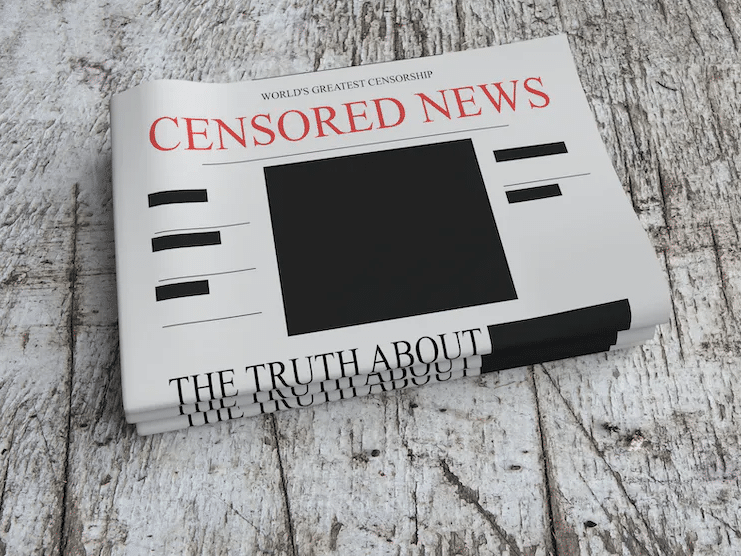
Democracy Cannot Survive Without Free Media. | Photo Courtesy

Democracy cannot survive without free media. | Photo Courtesy

FacebookTwitterLinkedInRedditWhatsApp
Advertisement

In July 2022, BBC Africa Eye released a documentary on gang activity in northwestern Nigeria. The programme, The Bandit Warlords of Zamfara, examined the raids on villages, abductions and murders that have plagued swaths of the country. Notably, it included interviews with so-called bandits, who described their violent actions and laid out their grievances.

The Nigerian government responded furiously to the documentary’s airing. The minister of information, Lai Mohamed, called it “a naked glorification of terrorism and banditry”. The National Broadcasting Commission, which regulates broadcasting, said it “undermines national security in Nigeria”.

The commission slapped fines of ₦5 million (about US$11,922) each on MultiChoice Nigeria Limited, NTA-Startimes Limited and TelCom Satellite Limited Trust Television Network for airing the programme.

The documentary, and the Nigerian government’s response to it, sparked a fierce debate over the limits of media freedoms. Some justified the fines, saying the BBC’s reporting was “becoming a tool for terrorists”. Others condemned the reporting as “whitewashing” reality to serve the government and as undercutting the public’s right to learn.


Also Read: Exploring Media Censorship: Why Were Journalists Denied Access to Shakahola?


The debate gets to the heart of a question facing all democracies: when, if ever, should the government impose limits on media?

ADVERTISEMENT

In 2021, I joined a team of researchers from Afrobarometer on a project to understand how citizens think about media freedom. Afrobarometer is an independent, pan-African research organization dedicated to the study of public opinion. In over a year, we focused on four countries: Côte d’Ivoire, Kenya, Nigeria and Uganda.

We found that citizens in these countries cannot be simply characterized as either for or against media freedom. People who supported democracy were more supportive of protecting the media from government interference. But this group swung behind the need for censorship when it came to hate speech and false information.

Thorny questions

Thorny questions about media freedoms and democracy face other African countries too. On the one hand, empowering governments to limit media might undermine fragile democracies by allowing incumbents to squelch investigative reporting and opposition voices.

On the other hand, free media brings potential problems. These include disinformation, hate speech and even calls to violence.


Also Read: Kenyan Media has Failed to Provide Safe Spaces for Women Journalists

ADVERTISEMENT

Our project sought to provide insights into how people from various African countries weigh these potential reasons for and against limiting media freedom. Are citizens more supportive of limits to particular kinds of content than others? And how do characteristics of individuals, such as their support for democracy, shape their attitudes towards the media?

These questions are important in light of recent declines in support for media freedom across Africa, even as attacks on those freedoms by governments increase. For example, in 2022, dozens of journalists were arrested in Ethiopia, and more than 120 attacks on media houses and practitioners were documented in the Democratic Republic of Congo. And new laws in countries like Tanzania target foreign and independent media, often in the name of addressing misinformation and divisive messages.

Limiting freedoms to protect democracy?

To answer our questions, we conducted interviews with experts on media, using nationally representative phone surveys and focus groups. We also analyzed data from nationally representative surveys Afrobarometer conducted in the four counties in 2019 and 2020.

Attitudes about democracy affected how citizens felt about the media. Those who thought positively about democracy and rejected non-democratic alternatives were more likely to agree with the statement:

The media should have the right to publish any views and ideas without government control.

Democracy sceptics were more likely to agree with the alternate statement:

The government should have the right to prevent the media from publishing things that it disapproves of.

We delved deeper by providing different types of potentially problematic media content and measuring support for government censorship of each one.


Also Read: As press freedom continues to struggle in Kenya, alternatives keep hope alive


Those who supported democracy were more likely to oppose the censorship of messages that a government disapproved of. In other words, supporting democracy again meant supporting media’s rights to share content that might upset those in power.

However, we found very different results when it came to two other kinds of content: hate speech and false information.

In these cases, people who were the most committed to democracy were the most likely to support censorship. Supporting democracy meant supporting restrictions on what the media could say.

Justifying censorship for democratic ends

We normally associate censorship with authoritarianism. What then explains why people who were most supportive of democracy were also most supportive of certain kinds of censorship?

We posit that Africans in the countries we studied actually found limiting certain content as necessary for defending democracy. Sixty per cent of our phone survey respondents told us that media spread too much hate speech. Such language can harm the public good by generating violence and disorder. But it can also lead to discrimination and other violations of individual rights central to democracy.

As one focus group participant in Lagos told us:

The pen is created for writing. But I can also use it to stab somebody. So, if it is misused, it becomes bad.

Our study participants had similar concerns about false information. Just over 60% called it a problem. As a Ugandan from Rwampara district told us, media nowadays are

all about the business, so much so that they have been known to report un-researched facts, and in other cases lied outright.

Democracy requires an informed citizenry, which false information undercuts. It is easy to see how many committed democrats might see censorship as a necessary step.

Complicated paths forward

Many of our study participants did see the dangers of empowering governments to censor media. Most who supported democracy erred on the side of supporting media’s right to produce content without serious limits. As a Kenyan participant put it:

If we are not careful about this, the steady erosion of media freedoms will continue and will end up in a bad place.

It is clear to most that democracy cannot survive without free media. The challenge is that, in many citizens’ eyes, democracy cannot survive with it, either. Finding the right balance between freedom and limits remains one of the greatest challenges modern democracies faces.The Conversation

Jeffrey Conroy-Krutz, Associate Professor of Political Science, Michigan State University

This article is republished from The Conversation under a Creative Commons license. Read the original article.


Tags: AfrobarometerBanditryBBCCôte d'IvoireDemocracyKenyaMediaMedia freedomNigeriaPan-AfricanismPublic OpinionUganda
Jeffrey Conroy-Krutz

Jeffrey Conroy-Krutz

Researcher on African politics, particularly media, elections, and ethnicity. Afrobarometer Working Papers Series editor.

Related Posts

Livestock A Strategic Engine For Kenyas Food Security Jobs And Industrial Transformation

Driving Kenya’s Food Security Jobs and Industrial Transformation Through Livestock

November 3, 2026
Ugandan Entrepreneur Nyanzi Martin Luther Argues Why Parents Must Address Inappropriate Physical Contact Among Secondary School Students

Why Parents Must Address Inappropriate Physical Contact Among Secondary School Students

November 1, 2026
One Nation, Many Cultures: Harnessing Diversity For A Prosperous Kenya

Why National Pride and Unity Must Define Kenya’s Future

October 29, 2026
Mployers And The Breastfeeding Mothers Bill 2024 Key Requirements And Impact

What Every Kenyan Employer Should Know About the Breastfeeding Mothers Bill 2024 

October 28, 2026
ADVERTISEMENT

The Kenya Times Facebook

LATEST NEWS

  • Investors Offer CBK Nearly KSh100 Billion as Govt Seeks New Borrowing
  • Health Ministry Issues Directive to Kenyans Misusing Cetirizine
  • Tokenized Stocks vs. Traditional Shares: What Actually Changes?
  • Why an Ebola Outbreak in Africa Is Unlikely to Cause a UK Epidemic
  • Govt Rolls Out NYOTA Programme Linking 600,000 Beneficiaries to State Tenders
  • Ruto Declares Kenya Free From 25-Year Sugar Restrictions
  • Kenya Acquires New Military Equipment as Part of Ksh3 Billion Deal
  • CS Ruku Announces Bid for Nairobi Governor Seat
  • Court Issues Fresh Orders on Lawyer Abducted by Gunmen
  • Kenya Linked to Multi-Million-Dollar US Bank Fraud Case as Suspect Attempts to Flee
  • Kizza Besigye’s Wife Lands New Global Role
  • Why Kenyan Companies Are Not Hiring Despite Rising Sales
  • Bolt Named Among Kenya’s Top 10 Strongest Brands in 2026
  • World Bank Exposes the Reality of Kenya’s Job Market as Millions of Youth Seek Employment
  • Kenyan-Born Lady Wins Seat in America
ADVERTISEMENT

Company

About Us

Our Authors

Our Experts

Social Media

Policies

Privacy Policy

House Rules

Standards and Policies

Terms and Conditions

Subscription

My Account

Contact Us

Contact Us

Join Our Team

Advertise With Us

© Copyright 2026 | The Kenya Times | All Rights Reserved

Welcome Back!

Sign In with Facebook
Sign In with Google
Sign In with Linked In
OR

Login to your account below

Forgotten Password? Sign Up

Create New Account!

Sign Up with Facebook
Sign Up with Google
Sign Up with Linked In
OR

Fill the forms below to register

All fields are required. Log In

Retrieve your password

Please enter your username or email address to reset your password.

Log In
Your Privacy and Cookies
We use cookies on our website to give you the most relevant experience by remembering your preferences and repeat visits. By clicking “Accept”, you consent to the use of ALL the cookies.
Do not sell my personal information.
Cookie settingsACCEPT
Privacy & Cookies Policy

Privacy Overview

This website uses cookies to improve your experience while you navigate through the website. Out of these cookies, the cookies that are categorized as necessary are stored on your browser as they are essential for the working of basic functionalities of the website. We also use third-party cookies that help us analyze and understand how you use this website. These cookies will be stored in your browser only with your consent. You also have the option to opt-out of these cookies. But opting out of some of these cookies may have an effect on your browsing experience.
Necessary
Always Enabled
Necessary cookies are absolutely essential for the website to function properly. This category only includes cookies that ensures basic functionalities and security features of the website. These cookies do not store any personal information.
Functional
Functional cookies help to perform certain functionalities like sharing the content of the website on social media platforms, collect feedbacks, and other third-party features.
Performance
Performance cookies are used to understand and analyze the key performance indexes of the website which helps in delivering a better user experience for the visitors.
Analytics
Analytical cookies are used to understand how visitors interact with the website. These cookies help provide information on metrics the number of visitors, bounce rate, traffic source, etc.
Advertisement
Advertisement cookies are used to provide visitors with relevant ads and marketing campaigns. These cookies track visitors across websites and collect information to provide customized ads.
Others
Other uncategorized cookies are those that are being analyzed and have not been classified into a category as yet.
SAVE & ACCEPT
LOGIN | REGISTER
  • Login
  • Sign Up
  • Cart
No Result
View All Result
  • News
    • Latest News
    • Breaking News
    • Investigations
    • Explainers
    • Fact Check
  • Politics
    • Global Politics
    • Conflicts & Security
    • Elections
    • Diplomacy
    • Government & Policy
    • Political Analysis
  • Business
    • Global Economy
    • Markets
    • Technology
    • Startups
    • Energy
    • Finance
  • World News
    • Americas
    • Asia
    • Asia Pacific
    • Africa
    • Europe
    • Middle East
  • Africa
    • East Africa
    • West Africa
    • Southern Africa
    • Central Africa
  • Health
    • Global Health
    • Public Health
    • Health Policy
    • Medical Research
    • Diseases & Conditions
    • Mental Health
    • Nutrition
    • Climate & Health
    • Health Explainers
  • Sports
    • World Cup 2026
    • Athletics
    • Basketball
    • Boxing
    • Cricket
    • Football
    • Formula 1
    • Golf
    • Rugby
  • Weather
    • Climate Business
    • Climate Change
    • Climate Solutions
    • Living Green
  • Culture
    • Arts
    • Film & TV
    • Food and Recipes
    • Lifestyle
    • Music
    • People
    • Travel
  • Opinion
    • Editorials
    • Letters
  • Behind The Brand
  • Contact Us

Not enough quota to unlock this post
Unlock left : 0
Are you sure want to cancel subscription?