Wednesday, September 2, 2026
  • News
    • Latest News
    • Breaking News
    • Fact Check
    • Investigations
    • Explainers
  • Politics
    • Global Politics
    • Elections
    • Government & Policy
    • Diplomacy
    • Conflicts & Security
    • Political Analysis
  • Business
    • Global Economy
    • Markets
    • Technology
    • Startups
    • Energy
    • Finance
  • World News
    • Americas
    • Asia
    • Asia Pacific
    • Africa
    • Europe
    • Middle East
  • Africa
    • Central Africa
    • East Africa
    • West Africa
    • Southern Africa
  • Health
    • Global Health
    • Public Health
    • Health Policy
    • Medical Research
    • Diseases & Conditions
    • Mental Health
    • Nutrition
    • Climate & Health
    • Health Explainers
  • Sports
    • World Cup 2026
    • Athletics
    • Basketball
    • Boxing
    • Cricket
    • Football
    • Formula 1
    • Golf
    • Rugby
  • Weather
    • Climate Business
    • Climate Change
    • Climate Solutions
    • Living Green
  • Culture
    • Arts
    • Film & TV
    • Food and Recipes
    • Music
    • Lifestyle
    • Travel
  • Opinion
    • Editorials
    • Letters
  • Behind The Brand
REGISTER
LOGIN
No Result
View All Result
The Kenya Times
  • News
    • Latest News
    • Breaking News
    • Fact Check
    • Investigations
    • Explainers
  • Politics
    • Global Politics
    • Elections
    • Government & Policy
    • Diplomacy
    • Conflicts & Security
    • Political Analysis
  • Business
    • Global Economy
    • Markets
    • Technology
    • Startups
    • Energy
    • Finance
  • World News
    • Americas
    • Asia
    • Asia Pacific
    • Africa
    • Europe
    • Middle East
  • Africa
    • Central Africa
    • East Africa
    • West Africa
    • Southern Africa
  • Health
    • Global Health
    • Public Health
    • Health Policy
    • Medical Research
    • Diseases & Conditions
    • Mental Health
    • Nutrition
    • Climate & Health
    • Health Explainers
  • Sports
    • World Cup 2026
    • Athletics
    • Basketball
    • Boxing
    • Cricket
    • Football
    • Formula 1
    • Golf
    • Rugby
  • Weather
    • Climate Business
    • Climate Change
    • Climate Solutions
    • Living Green
  • Culture
    • Arts
    • Film & TV
    • Food and Recipes
    • Music
    • Lifestyle
    • Travel
  • Opinion
    • Editorials
    • Letters
  • Behind The Brand
  • News
    • Latest News
    • Breaking News
    • Fact Check
    • Investigations
    • Explainers
  • Politics
    • Global Politics
    • Elections
    • Government & Policy
    • Diplomacy
    • Conflicts & Security
    • Political Analysis
  • Business
    • Global Economy
    • Markets
    • Technology
    • Startups
    • Energy
    • Finance
  • World News
    • Americas
    • Asia
    • Asia Pacific
    • Africa
    • Europe
    • Middle East
  • Africa
    • Central Africa
    • East Africa
    • West Africa
    • Southern Africa
  • Health
    • Global Health
    • Public Health
    • Health Policy
    • Medical Research
    • Diseases & Conditions
    • Mental Health
    • Nutrition
    • Climate & Health
    • Health Explainers
  • Sports
    • World Cup 2026
    • Athletics
    • Basketball
    • Boxing
    • Cricket
    • Football
    • Formula 1
    • Golf
    • Rugby
  • Weather
    • Climate Business
    • Climate Change
    • Climate Solutions
    • Living Green
  • Culture
    • Arts
    • Film & TV
    • Food and Recipes
    • Music
    • Lifestyle
    • Travel
  • Opinion
    • Editorials
    • Letters
  • Behind The Brand
No Result
View All Result
The Kenya Times ~ Trending, Breaking News and Videos
No Result
View All Result
ADVERTISEMENT

Why China Might Have a Winning Hand in Trade War With the U.S

The ConversationbyThe Conversation
April 17, 2025
Reading Time: 12 mins read
A Collage Of President Doland Trump (Left) And President Xi Ji Ping Of China. Photos/ White House

A collage of President Doland Trump (left) and President Xi Ji Ping of China. Photos/ White House

FacebookTwitterLinkedInRedditWhatsApp
Advertisement

When Donald Trump pulled back on his plan to impose eye-watering tariffs on trading partners across the world, there was one key exception: China.

While the rest of the world would be given a 90-day reprieve on additional duties beyond the new 10% tariffs on all U.S. trade partners, China would feel the squeeze even more. On April 9, 2025, Trump raised the tariff on Chinese goods to 125% – bringing the total U.S. tariff on some Chinese imports to 145%.

The move, in Trump’s telling, was prompted by Beijing’s “lack of respect for global markets”.

But the U.S. president may well have been smarting from Beijing’s apparent willingness to confront U.S. tariffs head-on.

While many countries opted not to retaliate against Trump’s now-delayed reciprocal tariff hikes, instead favoring negotiation and dialogue, Beijing took a different tack. It responded with swift and firm countermeasures. On April 11, China dismissed Trump’s moves as a “joke” and raised its own tariff against the U.S. to 125%.

The two economies are now locked in an all-out, high-intensity trade standoff. And China is showing no signs of backing down.

And as an expert on U.S.-China relations, I wouldn’t expect China to. Unlike the first U.S.-China trade war during Trump’s initial term, when Beijing eagerly sought to negotiate with the U.S., China now holds far more leverage.

Indeed, Beijing believes it can inflict at least as much damage on the U.S. as vice versa, while at the same time expanding its global position.

A changed calculus for China

There’s no doubt that the consequences of tariffs are severe for China’s export-oriented manufacturers – especially those in the coastal regions producing furniture, clothing, toys and home appliances for American consumers.

But since Trump first launched a tariff increase on China in 2018, a number of underlying economic factors have significantly shifted Beijing’s calculus.

Crucially, the importance of the U.S. market to China’s export-driven economy has declined significantly. In 2018, at the start of the first trade war, U.S.-bound exports accounted for 19.8% of China’s total exports. In 2023, that figure had fallen to 12.8%. The tariffs may further prompt China to accelerate its “domestic demand expansion” strategy, unleashing the spending power of its consumers and strengthening its domestic economy.

And while China entered the 2018 trade war in a phase of strong economic growth, the current situation is quite different. Sluggish real estate markets, capital flight and Western “decoupling” have pushed the Chinese economy into a period of persistent slowdown.

Perhaps counterintuitively, this prolonged downturn may have made the Chinese economy more resilient to shocks.

It has pushed businesses and policymakers to come to factor in the existing harsh economic realities, even before the impact of Trump’s tariffs.

Trump’s tariff policy against China may also allow Beijing a useful external scapegoat, allowing it to rally public sentiment and shift blame for the economic slowdown onto U.S. aggression.

China also understands that the U.S. cannot easily replace its dependency on Chinese goods, particularly through its supply chains. While direct U.S. imports from China have decreased, many goods now imported from third countries still rely on Chinese-made components or raw materials.

By 2022, the U.S. relied on China for 532 key product categories – nearly four times the level in 2000 – while China’s reliance on U.S. products was cut by half in the same period.

There’s a related public opinion calculation: Rising tariffs are expected to drive up prices, something that could stir discontent among American consumers, particularly blue-collar voters. Indeed, Beijing believes Trump’s tariffs risk pushing the previously strong U.S. economy toward a recession.

Potent tools for retaliation

Alongside the changed economic environments, China also holds a number of strategic tools for retaliation against the U.S.

It dominates the global rare earth supply chain – critical to military and high-tech industries – supplying roughly 72% of U.S. rare earth imports, by some estimates.

On March 4, China placed 15 American entities on its export control list, followed by another 12 on April 9. Many were U.S. defense contractors or high-tech firms reliant on rare earth elements for their products.

China also retains the ability to target key U.S. agricultural export sectors such as poultry and soybeans – industries heavily dependent on Chinese demand and concentrated in Republican-leaning states.

China accounts for about half of U.S. soybean exports and nearly 10% of American poultry exports. On March 4, Beijing revoked import approvals for three major U.S. soybean exporters.

And on the tech side, many U.S. companies – such as Apple and Tesla – remain deeply tied to Chinese manufacturing. Tariffs threaten to shrink their profit margins significantly, something Beijing believes can be used as a source of leverage against the Trump administration. Already, Beijing is reportedly planning to strike back through regulatory pressure on U.S. companies operating in China.

Meanwhile, the fact that Elon Musk, a senior Trump insider who has clashed with U.S. trade adviser Peter Navarro against tariffs, has major business interests in China is a particularly strong wedge that Beijing could yet exploit in an attempt to divide the Trump administration.

A strategic opening for China?

While Beijing thinks it can weather Trump’s sweeping tariffs on a bilateral basis, it also believes the U.S. broadside against its own trading partners has created a generational strategic opportunity to displace American hegemony.

Close to home, this shift could significantly reshape the geopolitical landscape of East Asia. Already on March 30 – after Trump had first raised tariffs on Beijing – China, Japan and South Korea hosted their first economic dialogue in five years and pledged to advance a trilateral free trade agreement. The move was particularly remarkable given how carefully the U.S. had worked to cultivate its Japanese and South Korean allies during the Biden administration as part of its strategy to counter Chinese regional influence. From Beijing’s perspective, Trump’s actions offer an opportunity to directly erode U.S. sway in the Indo-Pacific.

Similarly, Trump’s steep tariffs on Southeast Asian countries, which were also a major strategic regional priority during the Biden administration, may push those nations closer to China. Chinese state media announced on April 11 that President Xi Jinping will pay state visits to Vietnam, Malaysia and Cambodia from April 14-18, aiming to deepen “all-round cooperation” with neighboring countries. Notably, all three Southeast Asian nations were targeted with now-paused reciprocal tariffs by the Trump administration – 49% on Cambodian goods, 46% on Vietnamese exports and 24% on products from Malaysia.

Farther away from China lies an even more promising strategic opportunity. Trump’s tariff strategy has already prompted China and officials from the European Union to contemplate strengthening their own previously strained trade ties, something that could weaken the transatlantic alliance that had sought to decouple from China.

On April 8, the president of the European Commission held a call with China’s premier, during which both sides jointly condemned U.S. trade protectionism and advocated for free and open trade. Coincidentally, on April 9, the day China raised tariffs on U.S. goods to 84%, the EU also announced its first wave of retaliatory measures – imposing a 25% tariff on selected U.S. imports worth over €20 billion – but delayed implementation following Trump’s 90-day pause.
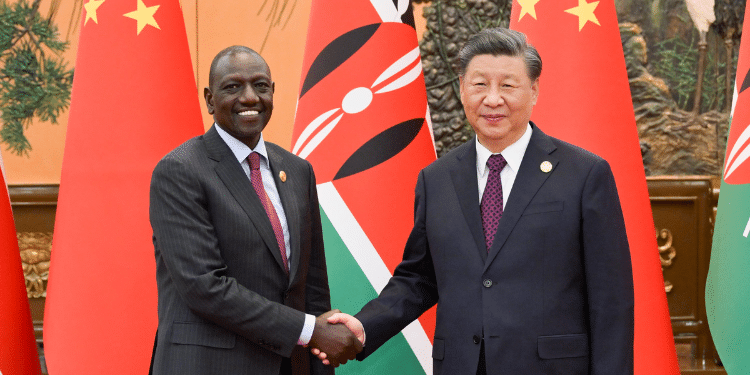
President William With Chinese President Xi Ping In China In A Past Meeting.
President William with Chinese President Xi Ping in China in a past meeting.

Now, EU and Chinese officials are holding talks over existing trade barriers and considering a full-fledged summit in China in July.

Finally, China sees in Trump’s tariff policy a potential weakening of the international standing of the U.S. dollar. Widespread tariffs imposed on multiple countries have shaken investor confidence in the U.S. economy, contributing to a decline in the dollar’s value.

Traditionally, the dollar and U.S. Treasury bonds have been viewed as haven assets, but recent market turmoil has cast doubt on that status. At the same time, steep tariffs have raised concerns about the health of the U.S. economy and the sustainability of its debt, undermining trust in both the dollar and U.S. Treasurys.

While Trump’s tariffs will inevitably hurt parts of the Chinese economy, Beijing appears to have far more cards to play this time around. It has the tools to inflict meaningful damage on U.S. interests – and perhaps more importantly, Trump’s all-out tariff war is providing China with a rare and unprecedented strategic opportunity.The Conversation

Linggong Kong, the author of this article, is Ph.D. Candidate in Political Science, Auburn University

This article is republished from The Conversation under a Creative Commons license. Read the original article.

Follow our WhatsApp Channel and X Account for real-time news updates.

Tags: ChinaDonald TrumpTrade TariffsUSXi Jinping
The Conversation

The Conversation

The Conversation is an independent news organization that publishes evidence-based articles written by experts to help readers understand diverse topics. We cover a wide range of areas including arts, culture, education, health, politics, science, and more¹. Their content is characterized by in-depth analysis, research, news, and ideas from leading academics and researchers. The Conversation aims to provide academic rigor with journalistic flair.

Related Posts

Parliament Has Allocated Ksh175.5 Billion To Health, Including Ksh19.1 Billion For The Primary Healthcare Fund And Ksh4.0 Billion For Emergencies.

More Revenue for Health Will Not Be Enough Without Budget Credibility

August 31, 2026
A Collage Of Kenya'S Former Deputy President Rigathi Gachagua And Health Cs Aden Duale. Photo/Courtesy

When Political Insults Become Attacks on Entire Communities

August 31, 2026
Ruto Orders Police To Go After Politicians Funding Goons

Why Kenya Never Finishes a Presidential Election 

August 29, 2026
Kenya Politics And Hate Speech: Institutionalize Communication In Leaders’ Offices

Kenya Hate Speech: Why Political Offices Need Professional Communication Units

August 29, 2026
ADVERTISEMENT

The Kenya Times Facebook

LATEST NEWS

  • From Kenya Airways Lawyer to Acting CEO: The Rise of Habil Waswani
  • Menengai Oil and 10 Other Companies Linked to Kenyan Tycoon Jaswant Singh Rai
  • Kenya Dairy Board Explains Why There Is a Milk Shortage in Kenya
  • Arnold Origi: Divock Origi’s Cousin Who Defied the Odds to Build a 15-Year European Career
  • Kenya Airways CEO George Kamal Resigns, New Boss Appointed Immediately
  • NACADA Names 8 Nairobi Areas Hit by Counterfeit Alcohol Crackdown
  • Story of How PCEA Turned a Prime Mombasa Beachfront Property into Milele Beach Hotel
  • Principals Reveal What Schools Are Actually Receiving in Capitation
  • Projects and Competitions That Lifted Kenya as a Sports Powerhouse in the Last Four Years
  • Schools, Hotels, Hospitals and Other Investments Owned by PCEA
  • Oburu Odinga Breaks Silence, Updates Kenyans on His Health Condition
  • Govt Orders Evacuation in 5 Regions Ahead of El Niño Rains
  • Why Foreigners Will Start Forcefully Recovering Debts in Kenya
  • More Than 8,000 EPK Employees to Receive Salary Increase
  • Russian Embassy Announces University Scholarships for Kenyans
ADVERTISEMENT

Company

About Us

Our Authors

Our Experts

Social Media

Policies

Privacy Policy

House Rules

Standards and Policies

Terms and Conditions

Subscription

My Account

Contact Us

Contact Us

Join Our Team

Advertise With Us

© Copyright 2026 | The Kenya Times | All Rights Reserved

Welcome Back!

Sign In with Facebook
Sign In with Google
Sign In with Linked In
OR

Login to your account below

Forgotten Password? Sign Up

Create New Account!

Sign Up with Facebook
Sign Up with Google
Sign Up with Linked In
OR

Fill the forms below to register

All fields are required. Log In

Retrieve your password

Please enter your username or email address to reset your password.

Log In
Your Privacy and Cookies
We use cookies on our website to give you the most relevant experience by remembering your preferences and repeat visits. By clicking “Accept”, you consent to the use of ALL the cookies.
Do not sell my personal information.
Cookie settingsACCEPT
Privacy & Cookies Policy

Privacy Overview

This website uses cookies to improve your experience while you navigate through the website. Out of these cookies, the cookies that are categorized as necessary are stored on your browser as they are essential for the working of basic functionalities of the website. We also use third-party cookies that help us analyze and understand how you use this website. These cookies will be stored in your browser only with your consent. You also have the option to opt-out of these cookies. But opting out of some of these cookies may have an effect on your browsing experience.
Necessary
Always Enabled
Necessary cookies are absolutely essential for the website to function properly. This category only includes cookies that ensures basic functionalities and security features of the website. These cookies do not store any personal information.
Functional
Functional cookies help to perform certain functionalities like sharing the content of the website on social media platforms, collect feedbacks, and other third-party features.
Performance
Performance cookies are used to understand and analyze the key performance indexes of the website which helps in delivering a better user experience for the visitors.
Analytics
Analytical cookies are used to understand how visitors interact with the website. These cookies help provide information on metrics the number of visitors, bounce rate, traffic source, etc.
Advertisement
Advertisement cookies are used to provide visitors with relevant ads and marketing campaigns. These cookies track visitors across websites and collect information to provide customized ads.
Others
Other uncategorized cookies are those that are being analyzed and have not been classified into a category as yet.
SAVE & ACCEPT
LOGIN | REGISTER
  • Login
  • Sign Up
  • Cart
No Result
View All Result
  • News
    • Latest News
    • Breaking News
    • Investigations
    • Explainers
    • Fact Check
  • Politics
    • Global Politics
    • Conflicts & Security
    • Elections
    • Diplomacy
    • Government & Policy
    • Political Analysis
  • Business
    • Global Economy
    • Markets
    • Technology
    • Startups
    • Energy
    • Finance
  • World News
    • Americas
    • Asia
    • Asia Pacific
    • Africa
    • Europe
    • Middle East
  • Africa
    • East Africa
    • West Africa
    • Southern Africa
    • Central Africa
  • Health
    • Global Health
    • Public Health
    • Health Policy
    • Medical Research
    • Diseases & Conditions
    • Mental Health
    • Nutrition
    • Climate & Health
    • Health Explainers
  • Sports
    • World Cup 2026
    • Athletics
    • Basketball
    • Boxing
    • Cricket
    • Football
    • Formula 1
    • Golf
    • Rugby
  • Weather
    • Climate Business
    • Climate Change
    • Climate Solutions
    • Living Green
  • Culture
    • Arts
    • Film & TV
    • Food and Recipes
    • Lifestyle
    • Music
    • Travel
  • Opinion
    • Editorials
    • Letters
  • Behind The Brand
  • Contact Us

Not enough quota to unlock this post
Unlock left : 0
Are you sure want to cancel subscription?