Tuesday, June 2, 2026
  • News
    • Latest News
    • Breaking News
    • Fact Check
    • Investigations
    • Explainers
  • Politics
    • Global Politics
    • Elections
    • Government & Policy
    • Diplomacy
    • Conflicts & Security
    • Political Analysis
  • Business
    • Global Economy
    • Markets
    • Technology
    • Startups
    • Energy
    • Finance
  • World News
    • Americas
    • Asia
    • Asia Pacific
    • Africa
    • Europe
    • Middle East
  • Africa
    • Central Africa
    • East Africa
    • West Africa
    • Southern Africa
  • Health
    • Global Health
    • Public Health
    • Health Policy
    • Medical Research
    • Diseases & Conditions
    • Mental Health
    • Nutrition
    • Climate & Health
    • Health Explainers
  • Sports
    • Athletics
    • Basketball
    • Boxing
    • Cricket
    • Football
    • Formula 1
    • Golf
    • Rugby
  • Weather
    • Climate Business
    • Climate Change
    • Climate Solutions
    • Living Green
  • Culture
    • Arts
    • Film & TV
    • Food
    • Music
    • Lifestyle
    • Travel
  • Opinion
    • Editorials
    • Letters
  • Behind The Brand
REGISTER
LOGIN
No Result
View All Result
The Kenya Times
  • News
    • Latest News
    • Breaking News
    • Fact Check
    • Investigations
    • Explainers
  • Politics
    • Global Politics
    • Elections
    • Government & Policy
    • Diplomacy
    • Conflicts & Security
    • Political Analysis
  • Business
    • Global Economy
    • Markets
    • Technology
    • Startups
    • Energy
    • Finance
  • World News
    • Americas
    • Asia
    • Asia Pacific
    • Africa
    • Europe
    • Middle East
  • Africa
    • Central Africa
    • East Africa
    • West Africa
    • Southern Africa
  • Health
    • Global Health
    • Public Health
    • Health Policy
    • Medical Research
    • Diseases & Conditions
    • Mental Health
    • Nutrition
    • Climate & Health
    • Health Explainers
  • Sports
    • Athletics
    • Basketball
    • Boxing
    • Cricket
    • Football
    • Formula 1
    • Golf
    • Rugby
  • Weather
    • Climate Business
    • Climate Change
    • Climate Solutions
    • Living Green
  • Culture
    • Arts
    • Film & TV
    • Food
    • Music
    • Lifestyle
    • Travel
  • Opinion
    • Editorials
    • Letters
  • Behind The Brand
  • News
    • Latest News
    • Breaking News
    • Fact Check
    • Investigations
    • Explainers
  • Politics
    • Global Politics
    • Elections
    • Government & Policy
    • Diplomacy
    • Conflicts & Security
    • Political Analysis
  • Business
    • Global Economy
    • Markets
    • Technology
    • Startups
    • Energy
    • Finance
  • World News
    • Americas
    • Asia
    • Asia Pacific
    • Africa
    • Europe
    • Middle East
  • Africa
    • Central Africa
    • East Africa
    • West Africa
    • Southern Africa
  • Health
    • Global Health
    • Public Health
    • Health Policy
    • Medical Research
    • Diseases & Conditions
    • Mental Health
    • Nutrition
    • Climate & Health
    • Health Explainers
  • Sports
    • Athletics
    • Basketball
    • Boxing
    • Cricket
    • Football
    • Formula 1
    • Golf
    • Rugby
  • Weather
    • Climate Business
    • Climate Change
    • Climate Solutions
    • Living Green
  • Culture
    • Arts
    • Film & TV
    • Food
    • Music
    • Lifestyle
    • Travel
  • Opinion
    • Editorials
    • Letters
  • Behind The Brand
No Result
View All Result
The Kenya Times ~ Trending, Breaking News and Videos
No Result
View All Result
ADVERTISEMENT

Why Men in Nairobi’s Pipeline Estate Are Cheating on Their Wives and Girlfriends

The ConversationbyThe Conversation
November 26, 2025
Reading Time: 7 mins read
How People In Pipeline Estate In Nairobi Cope With Stress.

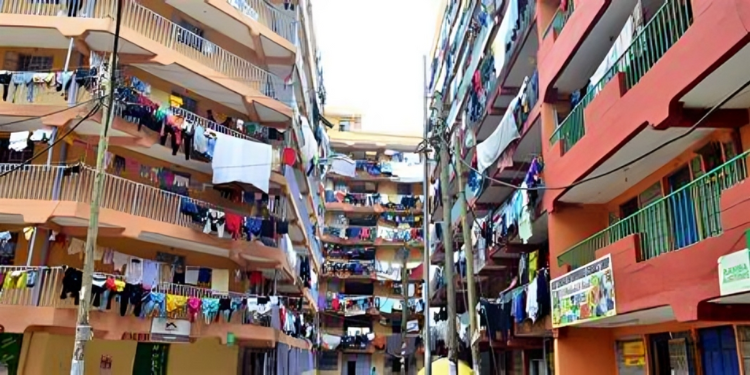
A photo of apartments Kenya. PHOTO/Nation.

FacebookTwitterLinkedInRedditWhatsApp
Advertisement

Within sight of Kenya’s main international airport in Nairobi’s east, Pipeline residential estate stands out like a sore thumb. Composed almost entirely of tightly packed high-rise tenement flats, the estate has been described by the media as an urban planning nightmare. They point to its garbage problem, its waterlogged and frequently impassable streets, and the effect of dense living conditions on children’s health.

Pipeline’s transformation started roughly two decades ago. High-rise apartment blocks were a response to demand for low-cost rental housing in the rapidly urbanising capital. Individual private developers gradually converted the area, roughly 2km², into a dense, high-rise residential district. On average each block of flats hosts 200 or 300 tenants.

Pipeline is an example of how private sector developers can contribute to solving Nairobi’s housing crisis. But it’s also an example of how unregulated and poorly planned housing construction can have a negative impact on the social, economic and psychological well-being of households.

Pipeline is not the only tenement district in Nairobi. But it is one of the densest neighbourhoods in the city of over 4 million. The quality of buildings varies, but there are similarities:

  • rental flats mainly comprise single rooms with shared ablutions
  • unit design gives little attention to lighting, air circulation, or open space
  • tenants are forced into unfavourable rental relationships, where delays or default in payments can lead to water or electricity cuts.

The flats in Pipeline are almost exclusively inhabited by rural-urban migrants. They are attracted here by cheap accommodation and the promise of modernity. The flats have running water, tiled floors, individual electric meters and formal rental agreements.

We are researchers who study urban development, urban migration, and urban communities. Our fieldwork research sought to understand how the physical and social spaces created in neighbourhoods like Pipeline shape the experience of stress and pressure among men and women. We also looked at the strategies they apply to cope or reduce social, economic and romantic pressure.

Pipeline is a marked improvement from the options provided in Nairobi’s traditional informal settlements. Still, most basic services in the area are intermittent, or privatised. This is because the unplanned densification has outpaced the capacity of public infrastructure and services. This forces residents to pay for education, health, water, recreation and other services.

Many of these tenants are unemployed, or employed in low-wage industrial work, precarious gig work, or domestic work.

We found that men and women experience and try to cope with stress in diverse ways. Both men and women located the cause of their distress within their marital home. But the meanings and reactions to that stress diverged sharply in the migrant household.

We found that migrant men tend to experience stress in the form of pressure and migrant women in the form of tiredness.

Previous evidence points to the different ways in which stress is experienced based on biological differences between men and women. However, we propose that the tight coupling between men and pressure and between women and tiredness is the result of the expectation that men will be breadwinners. This drives men towards action and prevents women from expressing a will towards action.

Fieldwork and findings about Pipeline Estate 

We discovered our shared interest in studying Nairobi’s high-rise estates during a workshop on urban Nairobi.

Mario had carried out longitudinal ethnographic work with rural–urban migrants in Pipeline. His two-year-long fieldwork mostly took place in near-exclusively male spaces, such as gyms, barber shops and bars. Roughly 50 in-depth qualitative interviews revealed how men navigated urban lives that were increasingly defined by stress, pressure and exhaustion.

Miriam’s research focused on how Nairobi’s privately developed low-cost tenement precincts created environments of everyday urban dysfunction.

After the first meeting, we concluded that it would be beneficial to get a deeper understanding of women’s experiences of stress. This would help us to understand men’s and women’s experiences of stress and pressure. It would also enable us to compare how these different groups managed and coped with stress.

We designed a semi-structured questionnaire and conducted interviews with a dozen female residents. The interviewees spanned single and married women, members of a financial self-help group (chama), female neighbours who usually spent time together on balconies, a sex worker, and an entrepreneur who owned a hair salon.

Comparing the two sets of interviews provides ethnographic support for our hypothesis, which is that men and women tend to experience different types of stress: masculine “pressure” and feminine “tiredness”.

Masculine pressure is defined as an experience that provokes action. The pressure is intrinsically attached to the cause of stress and driven by the hope that overcoming it will promise social validation linked to the male provider model.

The male interviewees tended to engage in outward-oriented strategies to overcome this pressure. These include social drinking, extramarital affairs, or violent reaffirmations of gender identity. In this way, the form and design of Pipeline offered plentiful avenues for commercialised, stress-reducing activities.

In contrast, feminine tiredness emerged as an experience that inhibited action. Female respondents were constrained from aggressive responses, lest they risk being branded immoral or losing vital male financial support.

Married women, or single parents, found themselves largely confined to the small apartments. Their inward-oriented coping strategies were sometimes identified as “doing nothing” or watching TV, or performing household tasks. This passive endurance of stress was also seen as a means to “persevere” (Kiswahili: kuvumulia). In some cases, women used intermediate semi-private spaces, such as balconies, chamas or church, to connect with neighbours.

Taken together, these responses and expectations structure the modes by which male and female migrants react to or attempt to mitigate or relieve stress. This stress is not only caused by poverty but by expectations of middle-class success, ideals of romantic family life and economic progression.

Conclusions

As yet, there are no policies or programmes that seek to reverse the complex challenges created through neighbourhoods like Pipeline. Kenya’s national affordable housing programme is focused on home-ownership solutions. However, with over 90% of the city’s population renting their dwellings, and 87% renting from private individuals, Nairobi needs a better solution for rental housing.

This could be through redevelopment and area-based upgrading, expansion of basic social and community services, incentives for private developers to incrementally upgrade their housing stock, rental and tenant protection legislation, and support for sustainable, communal, and cooperative housing alternatives spearheaded by citizens themselves.The Conversation

Mario Schmidt, Associate Researcher, Max Planck Institute for Social Anthropology and Miriam Maina, Research Associate (African Cities), University of Manchester

This article is republished from The Conversation under a Creative Commons license. Read the original article.


Tags: Affordable HousingNairobiPipeline EstateWilliam Ruto
The Conversation

The Conversation

The Conversation is an independent news organization that publishes evidence-based articles written by experts to help readers understand diverse topics. We cover a wide range of areas including arts, culture, education, health, politics, science, and more¹. Their content is characterized by in-depth analysis, research, news, and ideas from leading academics and researchers. The Conversation aims to provide academic rigor with journalistic flair.

Related Posts

Moe Has Vowed To Take Action Against Utumishi Girls School Principal Over School Fire That Killed 16 Learners.

Opinion | How Kenya Failed the Girls of Utumishi Academy

June 2, 2026
Is Kenya Losing Its Morals? Rising Deviant Behavior And Rampant Crime

Opinion | The Mother Who Hates Her Own Children: Kenya’s Moral Collapse

June 2, 2026
Treasury Invites Applications For Board Recruitment Across 39 State-Owned Enterprises

Opinion | How New Taxes on Bank Card Transactions Charges Will Raise the Costs for Ordinary Kenyans if Adopted by Parliament

June 1, 2026
The Kenya National Examinations Council (Knec) Has Announced The Dates For The 2026/2027 Business And Technical Examination.

Opinion | AI Mistakes That Could Destroy Kenya’s Future — Global Lessons Every Leader, Business and Citizen Must See Now

May 31, 2026
ADVERTISEMENT

The Kenya Times Facebook

LATEST ARTICLES

  • High Court Rejects Bia Tosha Bid to Halt KSh297 Billion EABL Stake Sale to Asahi Group
  • Who Is Bill Pulte? Meet the 38-Year-Old Trump Pick Replacing Tulsi Gabbard as Acting DNI
  • Florentius Koech: Neurosurgeon and Founder of Tophill Brain and Spine Hospital
  • In Iran War’s Shadow, Israel’s Renewed Lebanon Campaign Risks Repeating Failed Lessons and Occupations of the Past
  • Meet the Ismaili Family Behind Nairobi’s 4-Star Best Western Plus Meridian Hotel
  • Kenya on Alert as Experts Issue Warning on Severe Weather Conditions Ahead
  • KNEC Announces 2026/2027 TVET Examination Registration Dates
  • PS Oluga Clarifies Nationality of 37 People Quarantined After Returning from Congo
  • How to Send Money Internationally: Cheapest Methods in 2026
  • Where CCTV Cameras Should Not Be Installed Under Kenyan Law
  • Profile of Henry Wooster, Trump’s Nominee for U.S. Ambassador to Kenya
  • Mudavadi Asks Africa to Stop Depending on Aid
  • KeNHA Advances Plans for Mau Summit-Eldoret Road Upgrade After Securing Funding
  • Sasini PLC Appoints New Company Secretary
  • Pressure on Ruto to Allow Atheism in All Schools Countrywide
ADVERTISEMENT

Company

About Us

Our Authors

Our Experts

Social Media

Policies

Privacy Policy

House Rules

Standards and Policies

Terms and Conditions

Subscription

My Account

Contact Us

Contact Us

Join Our Team

Advertise With Us

© Copyright 2026 | The Kenya Times | All Rights Reserved

Welcome Back!

Sign In with Facebook
Sign In with Google
Sign In with Linked In
OR

Login to your account below

Forgotten Password? Sign Up

Create New Account!

Sign Up with Facebook
Sign Up with Google
Sign Up with Linked In
OR

Fill the forms below to register

All fields are required. Log In

Retrieve your password

Please enter your username or email address to reset your password.

Log In
Your Privacy and Cookies
We use cookies on our website to give you the most relevant experience by remembering your preferences and repeat visits. By clicking “Accept”, you consent to the use of ALL the cookies.
Do not sell my personal information.
Cookie settingsACCEPT
Privacy & Cookies Policy

Privacy Overview

This website uses cookies to improve your experience while you navigate through the website. Out of these cookies, the cookies that are categorized as necessary are stored on your browser as they are essential for the working of basic functionalities of the website. We also use third-party cookies that help us analyze and understand how you use this website. These cookies will be stored in your browser only with your consent. You also have the option to opt-out of these cookies. But opting out of some of these cookies may have an effect on your browsing experience.
Necessary
Always Enabled
Necessary cookies are absolutely essential for the website to function properly. This category only includes cookies that ensures basic functionalities and security features of the website. These cookies do not store any personal information.
Functional
Functional cookies help to perform certain functionalities like sharing the content of the website on social media platforms, collect feedbacks, and other third-party features.
Performance
Performance cookies are used to understand and analyze the key performance indexes of the website which helps in delivering a better user experience for the visitors.
Analytics
Analytical cookies are used to understand how visitors interact with the website. These cookies help provide information on metrics the number of visitors, bounce rate, traffic source, etc.
Advertisement
Advertisement cookies are used to provide visitors with relevant ads and marketing campaigns. These cookies track visitors across websites and collect information to provide customized ads.
Others
Other uncategorized cookies are those that are being analyzed and have not been classified into a category as yet.
SAVE & ACCEPT
LOGIN | REGISTER
  • Login
  • Sign Up
  • Cart
No Result
View All Result
  • News
    • Latest News
    • Breaking News
    • Investigations
    • Explainers
    • Fact Check
  • Politics
    • Global Politics
    • Conflicts & Security
    • Elections
    • Diplomacy
    • Government & Policy
    • Political Analysis
  • Business
    • Global Economy
    • Markets
    • Technology
    • Startups
    • Energy
    • Finance
  • World News
    • Americas
    • Asia
    • Asia Pacific
    • Africa
    • Europe
    • Middle East
  • Africa
    • East Africa
    • West Africa
    • Southern Africa
    • Central Africa
  • Health
    • Global Health
    • Public Health
    • Health Policy
    • Medical Research
    • Diseases & Conditions
    • Mental Health
    • Nutrition
    • Climate & Health
    • Health Explainers
  • Sports
    • Athletics
    • Basketball
    • Boxing
    • Cricket
    • Football
    • Formula 1
    • Golf
    • Rugby
  • Weather
    • Climate Business
    • Climate Change
    • Climate Solutions
    • Living Green
  • Culture
    • Arts
    • Film & TV
    • Food
    • Lifestyle
    • Music
    • Travel
  • Opinion
    • Editorials
    • Letters
  • Behind The Brand
  • Contact Us

Not enough quota to unlock this post
Unlock left : 0
Are you sure want to cancel subscription?