
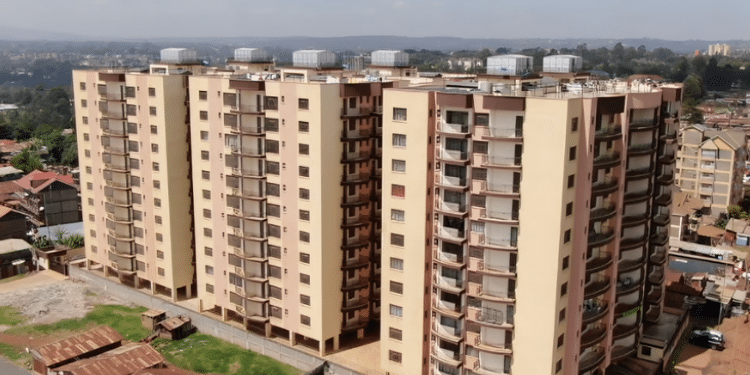
In Nairobi, building an apartment requires multiple approvals and compliance with both the National Building Code 2024 and Nairobi City County regulations.
Developers must secure licenses covering zoning, environmental impact, construction safety, and contractor registration before commencing work.
Permit fees are calculated based on plinth area and estimated construction costs, with updated land rates affecting post-occupancy taxes.
The new 2026 land rates introduced by Nairobi County under Governor Johnson Sakaja increase annual property taxes after occupancy but do not affect initial building permits. It is essential to engage NCA-registered contractors, as non-compliance may result in penalties of up to twice the permit fees for illegal or unlicensed works.
For a typical mid-rise apartment, the cost of permits and approvals ranges from Ksh 500,000 to Ksh 1.5 million, excluding professional fees.
Required Licences and Where to Obtain Them
Constructing an apartment in Nairobi in 2026 involves obtaining several mandatory licences to comply with legal, safety, and environmental standards.
The main approvals include:
- Change of User Approval – This licence is required when converting land from its current zoning to accommodate residential apartment construction. Fees range from KSh 60,000 to 120,000, with central business district properties attracting higher charges. Applications are submitted to the Nairobi City County Planning Department along with the title deed, approved site plan, and zoning maps.
- Building Permit – The building permit ensures that construction plans meet structural, safety, and design standards. Fees are typically 0.5% of the estimated construction cost. For an 800 sqm low-rise apartment, this could amount to over KSh 400,000. Applications are made through the Nairobi e-construction portal, accompanied by stamped architectural and structural drawings from registered professionals.
- NEMA Environmental Impact Assessment (EIA) License – Apartments taller than three storeys require an EIA licence to ensure environmental compliance. Costs range from KSh 50,000 to 200,000. Applications are submitted to the National Environment Management Authority (NEMA) with a detailed environmental assessment report prepared by a certified environmental expert.
Also Read: Nairobi City County Clarifies on South C Storey Building Collapse as Rescue Operations Continue
- NCA Contractor License – Engaging a contractor licensed by the National Construction Authority (NCA) is mandatory. Licence renewal fees range from KSh 50,000 to 500,000, depending on the NCA category (1–8). Contractors must submit evidence of registration and proof of compliance with safety and operational standards.
- Fire Clearance and Utility Approvals – Fire safety clearance and approvals for electricity, water, and sewer connections are required before construction begins. Combined fees are approximately KSh 20,000–50,000. Applications are made at the Nairobi Fire Department and relevant utility providers, supported by approved building plans.
Nairobi Apartment Construction Fee Schedule
| Category | Rate per sqm (KSh) | Example Fee (800 sqm Apartment) |
| Low-rise Flats (≤5 storeys) | 21,000–30,000 | 336,000–480,000 base |
| High-rise Apartments (>5 storeys) | 24,000–33,000 | 384,000–528,000 base |
| Site Board/Hoarding | 6,000–10,000 per month | 72,000–120,000 per year |
| Plan Amendments | 0.1% of construction cost | 20,000–50,000 |
Also Read: Sakaja Publishes Last Warning to Nairobi Landlords with no Deadline Extension
Process and Requirements
Nairobi City County’s official e-construction portal for building permit applications is accessible at https://edev.nairobiservices.go.ke. Applicants must submit requests there with the title deed, land surveys (from Survey of Kenya), and stamped plans from registered architects and engineers (BORA/BIKS registered).
Mandatory inspections are conducted at the foundation, slab, and completion stages to ensure compliance with building codes.
All licences require supporting documents such as title deeds, surveys, and professionally stamped plans.
Inspections are conducted at key construction stages, including foundation, slab, and completion.
Following these processes ensures legal compliance and avoids penalties, which may reach up to twice the permit fees for unauthorised construction.
Follow our WhatsApp Channel and X Account for real-time news updates.