


Examination results are often seen as the clearest measure of academic performance. But behind every set of results is a longer story of teaching, preparation, individual learner support, and the environment in which students are expected to grow.
At Brookhurst International Schools, the 2026 examination results offer a glimpse into that story.
This year, the school’s A-Level candidates recorded a 90.3% overall pass rate, while O-Level candidates achieved a 96% overall pass rate. At O-Level, 79% of candidates attained grades A*–C, while 63% achieved A*–B. Both campuses also recorded perfect scores in individual subjects, with the Kiserian campus recording a 100% pass rate in English and Literature in English, while the Lavington campus achieved 100% passes in six subjects, including Swahili, Religious Studies, Art and ICT.
The International Foundation Diploma (IFD) candidates recorded a 100% pass rate across both campuses.
The figures are significant, but perhaps the more interesting question is what happens before the results are released.
What happens behind the results?
Academic performance is rarely the result of one intervention or a last-minute examination push. At Brookhurst International Schools, the approach emphasizes monitoring learners throughout the academic year and responding to individual needs as they emerge.
Teachers work with learners through continuous assessment, targeted interventions and personalised support. Rather than waiting for examination results to identify gaps, the school monitors academic progress during the learning process.
The approach also relies heavily on teachers understanding the learners they work with — their strengths, areas that require attention and the pace at which they learn.
According to Brookhurst International Schools Director Prof. Ruth Waweru, this consistency is an important part of the school’s academic approach.
“Academic excellence at Brookhurst is the result of intentionality. We have created an environment where our learners are challenged to discover what they are capable of, while being supported every step of the way. Our results are a reflection of the commitment of our learners, teachers and the entire Brookhurst community.”
The academic programme is also complemented by co-curricular activities, giving learners opportunities to develop outside the classroom. The school’s approach recognises that academic development takes place alongside social, creative and physical development.
Creating the conditions for learning
The quality of teaching is another important part of the equation.
Brookhurst International Schools’ teaching staff are highly qualified and experienced, with continuous professional development forming part of the school’s approach to teaching. The aim is to keep educators equipped with current teaching practices while allowing them to respond to changing learner needs.
The school also emphasizes creating an environment where learners can balance academic work with other aspects of school life.
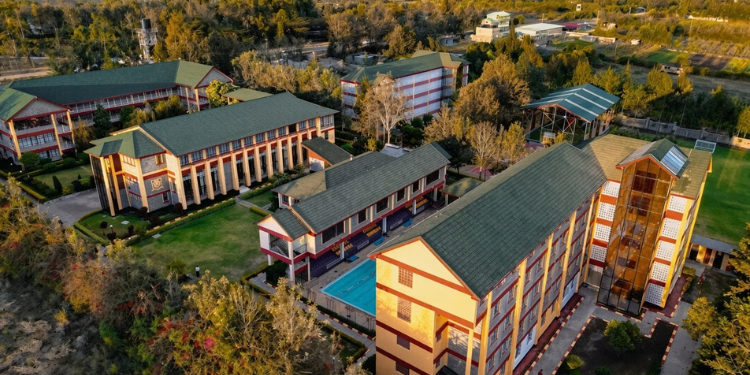
Classrooms, laboratories, sports facilities and other learning spaces form part of that environment, alongside the academic support provided by teachers and school leadership.
Executive Principal George Mathenge says the results show what can happen when learners, teachers and the wider school community work toward the same objective.
“At Brookhurst, we have never believed that excellence happens by accident. It is cultivated through intentionality, strong relationships and an unwavering commitment to the growth of every learner. These examination results affirm what we see every day here at Brookhurst — young people who are capable, confident and prepared to rise to the occasion.”
A closer look at Brookhurst Lavington
At the Lavington campus, academic progress is closely monitored through a system that gives learners clear targets and helps teachers identify areas needing additional attention.
Students set academic targets for each subject at the beginning of the term, with progress reviewed throughout the academic year. This gives teachers and academic leaders an opportunity to intervene early when a learner may be falling behind.
Teaching is also adapted to individual abilities and learning pace, supported by a low teacher-to-student ratio and continued investment in teacher development.
The campus has continued to expand its pre-university options, with pathways including A-Levels, the International Foundation Diploma and the International Baccalaureate Diploma Programme.
Some of its alumni have gone on to pursue university studies in Kenya and abroad, including at the University of Nairobi, the United States International University and Middlesex University in Dubai.
For the campus’s academic leadership, however, the value of the approach extends beyond examination grades.
The Academic Dean describes academic excellence as “not a destination; it is a continuous commitment to identifying potential, nurturing talent, measuring progress and empowering every learner to achieve their best.”
Principal Lucy Simotwo similarly points to the role of the wider school community in supporting learners.
“Our role is to create an environment where every learner believes that excellence is within their reach. At Brookhurst Lavington, we are intentional about knowing our learners, supporting their individual journeys and challenging them to go further. These results are a wonderful affirmation of what happens when learners, parents and teachers work together towards a shared goal.”
More than a set of grades
For the Class of 2026, the results mark the end of one stage of their education and the beginning of another.
Beyond the grades are years of lessons, revision, examinations, activities, challenges and the support of teachers, parents and peers.
The next stage will take learners in different directions. Some will continue into Sixth Form, while others will move on to universities and other institutions of higher learning.
For those continuing at Brookhurst International Schools, Sixth Form offers several pathways, including A-Levels, the International Foundation Diploma, BTEC and the International Baccalaureate Diploma Programme. These options provide different routes for learners depending on their academic interests and future plans.
Whether a learner is interested in STEM, the arts, social sciences or another field, the transition from secondary education to the next stage requires more than examination preparation. It calls for confidence, independence, discipline and an understanding of one’s own strengths.
That is perhaps where the significance of the 2026 results lies.
The numbers provide a snapshot of academic performance. Behind them is the day-to-day work of learners preparing for examinations, teachers tracking progress, parents supporting their children and school leadership creating the conditions in which that work can happen.
For Brookhurst International Schools, the latest results therefore represent not just a successful examination year, but another measure of how its approach to teaching and learner support is translating into outcomes.
For the Class of 2026, however, the results are more personal: a reflection of the work they put in and a starting point for whatever comes next.
Congratulations to the Class of 2026.


