The Ministry of Electronics and Information Technology has ordered Meta to immediately stop any rollout of WhatsApp’s username feature in India and demanded a detailed response within three days, government sources said on July 1, 2026.
The notice directs Meta not to proceed with the feature until the government completes consultations and is satisfied with the company’s explanations.
Officials cited risks of increased fraud, phishing, and impersonation as the main reasons for the intervention.
The move follows internal assessments by MeitY, the Department of Telecommunications, and law enforcement agencies that the feature could make it easier for criminals to target users.
Concerns Over Fraud and Impersonation
In the notice, MeitY warned that usernames “may materially increase the incidence of online fraud, phishing, digital arrest scams and impersonation attacks” by allowing bad actors to message victims without prior connection.
The ministry also raised the possibility of users adopting names closely resembling those of public authorities, financial institutions, and government agencies.
Also Read: Why Some WhatsApp Users Are Unable to Access the New Username Feature
A senior official, speaking on condition of anonymity, told Hindustan Times that the feature could complicate investigations.
“If someone uses a foreign number and a similar username, tracing becomes much harder,” the official said. Earlier, phone numbers starting with +91 provided a starting point for action. Without easy access to such details, resolution would be difficult.
Delhi Police and DoT officials had previously flagged these issues in internal discussions, according to government sources.
WhatsApp Responds to Government Notice
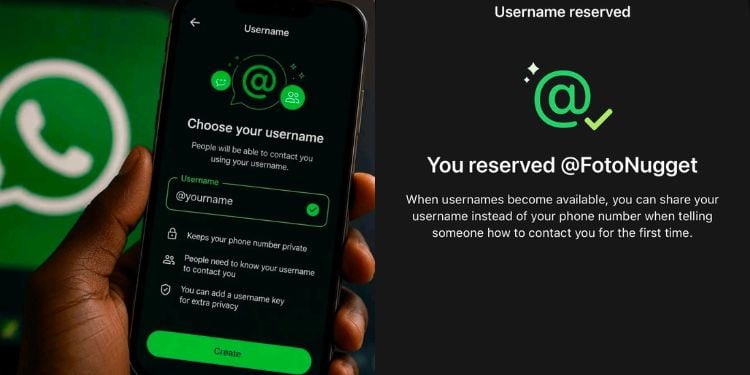
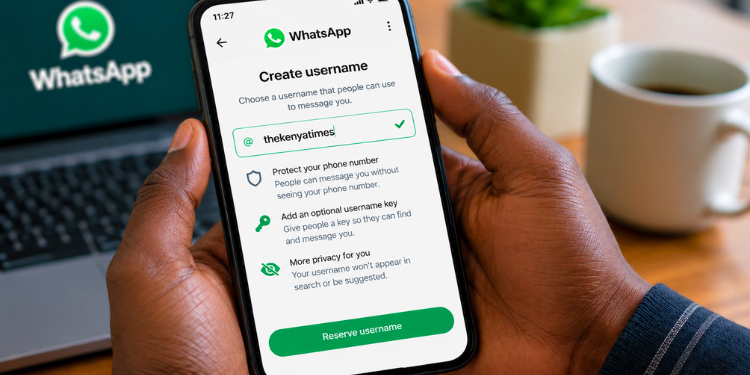
A WhatsApp spokesperson responded to the notice, stating that the ability to use usernames is not yet live and will roll out slowly later this year.
The company said it has reserved high-profile names, including those of public figures, government entities, celebrities, and verified Meta accounts, so only legitimate owners can claim them. Lookalike derivatives have also been held.
“Users still require a phone number to use WhatsApp, and we’ve built multiple layers of defense against scams into usernames,” the spokesperson said. Other users will need to know the exact username to message someone.
The company plans to limit how many new people an account can contact, block repeated guessing attempts, and deploy systems to detect common impersonation patterns.
When someone messages a user for the first time via username, WhatsApp said it will display information such as whether the sender has a new account, shares contacts or groups, or is from a different country.
Law Enforcement and Tracing Challenges
Officials are particularly concerned about cross-border cases. One DoT official noted that fraudsters could impersonate Indian government officials using foreign numbers and similar usernames.
Also Read: WhatsApp Introduces Usernames, Letting Users Chat Without Sharing Phone Numbers
“Tomorrow, someone could create a WhatsApp account using a +1 number, use the NIA chief’s photograph, adopt a similar username and make fraudulent calls,” the official said.
The government believes the feature could hinder efforts to identify whether perpetrators are operating from within India or abroad.
WhatsApp has maintained that the feature is designed to give users more control over their privacy by reducing reliance on phone numbers for contact. However, Indian authorities want clearer details on how the company will prevent abuse in a market with over 500 million users.
The username feature was announced earlier as an option for people to reserve preferred handles on WhatsApp. It forms part of broader efforts by the platform to evolve beyond phone-number-based identification.
MeitY has called for detailed technical information from Meta, including data on implementation timelines, moderation systems, and cooperation mechanisms with Indian law enforcement. The three-day deadline requires the company to address specific points raised in the notice.
This is not the first time Indian authorities have scrutinized WhatsApp’s changes. Previous interactions have covered issues such as encryption, content moderation, and traceability.
As of July 1, 2026, the feature remains unavailable in India. Government sources said consultations will continue until all concerns are resolved. Meta has not commented beyond the initial statement from WhatsApp.