
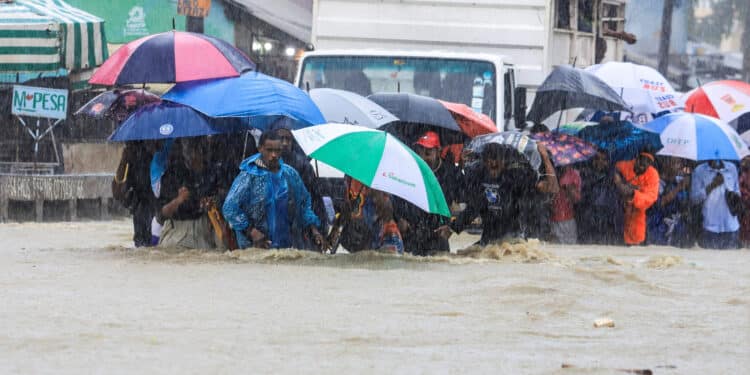
The Kenya Meteorological Department (Kenya Met) has listed regions that will continue to receive heavy rainfall in the country.
Kenya is currently experiencing heavy rainfall that has led to flooding, destroyed homes and transport infrastructure, and disrupted activities across the country. The country will continue to receive heavy rainfall.
The weatherman has stated that widespread showers and thunderstorms are expected in key regions, raising concerns of possible flooding.
Weatherman Lists Regions Expected to Receive Heavy Rainfall
According to the weatherman, regions likely to be affected by heavy rainfall are expected to experience intensifying weather conditions in the afternoons and evenings.
Also Read: Urgent Alert Issued as Floods Affect Over 650 Households in Nairobi
The Highlands East and West of the Rift Valley, the Rift Valley, North-Eastern Kenya, South-eastern lowlands, and the Coastal region are all expected to experience varying rainfall intensities.
In the Highlands West of the Rift Valley and the Lake Victoria Basin, including surrounding areas, residents are likely to experience morning rains followed by widespread showers and thunderstorms in the afternoon, with continued showers at night.
Similar patterns are expected in North-western Kenya, where morning rains are forecast in isolated areas, followed by afternoon thunderstorms and evening showers.
The Highlands East of the Rift Valley are also expected to receive light morning rains, with increased thunderstorm activity in the afternoon.
North-Eastern Kenya will experience isolated morning rains, followed by localized thunderstorms in the afternoon and showers in the evening.
In the South-eastern lowlands, morning rains are expected in a few places, while afternoon thunderstorms are likely to affect several areas and light.
Along the Coast, persistent rainfall activity is expected in the morning, afternoon, and at night.
Flood Risk as Heavy Downpours Persist Across the Country
The Kenya Red Cross Society has reported flooding across the country, with over 650 households affected in Nairobi after floods hit Nairobi again.
The Ministry of Interior and National Administration has issued a flood advisory dated 29 April 2026, warning the public against exposure to flood waters amid ongoing heavy rains in several parts of the country.
The ministry advised residents to avoid crossing flooded roads, bridges, or rivers on foot or by vehicle, emphasizing the risk of drowning and urging the public to turn around in unsafe conditions.
It further directed that vulnerable groups, including the elderly, children, persons with disabilities, and pregnant women, be prioritized for early evacuation and safe shelter.
The advisory also urged residents in flood-prone areas to evacuate early, move to higher ground as water levels rise, and comply with official evacuation instructions.
the likelihood of surface runoff and flooding, particularly in areas that have experienced persistent rainfall over the past few days.
Also Read: Kenya Met Issues High Flood Risk Alert for Tana River Basin
Ministry of Interior Issues Flood Alert for Tana River Basin
In a separate advisory, the Ministry of Interior and National Administration has issued a flood alert for communities living along the Lower Tana River Basin.
The warning follows a sharp rise in water levels driven by heavy rainfall in upstream catchment areas, including regions around Mount Kenya.
“Residents living along the Lower Tana River, especially in the Tana Delta, are being urged to stay alert as river levels continue to rise, increasing the risk of flooding in the coming days. Heavy rainfall in the upper Tana region, including areas around Mt. Kenya, has led to a significant increase in water flowing into the Seven Forks dams,” the notice read.
According to the ministry, water inflow into the Seven Forks dam system have increased significantly, prompting controlled releases from the Kamburu, Gitaru, and Kindaruma dams.
However, authorities caution that if rainfall persists and Kiambere Dam reaches capacity, additional releases may be necessary, thereby increasing downstream river flow. This could elevate flood risks along the Lower Tana River corridor in the coming days.