


The Kenya Meteorological Department (Kenya Met) has warned of continued heavy rainfall across several parts of the country over the next seven days, raising concerns about possible flooding, mudslides, and disruptions to transport and farming activities.
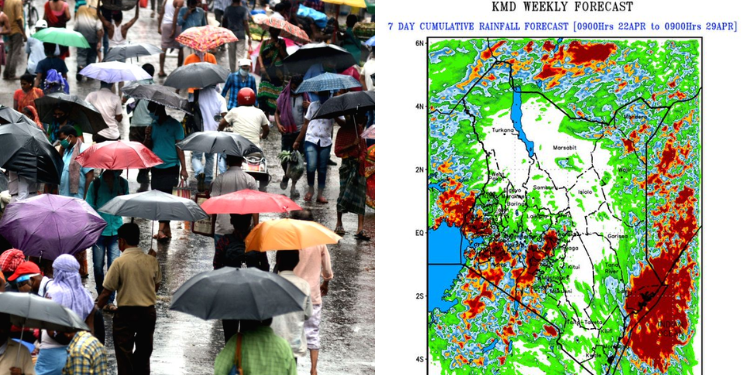
In its latest seven-day cumulative rainfall forecast covering the period from 9 am on April 22 to 9 am on April 29, Kenya Met indicates that large parts of the country are likely to experience moderate to very heavy rainfall, with some areas recording over 100 millimeters.
The forecast map shows widespread rain across the country, with the heaviest downpours expected in coastal, western, and north-eastern regions, as well as parts of the central and eastern highlands.
According to Kenya Met, the rains are being driven by active weather systems over the western Indian Ocean, combined with enhanced moisture inflow into the country.
This situation is expected to persist throughout the coming week.
Kenya Met Lists Regions at Highest Risk
Areas along the Coast are expected to receive the heaviest rainfall.
These include Kwale, Mombasa, Kilifi, Lamu, and parts of Tana River County, where cumulative rainfall is forecast to exceed 70 millimeters in some locations.
Also Read: Jubilee Leadership Crisis Looms as Member Rejects Proposed Changes
Kenya Met has also designated northeastern Kenya as a high-risk zone, particularly the counties of Garissa, Wajir, and Mandera.
Parts of these regions are projected to receive rainfall totals approaching or exceeding 100 millimeters over the seven-day period, raising fears of flash floods in normally dry riverbeds and low-lying areas.
Western Kenya is also expected to receive significant rainfall.
Counties such as Busia, Kakamega, Vihiga, Bungoma, and parts of Siaya and Kisumu are forecast to experience steady to heavy rain.
In the Rift Valley, areas around Kericho, Bomet, Nandi, Nakuru, and parts of Narok are expected to receive moderate to heavy rainfall.
Parts of the central highlands, including Nyeri, Murang’a, Kirinyaga, and some areas of Kiambu County, are also set to experience persistent rainfall.
Kenya Met notes that while totals here may be lower than on the Coast and in the north-east, prolonged rain could still lead to river flooding and waterlogged farms.
Also Read: KWS Given 21 Days to Release Information on Kenya’s Snakebite Deaths
Eastern Kenya, including Machakos, Kitui, Makueni, and parts of Meru and Tharaka-Nithi, is forecast to receive light to moderate rainfall, with some pockets of heavy rain, especially towards the eastern slopes of Mount Kenya.
Safety Warnings and Advisory
Kenya Met has urged residents in affected areas to take necessary precautions, warning that heavy rainfall may lead to flooding, reduced road visibility, and disruptions to daily activities.
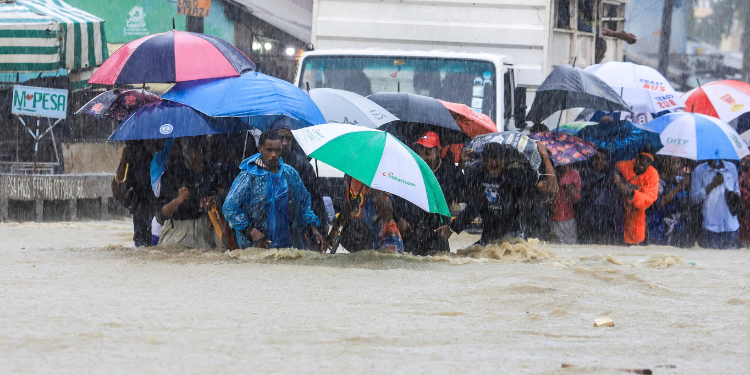
The warning comes after several deaths were reported during the previous rains, when people were swept away while trying to cross flooded roads and rivers.
Kenya Met says the latest forecast is meant to prevent further loss of life by encouraging caution, preparedness, and early action in high-risk areas nationwide today.
Motorists have been cautioned against crossing flooded roads, while residents in flood-prone zones have been advised to move to higher ground when necessary.
Farmers have been encouraged to take advantage of the rainfall to plant where conditions allow, while remaining cautious about waterlogging and soil erosion.
In urban areas, the public has been warned about the risk of flash floods, especially in poorly drained neighborhoods.
The weather department said it will continue to monitor the situation closely and provide updates as conditions evolve.




What’s the weather forecast for Subukia, Nakuru and sorrounding areas? It has been for about a month. Should we expect any rains any soon?