Arab countries have sharply stepped up pressure on Iran, demanding that Tehran pay compensation for economic damage caused by recent attacks and the closure of the vital Strait of Hormuz.
The demand was made during an emergency meeting of Arab foreign ministers held by video conference under the chairmanship of Bahrain on April 22, 2026.
The ministers accused Iran of bearing full responsibility for what they described as attacks on several Arab states and for actions that disrupted international navigation.
In a joint resolution, the ministers said Iran must provide full reparations for losses suffered by Arab countries due to rising tensions and disruptions to trade and energy supplies.
They also strongly condemned Iran’s decision to close the Strait of Hormuz and its threats to shut down the Bab el-Mandeb Strait, calling these actions violations of international law and the principle of free navigation.
The emergency meeting brought together foreign ministers from across the Arab world to respond to what they described as a widening regional crisis, triggered by escalating military actions since late February.
A Hardening Arab Position on Iran
According to the resolution, Iran bears what the ministers called “full international responsibility” for attacks targeting Jordan, the United Arab Emirates, Bahrain, Saudi Arabia, Oman, Qatar, Kuwait, and Iraq.
They said Iran is obligated under international law to compensate for all resulting damage, including harm to infrastructure, trade, and national economies.
Also Read: KWS Given 21 Days to Release Information on Kenya’s Snakebite Deaths
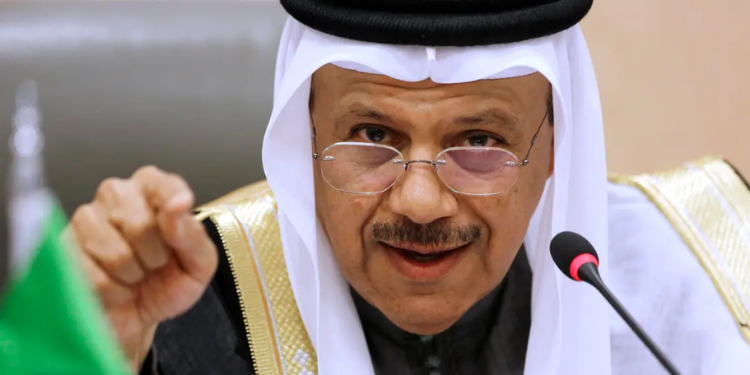
Bahrain’s foreign minister, Abdullatif Al Zayani, told the meeting that Iran’s actions had forced ships out of key waterways, disrupted maritime traffic, and endangered global energy supplies.
He said the consequences had gone beyond the Middle East, affecting food and medicine supply chains and damaging the global economy.
Al Zayani said Arab countries would not accept being pressured or punished economically as part of wider political or military disputes.
He added that closing international sea lanes was not only a regional threat but a direct challenge to international stability.
Arab League Secretary-General Ahmed Aboul Gheit reinforced this message, saying disputes must be resolved through diplomacy rather than by threatening trade routes relied upon by the entire world.
“Arab countries have not been and will not be hostages to Iran for the sake of settling scores,” he said.
The resolution also called on the United Nations Security Council to take responsibility for maintaining peace and security, and to ensure accountability for attacks on civilian infrastructure and threats to international shipping.
Background to the Crisis
Earlier this month, Iran itself demanded compensation from Saudi Arabia, Qatar, the UAE, Bahrain and Jordan, accusing them of participating in the war against Tehran.
Also Read: Kenya Railways Risks Prosecution Over Withheld Rail Safety Records
Arab states strongly rejected that claim, instead arguing that they were victims of Iranian actions.
The closure of the Strait of Hormuz, through which a large share of the world’s oil exports pass, quickly raised alarms across global markets. Energy prices surged, shipping routes were rerouted and insurance premiums for vessels rose sharply.
In an effort to stop further escalation, Pakistan brokered a two-week ceasefire that began on April 8, followed by peace talks held on April 11.
The ceasefire was later extended, and diplomatic efforts are ongoing to arrange another round of negotiations.
Despite these efforts, Arab ministers warned that lasting stability would not be possible unless Iran respected international law, halted attacks, and guaranteed the safety of international shipping.
They also urged stronger regional and international coordination to document damages and seek compensation through legal and diplomatic channels.