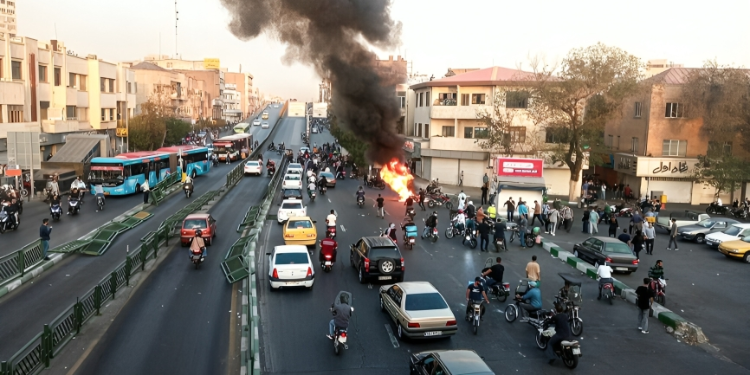
Iran’s protests have turned deadly as security officers and protesters were killed amid rising unrest.
According to the deputy governor of Lorestan province, Pourali, the officer was killed by rioters while defending public order.
“A 21-year-old member of the Basij from the city of Kouhdasht was killed last night (Wednesday) by rioters while defending public order,” the channel said, citing Said Pourali, the deputy governor of Lorestan Province.
In addition, seven protesters have been killed in the demonstrations, which began on Sunday, against rising living costs across Iran.
However, the government of Iran has requested dialogue with the protesters, but they turned it down, entering their fifth day.
“We recognize the protests and would listen with patience, even if confronted with harsh voices,” the official added.
Causes of the Protests in Iran
Iran’s rial on Sunday plunged to 1.42 million to the dollar. On Monday, it traded at 1.38 million to the dollar.
Reports about Farzin’s possible resignation had been circulating over the past week. When he took office in 2022, the rial was trading at around 430,000 to the dollar.
Therefore, the rapid depreciation is compounding inflationary pressure, pushing up prices of food and other daily necessities and further straining household budgets.
According to the state statistics center, the inflation rate in December rose to 42.2% from the same period last year and is 1.8 percent higher than in November. Food prices rose 72 percent, and health and medical items were up 50 percent.
Previously, Iran’s currency was trading at 32,000 rials to the dollar at the time of the 2015 nuclear accord that lifted international sanctions in exchange for tight controls on the country’s nuclear program.
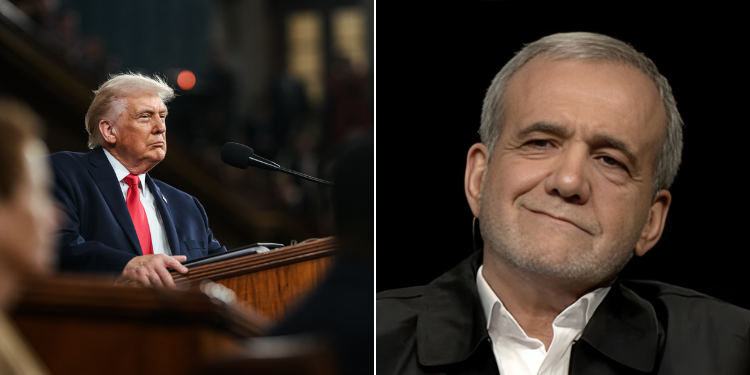
This deal was unraveled after US President Donald Trump unilaterally withdrew the United States in 2018.
Also Read: Drama as Iranians Reject US Interpreter in Multi-Million Dollar Case in Kenya
There is also uncertainty over the risk of renewed conflict following June’s 12-day war involving Iran and Israel, and Many Iranians also fear the possibility of a broader confrontation that could draw in the United States, adding to market anxiety.
In September, the United Nations reimposed nuclear-related sanctions on Iran through what diplomats described as the snapback mechanism.
However, those measures once again froze Iranian assets abroad, halted arms transactions with Tehran, and imposed penalties tied to Iran’s ballistic missile program.
Iran’s Government Talks About the Ongoing Protests in Its Country
The protests began peacefully in Tehran and spread after students from at least 10 universities joined on Tuesday.
The President of Iran, Masoud Pezeshkian, has sought to calm tensions, acknowledging protesters’ legitimate demands and urging the government to take action to improve the economic situation.
“From an Islamic perspective … if we do not resolve the issue of people’s livelihoods, we will end up in hell,” Pezeshkian said at an event broadcast on state television.
Also Read: Trump Set to Deport Dozen of Iranians Under Rare U.S.-Iran Agreement
Meanwhile, the Government spokesperson Fatemeh Mohajerani stated that the authorities would hold a direct dialogue with representatives of trade unions and merchants, without providing details.
In addition, the authorities have promised to take a firm stand and warned against exploiting the situation to bring chaos.
“Any attempt to turn economic protests into a tool of insecurity, destruction of public property, or implementation of externally designed scenarios will inevitably be met with a legal, proportionate and decisive response,”
Follow our WhatsApp Channel and X Account for real-time news updates.