
The Israeli Air Force has intensified its air campaign deep inside Iran, launching what it described as a widespread and coordinated series of strikes on three airports in and around Tehran.
In a series of statements posted on their official X account on April 6, the Israeli Air Force confirmed that dozens of fighter jets had conducted attacks targeting Iranian Air Force aircraft, helicopters, and supporting military infrastructure at airports named “Baharain,” “Mehrabad,” and “Azmayesh.”
The strikes, according to Israeli military officials, were part of an ongoing operation aimed at reducing Iran’s air power and restricting its ability to fly aircraft over Iranian territory.
“The Air Force completed a wave of extensive strikes a short time ago targeting infrastructure of the Iranian terror regime in Tehran and additional areas in Iran,” read part of the series of statements by the Israeli Air Force.
Israeli Expands Air Assault
The Israeli military said the attacks happened quickly and involved accurate, intelligence-led targeting.
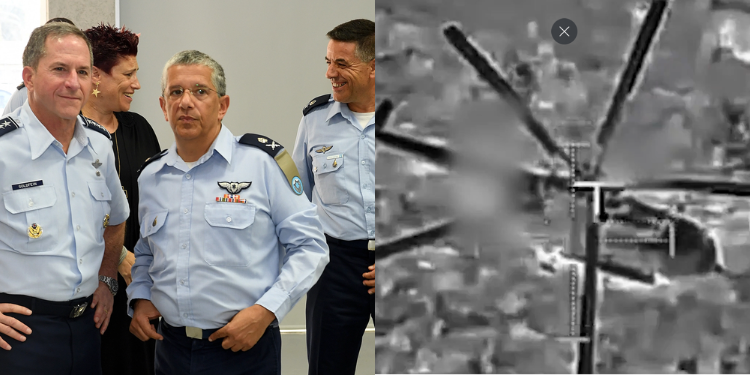
Video footage released along with the statements showed aerial images of aircraft and infrastructure being hit on the ground, with crosshairs visible over what Israel claimed were Iranian military assets.
“In a widespread attack on the airports in Tehran, the Air Force struck dozens of aircraft and helicopters of the Iranian Air Force. Dozens of Air Force fighter jets attacked dozens of aircraft, including planes and helicopters, as well as additional military infrastructure at three airports around Tehran,” the Israeli Air Force said in a post translated from Hebrew.
Mehrabad Airport is a key dual-use facility in western Tehran that has historically served both civilian and military aviation roles, including hosting Iranian Air Force units.
“The completed attacks are part of the phase of intensifying the damage to the core systems of the Iranian terror regime and its foundations,” the Israeli Air Force said in another message released in the series.
Also Read: Israel Kills IRGC Undercover Commander in Tehran Airstrike
By targeting aircraft on the ground and related infrastructure, Israel seeks to limit Iran’s ability to launch or maintain air operations, especially as both sides increasingly rely on missiles, drones, and air power.
Israel’s New War Strategy
Since the war began on February 28, 2026, Israel has adopted a “decapitation strategy,” a tactic focused on eliminating Iran’s top leadership through precise, intelligence-driven strikes.
This method targets command centers, residences, and secure locations, often in Tehran, aiming to dismantle decision-making structures rather than just destroy equipment.
By early April 2026, at least 25 prominent Iranian figures have been confirmed killed in these targeted operations.
Key figures include Ali Khamenei, Ali Larijani, Gholamreza Soleimani, Mohammad Pakpour, Abdolrahim Mousavi, Amir Nasirzadeh, Ali Shamkhani, Esmail Khatib, Majid Khademi, and Asghar Bagheri.
Many other senior figures, including IRGC commanders, intelligence deputies, Basij leaders, and national security officials, were killed in coordinated strikes between March 2 and March 26.
Also Read: Arab Nation Vows Full Support for Any U.S.-Led Hormuz Opening Operation
This approach differs from previous wars.
Instead of widespread bombing, Israel is now carrying out ongoing targeted assassinations, sometimes multiple in a single day, supported by real-time intelligence and air dominance.
The result is a steady removal of Iran’s leadership layer, creating command disruption, forcing rapid replacements, and weakening coordination across military and intelligence structures.
The early strikes targeted missiles, air defenses, and command systems to weaken Iran’s ability to respond or threaten Israel long-term.
By doing all this, Israel aims to permanently eliminate Iran’s capacity to develop a nuclear weapon by targeting enrichment sites, removing uranium stockpiles, and blocking future research.
Iran’s strategy is to absorb the initial strikes, then escalate its attacks to increase costs and demonstrate it still has the capability to strike back, aiming to restore deterrence and prevent further assaults.