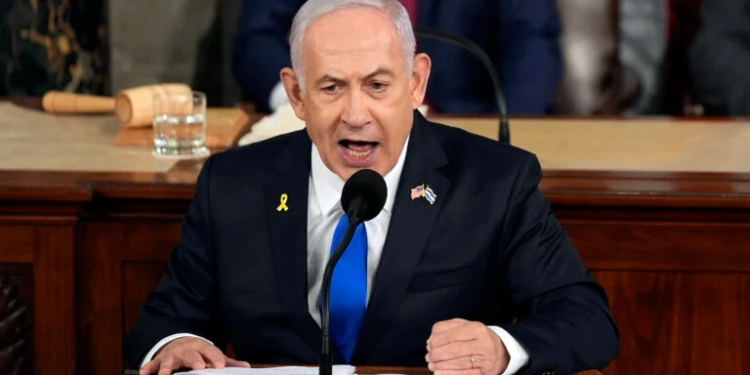
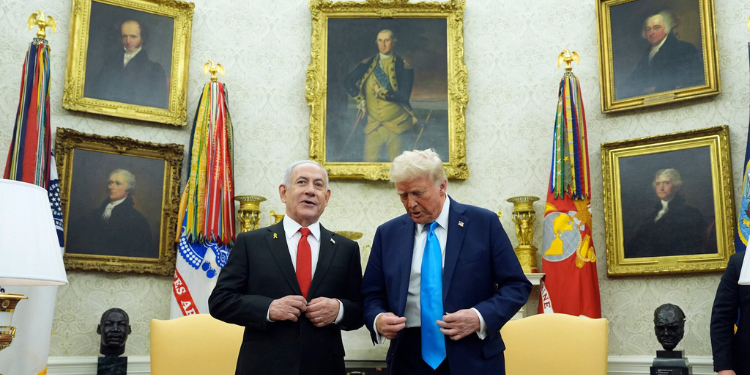
Israeli Prime Minister Benjamin Netanyahu has moved up his planned trip to Washington amid growing concern in Israel over renewed talks between the United States and Iran.
The visit, brought forward by more than a week, will see Netanyahu meet U.S President Donald Trump in an urgent effort to influence the direction of negotiations that Israel fears could leave Iran with dangerous military capabilities.
The meeting comes days after the U.S and Iran held indirect talks in Oman, the first serious diplomatic contact since last year’s brief but intense Israel–Iran war.
President Trump described the discussions as positive and said more talks were planned.
Israeli officials, however, say the early signals from Iran have triggered alarm, prompting Netanyahu to seek immediate clarity and firm guarantees from the U.S.
Netanyahu’s Seven Demands
According to Israeli officials and diplomatic sources, Netanyahu is arriving in Washington with seven clear demands that he wants the United States to adopt as non-negotiable conditions in any future agreement with Iran.
The first demand is the total cancellation of Iran’s nuclear project.
Israel insists that Iran must permanently abandon all elements of its nuclear programme, including research, development, and industrial infrastructure.
Israeli leaders argue that partial limits or temporary freezes have failed in the past and only allowed Iran to advance its capabilities in secret.
Second, Netanyahu is demanding zero uranium enrichment on Iranian soil.
Iran has long claimed enrichment is its right under international law, but Israel sees any enrichment as a direct path to nuclear weapons.
Also Read: Two More Kenyans Die Fighting for Russia in Ukraine
Netanyahu wants a deal that bans enrichment entirely, without exceptions.
Thirdly, beyond stopping current activity, Israel wants Iran stripped of the technical ability to enrich uranium in the future.
This would involve dismantling centrifuges and shutting down related facilities so that enrichment cannot be restarted quickly.
Fourth, Israel is calling for the removal of all enriched nuclear material from Iran.
Netanyahu wants existing stockpiles shipped out of the country under international supervision.
The fifth demand is that Israel wants strict limits on the range of Iranian missiles, capped at 300 kilometres.
This would effectively block Iran from developing or deploying long-range missiles capable of reaching Israel or US bases in the region.
Netanyahu has repeatedly warned that missiles, not just nuclear material, are a central part of Iran’s threat.
Sixth, Netanyahu is demanding the dismantling of what Israel calls the “Shiite axis.”
This refers to Iran’s network of allied armed groups across the Middle East, including Hezbollah in Lebanon, militias in Iraq and Syria, and Hamas and Islamic Jihad in Gaza.
Israel wants Iran to end military, financial, and logistical support for these groups as part of any deal.
The seventh demand is for close, high-quality, and genuine supervision.
Also Read: Obama’s Nobel Peace Prize Faces Fresh Scrutiny After Epstein Files Release
Israel wants a monitoring system that goes beyond previous agreements, with unrestricted access for international inspectors, real-time oversight, and clear enforcement mechanisms.
Iran Responds
Iran has rejected Israel’s demands and dismissed the Israeli prime minister’s rushed visit as an attempt to pressure the United States and derail diplomacy.
Iranian officials say the ongoing talks with the Americans are limited strictly to nuclear issues and will not be widened to include missiles or regional alliances.
Foreign Minister Abbas Araghchi has stated that Iran will not abandon uranium enrichment, describing it as a legal and sovereign right.
He has said Iran is prepared to discuss limits on enrichment levels, but not a full ban or the dismantling of its nuclear infrastructure.
Iranian officials also oppose removing enriched material from the country, arguing this would leave Iran vulnerable and without guarantees.
Iranian leaders accuse Israel of destabilizing the region and using fear to shape American policy.
They warn that excessive demands or military threats could end talks and lead to retaliation against American interests in the region.
Follow our WhatsApp Channel and X Account for real-time news updates.