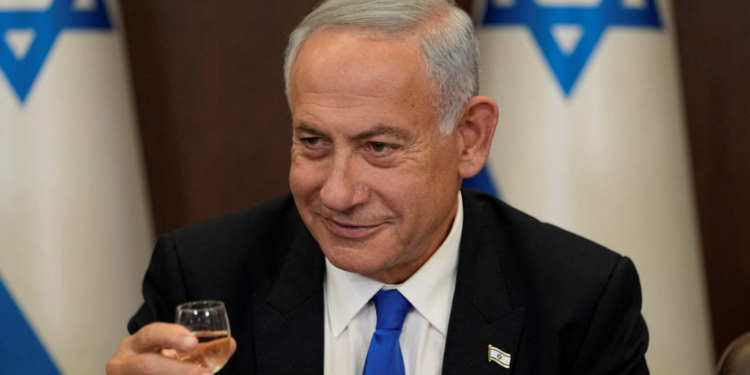
Israeli Prime Minister Benjamin Netanyahu said Israel should phase out its dependence on U.S. military aid over the next decade, marking a potential shift in the long-standing relationship between the two countries.
In an interview aired on CBS’s 60 Minutes on May 10, 2026, Netanyahu told correspondent Major Garrett that he wants to reduce American financial support to zero.
“I want to draw down to zero the American financial support, the financial component of the military cooperation that we have,” Netanyahu said. “Because we receive $3.8 billion a year. And I think that it’s time that we weaned ourselves from the remaining military support.”
He added that the process should begin now rather than wait for future U.S. congressional decisions.
Israel has received about $3.8 billion in annual U.S. military aid in recent years under a 2016 memorandum of understanding that runs through 2028.
Tensions with Iran Escalate
Netanyahu’s comments come amid renewed friction between the United States and Iran. President Donald Trump rejected Iran’s latest response to a U.S. peace proposal as “totally unacceptable.” The diplomatic impasse has kept tensions high in the Middle East.
Iran has resisted U.S. conditions on limits to its nuclear program and regional proxy activities. Concerns over possible disruptions to oil transport through the Strait of Hormuz have grown.
Also Read: See Gaza on YouTube: Netanyahu Tells Activists as Global Sumud Flotilla is Turned Away by IDF
Netanyahu described the move toward self-reliance as a natural step for Israel, citing its strong domestic defense industry and overall economy. He said Israel aims to transition from receiving aid to building a partnership based more on joint production and investment.
U.S. officials had not issued a detailed public response to the remarks as of Monday morning.
Oil Markets React to Uncertainty
Crude oil prices rose sharply on Monday as the diplomatic setbacks and regional risks weighed on supply concerns. Brent crude, the global benchmark, gained more than 4 percent in early trading, while U.S. West Texas Intermediate also climbed several dollars per barrel.
The price surge is now lnked to fears that stalled talks could lead to further instability near key shipping routes. Higher energy costs are already showing up at gasoline pumps in the United States and elsewhere.
The Israeli government has not outlined a specific schedule or annual reduction targets for the aid. Netanyahu indicated the drawdown could move quickly once started.
Current U.S. aid helps fund Israeli missile defense systems, fighter aircraft, and other military capabilities. Any long-term phase-out would require changes to existing agreements and approval from both Congress and the executive branch.
Also Read: Netanyahu Reveals He Had an Enlarged Prostate
Why This Matters
A gradual end to U.S. financial assistance would represent one of the most important changes in U.S.-Israel relations in decades. The two countries have maintained close military and intelligence cooperation since Israel’s founding, with consistent bipartisan support in Washington for the aid package.
The proposal arrives at a sensitive time. Rising oil prices directly affect American households through higher fuel and transportation costs. Any reduction in aid could also influence broader U.S. foreign policy discussions about defense spending and alliance commitments.
For Israel, the shift reflects growing confidence in its ability to fund its own defense. For the United States, it raises questions about future budget priorities and the structure of bilateral ties.