Russian President Vladimir Putin has announced a temporary ceasefire in the war in Ukraine to coincide with the Orthodox Easter holiday, ordering Russian forces to halt combat operations from 4:00 pm Moscow time on Friday, April 11, until midnight on Saturday, April 12.
The decision was made public on April 9 via a Kremlin statement and confirmed by presidential spokesman Dmitry Peskov.
According to the announcement, Russian troops are to cease all offensive actions for the duration of the truce, while remaining on high alert in case of what Moscow described as “provocations” or violations by Ukrainian forces.
Putin Announces Easter Ceasefire
The ceasefire is set to last roughly 32 hours and is timed to cover Easter Saturday and Easter Sunday, which falls on April 12 this year for Orthodox Christians.
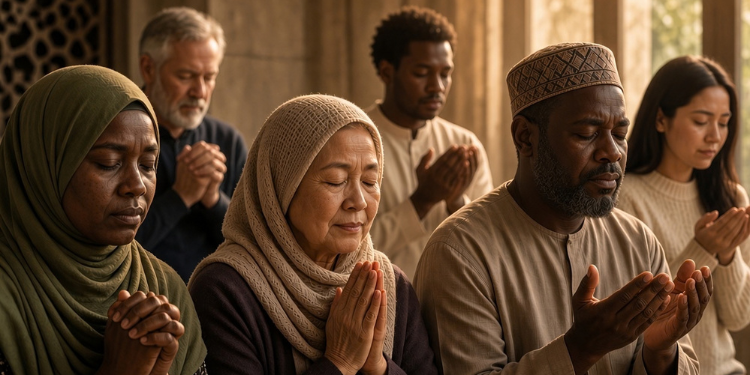
The Kremlin framed the move as a humanitarian gesture rooted in religious observance, with Putin saying he expects Ukraine to act “by example” and observe the same ceasefire period.
The order was issued by Putin in his capacity as supreme commander-in-chief of the Russian armed forces.
It applies across all areas of active hostilities in Ukraine, according to the Kremlin, though no independent monitoring mechanism has been announced to oversee compliance.
Ukrainian officials have in the past reacted cautiously to similar short-term ceasefires proposed by Moscow, arguing that previous pauses announced by Russia were accompanied by continued shelling, missile strikes, or ground attacks.
Also Read: Democratic Governor Signs Bill Raising Minimum Wage to $15
Kyiv has repeatedly called for a longer, unconditional ceasefire, insisting that brief truces serve primarily political or public-relations purposes.
The Easter truce comes as the war, now well into its fourth year, continues with heavy fighting across multiple sections of the front line.
Recent months have seen intensified artillery exchanges, drone attacks, and missile strikes, with civilian infrastructure again under pressure in several regions.
Both sides have blamed each other for escalating attacks and for targeting non-military sites.
Putin’s announcement also comes amid renewed diplomatic activity involving the United States and several European countries, which have been exploring limited confidence-building measures alongside broader discussions on a possible pathway to negotiations.
However, there has been little public progress toward a comprehensive ceasefire or peace talks, and positions on key issues remain widely divergent.
Short-term truces tied to religious holidays are not new to the conflict in Ukraine.
Similar ceasefire announcements have been made during previous Orthodox Easter and Christmas periods, as well as on other symbolic dates.
In most cases, the pauses were brief, unevenly observed, or disputed by the opposing side, with each side accusing the other of violations almost immediately.
Also Read: Melania Trump Confronts Epstein Rumors Head-On as DOJ Files Reveal 2002 Email Exchange
In the latest announcement, the Kremlin stressed that Russian forces would be ready to respond “decisively” if the truce is broken.
This condition, included in the official statement, highlights the ceasefire’s fragile, conditional nature and raises questions about how incidents during the period would be assessed or verified.
Europe’s View on Ukraine-Russia War
Europe broadly views the Russia-Ukraine war as a clear violation of international law and of Ukraine’s sovereignty.
The European Union (EU) and most European governments recognize Ukraine’s borders and support Kyiv’s right to self‑defence.
Europe has provided Ukraine with military, financial, and humanitarian aid, imposed wide‑ranging sanctions on Russia, and reduced dependence on Russian energy.
The respective leaders say any peace must respect Ukraine’s territorial integrity.
At the same time, some countries stress the need to avoid escalation and keep diplomatic channels open.
Europe sees the war as a security threat to the continent and a test of the rules‑based international order.