Tuesday, June 2, 2026
  • News
    • Latest News
    • Breaking News
    • Fact Check
    • Investigations
    • Explainers
  • Politics
    • Global Politics
    • Elections
    • Government & Policy
    • Diplomacy
    • Conflicts & Security
    • Political Analysis
  • Business
    • Global Economy
    • Markets
    • Technology
    • Startups
    • Energy
    • Finance
  • World News
    • Americas
    • Asia
    • Asia Pacific
    • Africa
    • Europe
    • Middle East
  • Africa
    • Central Africa
    • East Africa
    • West Africa
    • Southern Africa
  • Health
    • Global Health
    • Public Health
    • Health Policy
    • Medical Research
    • Diseases & Conditions
    • Mental Health
    • Nutrition
    • Climate & Health
    • Health Explainers
  • Sports
    • Athletics
    • Basketball
    • Boxing
    • Cricket
    • Football
    • Formula 1
    • Golf
    • Rugby
  • Weather
    • Climate Business
    • Climate Change
    • Climate Solutions
    • Living Green
  • Culture
    • Arts
    • Film & TV
    • Food
    • Music
    • Lifestyle
    • Travel
  • Opinion
    • Editorials
    • Letters
  • Behind The Brand
REGISTER
LOGIN
No Result
View All Result
The Kenya Times
  • News
    • Latest News
    • Breaking News
    • Fact Check
    • Investigations
    • Explainers
  • Politics
    • Global Politics
    • Elections
    • Government & Policy
    • Diplomacy
    • Conflicts & Security
    • Political Analysis
  • Business
    • Global Economy
    • Markets
    • Technology
    • Startups
    • Energy
    • Finance
  • World News
    • Americas
    • Asia
    • Asia Pacific
    • Africa
    • Europe
    • Middle East
  • Africa
    • Central Africa
    • East Africa
    • West Africa
    • Southern Africa
  • Health
    • Global Health
    • Public Health
    • Health Policy
    • Medical Research
    • Diseases & Conditions
    • Mental Health
    • Nutrition
    • Climate & Health
    • Health Explainers
  • Sports
    • Athletics
    • Basketball
    • Boxing
    • Cricket
    • Football
    • Formula 1
    • Golf
    • Rugby
  • Weather
    • Climate Business
    • Climate Change
    • Climate Solutions
    • Living Green
  • Culture
    • Arts
    • Film & TV
    • Food
    • Music
    • Lifestyle
    • Travel
  • Opinion
    • Editorials
    • Letters
  • Behind The Brand
  • News
    • Latest News
    • Breaking News
    • Fact Check
    • Investigations
    • Explainers
  • Politics
    • Global Politics
    • Elections
    • Government & Policy
    • Diplomacy
    • Conflicts & Security
    • Political Analysis
  • Business
    • Global Economy
    • Markets
    • Technology
    • Startups
    • Energy
    • Finance
  • World News
    • Americas
    • Asia
    • Asia Pacific
    • Africa
    • Europe
    • Middle East
  • Africa
    • Central Africa
    • East Africa
    • West Africa
    • Southern Africa
  • Health
    • Global Health
    • Public Health
    • Health Policy
    • Medical Research
    • Diseases & Conditions
    • Mental Health
    • Nutrition
    • Climate & Health
    • Health Explainers
  • Sports
    • Athletics
    • Basketball
    • Boxing
    • Cricket
    • Football
    • Formula 1
    • Golf
    • Rugby
  • Weather
    • Climate Business
    • Climate Change
    • Climate Solutions
    • Living Green
  • Culture
    • Arts
    • Film & TV
    • Food
    • Music
    • Lifestyle
    • Travel
  • Opinion
    • Editorials
    • Letters
  • Behind The Brand
No Result
View All Result
The Kenya Times ~ Trending, Breaking News and Videos
No Result
View All Result
ADVERTISEMENT

Who was Albert Luthuli? The Murdered South African Leader Who Put His People Above Himself

The ConversationbyThe Conversation
December 5, 2025
Reading Time: 10 mins read
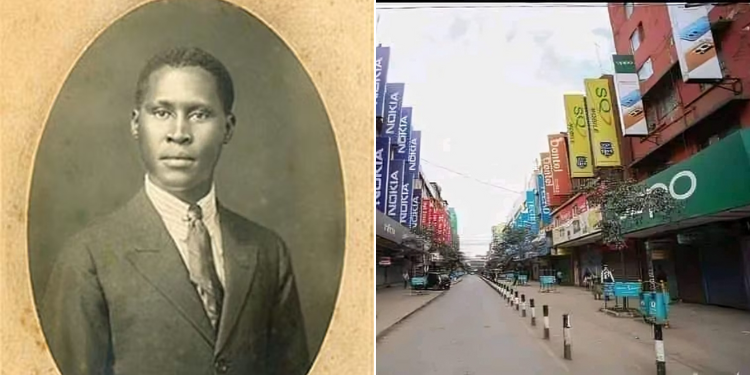
A Photo Collage Of South African Liberation Leader Albert Luthuli Who Died On 21 July 1967 (Left) And The Luthuli Street In Nairobi Cbd.

A photo collage of South African liberation leader Albert Luthuli who died on 21 July 1967 (left) and the Luthuli Street in Nairobi CBD.

FacebookTwitterLinkedInRedditWhatsApp
Advertisement

South African liberation leader Albert Luthuli died on 21 July 1967 near his home in Groutville, in the South African province of KwaZulu-Natal.

A government inquest concluded his death was an accident – that he was hit by a train. His family always disputed this, and almost 60 years later, they were vindicated.

In 2025, a court ruled that Luthuli was murdered, his death the result of “assault by members of the security special branch of the South African police”.

The ruling corrects long-standing historical records. It adds Luthuli’s murder to the catalog of torture and assassination that the apartheid government increasingly relied on to suppress dissent.

Albert John Mvumbi Luthuli was born around 1898. He was an educator, Zulu chief, and religious leader. Africa’s first Nobel Peace Prize winner was also president-general of the African National Congress (ANC) from 1952 until his death at 69.

The ANC resisted white minority rule in South Africa, and Luthuli was active in the organisation’s defiance campaign. He became head of the ANC in 1952, four years after apartheid was formalized.

ADVERTISEMENT

In the last decades of his life, Luthuli was silenced and persecuted. Once democracy was achieved in 1994, honours were heaped on him – his image is the watermark on South African passports.

Still, Luthuli is overshadowed mainly by fellow Peace Prize winners Nelson Mandela and Desmond Tutu. And while over 14 million copies of Mandela’s autobiography, Long Walk to Freedom, have been sold, Luthuli’s account of his own life, Let My People Go, is comparatively little known.

Much of my research on life writing has focused on autobiography published during apartheid, including an analysis of Let My People Go.

It’s a book that deserves to be read more widely. It defies expectations that the autobiographer will offer a candid personal account of self and life.

Luthuli’s autobiography primarily focuses on the struggle for justice. It depicts a steadfastly moral man whose fight against racist oppression inspired activists within and beyond South Africa, and should still.

Who was Albert Luthuli?

Let My People Go offers a brief sketch of Luthuli’s ancestors and early life. His grandparents were Zulu Christian converts.

ADVERTISEMENT

He was born, he calculated, “in the year 1898, and certainly before 1900” near Bulawayo, in today’s Zimbabwe. He was not born in his ancestral home, Groutville, because his father had left to serve in the Second Matabele War. After the conflict, his parents stayed on at a Seventh Day Adventist mission station.

His father died when Luthuli was a baby. At about 10, he was sent back to Groutville for his schooling.

Qualifying as a teacher, he became the principal of a small school. A government bursary allowed him to study further at Adams College, where he performed exceptionally well, was invited to join the staff, and rose through the ranks.

He met Nokukhanya Bhengu there, and they married in 1927.

Luthuli loved teaching. However, in 1935, after prolonged urging from tribal elders, he and Nokukhanya decided he was duty-bound to accept nomination as chief of the Umvoti Mission Reserve.

For 17 years, he dedicated himself to improving the lot of the people of Groutville and providing principled leadership in confronting the injustices of racism.

He took the “revolutionary step of admitting women” to local meetings. He organised African sugar farmers and held a seat on the Native Representatives Council.

In 1938, he was a member of the executive of the Christian Council of South Africa.

In the years that followed, he would remain deeply involved in Christian and civic organisations. In 1945, he was elected to the executive of the ANC’s provincial branch, becoming its president in 1951 and, in 1952, the whole organization.

Overseas travel widened Luthuli’s perspective, whether at a missionary conference in India (1938) or on a nine-month church-sponsored lecture tour of the US (1948).
His autobiography recounts in detail his religious, civic, and political involvement, weaving in a narrative of increasingly draconian and devastating apartheid policies. Writing painstakingly and usually without emotion – though disgust and horror sometimes break through – he challenges the “twisted, distorted” versions of history promoted by the regime. He offers meticulous evidence of the irrationality and immorality of racism.

Banned

From 1953 onward, repeated banning orders prevented Luthuli from leaving his home or from publishing or distributing any written material. In 1956, he was arrested on a charge of high treason. (Discharged in 1957, he was acquitted in 1961.)

Despite this, Luthuli continued with his autobiography, dictating his story to his friends, Rev. Charles Hooper and his wife, Sheila Hooper. They compiled the draft, which Luthuli then edited.

It was a foregone conclusion that Let My People Go would be banned, and Luthuli knew it was unlikely to enlighten apartheid rulers:

There is not really even a common language in which to discuss our agonising problems. (They) cannot speak to Africans except in the restricted language of Baasskap.

The term refers to whites being the boss, and anyone classified as non-white adopting a position of subservience.

Nonetheless, the narrator insists that:

“If the whites are ignorant of the realities, the fault does not lie with us.”


Also Read: Who is Michael Langley; US General Who Sparked Uproar After Criticizing Ibrahim Traore


Autobiography of a selfless self

Readers of autobiography tend to look for insight into the author’s personal life, but Luthuli’s gives greater weight to political-historical analysis.

In the book, he repeatedly denies his own importance, reminding readers that much of what he experienced was shared by other oppressed South Africans. This is key to the depiction of his character in the book.

He only briefly mentions his family. He and Nokukhanya have seven children, but he doesn’t share their names and draws a “veil” over any details about their marriage.

Nokukhanya, he writes, “ungrudgingly” assumed full responsibility for their home and smallholding so that he could focus on his public duties. At Adams College, for example, he was also a choirmaster, soccer team administrator, and Zulu cultural organiser, and served on an association for African teachers.

Under his leadership, the ANC became a mass organisation. Luthuli had to travel the country in support of the defiance campaign:

His use of the passive voice reinforces Luthuli’s reserve. For instance, he describes being urged to take on leadership roles rather than seeking them himself.

Nonetheless, even in these apparent self-deflections, Luthuli’s character emerges: his centre of gravity does not lie in the domestic sphere but in service to the community. He is driven by his “desire to serve God and neighbour”.

By refusing the “self-assertion and self-display” that is typical of autobiography, Let My People Go portrays a selfless self.


Also Read: Burkina Faso’s Ibrahim Traoré Is Making Waves in West Africa. Who Is He?


 The humility of a man who cannot be humiliated

Luthuli’s story depicts a humble man who refuses to yield, despite growing persecution. Or, as Charles Hooper observes in the introduction, the “humility of a man who cannot be humiliated”.

Luthuli expresses gratitude when outrage might seem more reasonable. He describes his prison cell, when he was ill and isolated, as a prayerful “sanctuary”.

Accounts of casual racism, police harassment, and brutal assault are harrowing. Hard to read, too, is Luthuli’s self-recrimination. He reproaches himself for “having contributed too little” to the political struggle.

This reserve doesn’t obscure his character; it illuminates it. He emerges as a thoughtful, humble man committed to non-racism, non-violence, and justice who even tries to understand Afrikaners’ fears of “being swamped”.

Farsighted, he predicted the rise of “terrorism (and) legalised murder by army and police forces”. Yet he retained faith that “the outcome of the struggle” would be justice for all.

After his release from prison, Luthuli, still banned, lived in isolation in Groutville. He was murdered before the banning order expired.The Conversation

By Judith Coullie, Senior Research Associate, English Studies, University of KwaZulu-Natal

Judith Coullie, University of KwaZulu-Natal

This article is republished from The Conversation under a Creative Commons license. Read the original article.

Follow our WhatsApp Channel and X Account for real-time news updates.
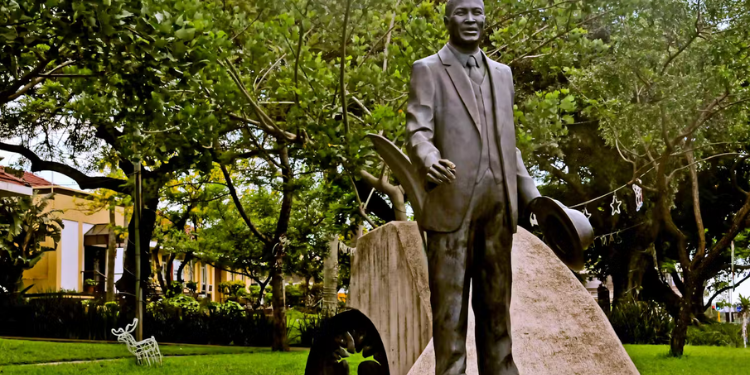
Statue Of Albert Luthuli In Kwazulu-Natal, Where He Was Born Photo.j Ramatsui/Wikimedia Commons, Cc By-Sa
Statue of Luthuli in KwaZulu-Natal, where he was born PHOTO.J Ramatsui/Wikimedia Commons, CC BY-SA
Tags: Albert LuthuliSouth Africa
The Conversation

The Conversation

The Conversation is an independent news organization that publishes evidence-based articles written by experts to help readers understand diverse topics. We cover a wide range of areas including arts, culture, education, health, politics, science, and more¹. Their content is characterized by in-depth analysis, research, news, and ideas from leading academics and researchers. The Conversation aims to provide academic rigor with journalistic flair.

Related Posts

Who Is Bill Pulte? Meet The 38-Year-Old Trump Pick Replacing Tulsi Gabbard As Acting Dni

Who Is Bill Pulte? Meet the 38-Year-Old Trump Pick Replacing Tulsi Gabbard as Acting DNI

June 2, 2026
Nairobi Mentioned As Trump Cut Number Of Embassies In Africa That Can Process Visa

Nairobi Mentioned as Trump Cut Number of Embassies in Africa

June 2, 2026
“I Couldn’t Care Less”: Trump Responds After Iran Reportedly Ends Talks With Us

“I Couldn’t Care Less” Trump Responds After Iran Ends Talks With US

June 1, 2026
Iran Suspends U.s. Talks And Threatens Full Strait Of Hormuz Blockade Amid Escalating Regional Conflict

Iran Ends All Negotiations With US, Vows to “Completely” Block the Strait of Hormuz

June 1, 2026
ADVERTISEMENT

The Kenya Times Facebook

LATEST ARTICLES

  • High Court Rejects Bia Tosha Bid to Halt KSh297 Billion EABL Stake Sale to Asahi Group
  • Who Is Bill Pulte? Meet the 38-Year-Old Trump Pick Replacing Tulsi Gabbard as Acting DNI
  • Florentius Koech: Neurosurgeon and Founder of Tophill Brain and Spine Hospital
  • In Iran War’s Shadow, Israel’s Renewed Lebanon Campaign Risks Repeating Failed Lessons and Occupations of the Past
  • Meet the Ismaili Family Behind Nairobi’s 4-Star Best Western Plus Meridian Hotel
  • Kenya on Alert as Experts Issue Warning on Severe Weather Conditions Ahead
  • KNEC Announces 2026/2027 TVET Examination Registration Dates
  • PS Oluga Clarifies Nationality of 37 People Quarantined After Returning from Congo
  • How to Send Money Internationally: Cheapest Methods in 2026
  • Where CCTV Cameras Should Not Be Installed Under Kenyan Law
  • Profile of Henry Wooster, Trump’s Nominee for U.S. Ambassador to Kenya
  • Mudavadi Asks Africa to Stop Depending on Aid
  • KeNHA Advances Plans for Mau Summit-Eldoret Road Upgrade After Securing Funding
  • Sasini PLC Appoints New Company Secretary
  • Pressure on Ruto to Allow Atheism in All Schools Countrywide
ADVERTISEMENT

Company

About Us

Our Authors

Our Experts

Social Media

Policies

Privacy Policy

House Rules

Standards and Policies

Terms and Conditions

Subscription

My Account

Contact Us

Contact Us

Join Our Team

Advertise With Us

© Copyright 2026 | The Kenya Times | All Rights Reserved

Welcome Back!

Sign In with Facebook
Sign In with Google
Sign In with Linked In
OR

Login to your account below

Forgotten Password? Sign Up

Create New Account!

Sign Up with Facebook
Sign Up with Google
Sign Up with Linked In
OR

Fill the forms below to register

All fields are required. Log In

Retrieve your password

Please enter your username or email address to reset your password.

Log In
Your Privacy and Cookies
We use cookies on our website to give you the most relevant experience by remembering your preferences and repeat visits. By clicking “Accept”, you consent to the use of ALL the cookies.
Do not sell my personal information.
Cookie settingsACCEPT
Privacy & Cookies Policy

Privacy Overview

This website uses cookies to improve your experience while you navigate through the website. Out of these cookies, the cookies that are categorized as necessary are stored on your browser as they are essential for the working of basic functionalities of the website. We also use third-party cookies that help us analyze and understand how you use this website. These cookies will be stored in your browser only with your consent. You also have the option to opt-out of these cookies. But opting out of some of these cookies may have an effect on your browsing experience.
Necessary
Always Enabled
Necessary cookies are absolutely essential for the website to function properly. This category only includes cookies that ensures basic functionalities and security features of the website. These cookies do not store any personal information.
Functional
Functional cookies help to perform certain functionalities like sharing the content of the website on social media platforms, collect feedbacks, and other third-party features.
Performance
Performance cookies are used to understand and analyze the key performance indexes of the website which helps in delivering a better user experience for the visitors.
Analytics
Analytical cookies are used to understand how visitors interact with the website. These cookies help provide information on metrics the number of visitors, bounce rate, traffic source, etc.
Advertisement
Advertisement cookies are used to provide visitors with relevant ads and marketing campaigns. These cookies track visitors across websites and collect information to provide customized ads.
Others
Other uncategorized cookies are those that are being analyzed and have not been classified into a category as yet.
SAVE & ACCEPT
LOGIN | REGISTER
  • Login
  • Sign Up
  • Cart
No Result
View All Result
  • News
    • Latest News
    • Breaking News
    • Investigations
    • Explainers
    • Fact Check
  • Politics
    • Global Politics
    • Conflicts & Security
    • Elections
    • Diplomacy
    • Government & Policy
    • Political Analysis
  • Business
    • Global Economy
    • Markets
    • Technology
    • Startups
    • Energy
    • Finance
  • World News
    • Americas
    • Asia
    • Asia Pacific
    • Africa
    • Europe
    • Middle East
  • Africa
    • East Africa
    • West Africa
    • Southern Africa
    • Central Africa
  • Health
    • Global Health
    • Public Health
    • Health Policy
    • Medical Research
    • Diseases & Conditions
    • Mental Health
    • Nutrition
    • Climate & Health
    • Health Explainers
  • Sports
    • Athletics
    • Basketball
    • Boxing
    • Cricket
    • Football
    • Formula 1
    • Golf
    • Rugby
  • Weather
    • Climate Business
    • Climate Change
    • Climate Solutions
    • Living Green
  • Culture
    • Arts
    • Film & TV
    • Food
    • Lifestyle
    • Music
    • Travel
  • Opinion
    • Editorials
    • Letters
  • Behind The Brand
  • Contact Us

Not enough quota to unlock this post
Unlock left : 0
Are you sure want to cancel subscription?