Saturday, July 4, 2026
  • News
    • Latest News
    • Breaking News
    • Fact Check
    • Investigations
    • Explainers
  • Politics
    • Global Politics
    • Elections
    • Government & Policy
    • Diplomacy
    • Conflicts & Security
    • Political Analysis
  • Business
    • Global Economy
    • Markets
    • Technology
    • Startups
    • Energy
    • Finance
  • World News
    • Americas
    • Asia
    • Asia Pacific
    • Africa
    • Europe
    • Middle East
  • Africa
    • Central Africa
    • East Africa
    • West Africa
    • Southern Africa
  • Health
    • Global Health
    • Public Health
    • Health Policy
    • Medical Research
    • Diseases & Conditions
    • Mental Health
    • Nutrition
    • Climate & Health
    • Health Explainers
  • Sports
    • World Cup 2026
    • Athletics
    • Basketball
    • Boxing
    • Cricket
    • Football
    • Formula 1
    • Golf
    • Rugby
  • Weather
    • Climate Business
    • Climate Change
    • Climate Solutions
    • Living Green
  • Culture
    • Arts
    • Film & TV
    • Food
    • Music
    • Lifestyle
    • Travel
  • Opinion
    • Editorials
    • Letters
  • Behind The Brand
REGISTER
LOGIN
No Result
View All Result
The Kenya Times
  • News
    • Latest News
    • Breaking News
    • Fact Check
    • Investigations
    • Explainers
  • Politics
    • Global Politics
    • Elections
    • Government & Policy
    • Diplomacy
    • Conflicts & Security
    • Political Analysis
  • Business
    • Global Economy
    • Markets
    • Technology
    • Startups
    • Energy
    • Finance
  • World News
    • Americas
    • Asia
    • Asia Pacific
    • Africa
    • Europe
    • Middle East
  • Africa
    • Central Africa
    • East Africa
    • West Africa
    • Southern Africa
  • Health
    • Global Health
    • Public Health
    • Health Policy
    • Medical Research
    • Diseases & Conditions
    • Mental Health
    • Nutrition
    • Climate & Health
    • Health Explainers
  • Sports
    • World Cup 2026
    • Athletics
    • Basketball
    • Boxing
    • Cricket
    • Football
    • Formula 1
    • Golf
    • Rugby
  • Weather
    • Climate Business
    • Climate Change
    • Climate Solutions
    • Living Green
  • Culture
    • Arts
    • Film & TV
    • Food
    • Music
    • Lifestyle
    • Travel
  • Opinion
    • Editorials
    • Letters
  • Behind The Brand
  • News
    • Latest News
    • Breaking News
    • Fact Check
    • Investigations
    • Explainers
  • Politics
    • Global Politics
    • Elections
    • Government & Policy
    • Diplomacy
    • Conflicts & Security
    • Political Analysis
  • Business
    • Global Economy
    • Markets
    • Technology
    • Startups
    • Energy
    • Finance
  • World News
    • Americas
    • Asia
    • Asia Pacific
    • Africa
    • Europe
    • Middle East
  • Africa
    • Central Africa
    • East Africa
    • West Africa
    • Southern Africa
  • Health
    • Global Health
    • Public Health
    • Health Policy
    • Medical Research
    • Diseases & Conditions
    • Mental Health
    • Nutrition
    • Climate & Health
    • Health Explainers
  • Sports
    • World Cup 2026
    • Athletics
    • Basketball
    • Boxing
    • Cricket
    • Football
    • Formula 1
    • Golf
    • Rugby
  • Weather
    • Climate Business
    • Climate Change
    • Climate Solutions
    • Living Green
  • Culture
    • Arts
    • Film & TV
    • Food
    • Music
    • Lifestyle
    • Travel
  • Opinion
    • Editorials
    • Letters
  • Behind The Brand
No Result
View All Result
The Kenya Times ~ Trending, Breaking News and Videos
No Result
View All Result
ADVERTISEMENT

Fuel Crisis in Africa: How Top 10 Economies on the Continent are Coping with Middle East War

Annah Nanjala WekesabyAnnah Nanjala Wekesa
April 1, 2026
Reading Time: 8 mins read
Epra Announces New Fuel Prices After Countrywide Protests

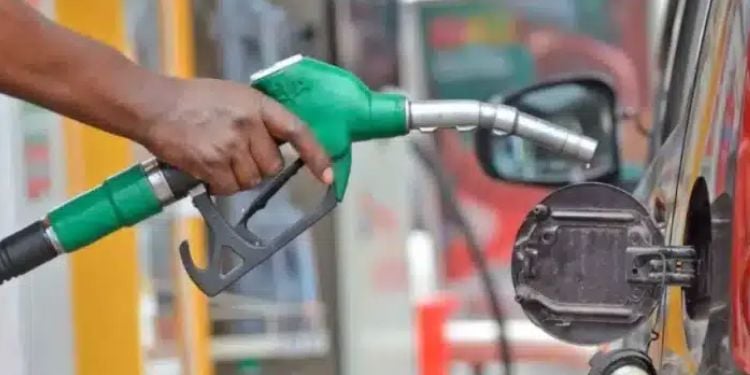
Fuel pump at a petrol station. PHOTO/ BD

FacebookTwitterLinkedInRedditWhatsApp
Advertisement

Countries across Africa have taken measures such as diluting petrol and restricting electricity consumption to cope with the fuel crisis triggered by the US and Israel’s war in Iran.

The attacks by the US and Israel on Iran, which started on 28 February 2026, upended key supply chains, driving oil prices above US$100 a barrel.

The spike followed Iran’s closure of the Strait of Hormuz in response to the US and Israeli action. About 20% of the world’s oil supplies are transported through the strait.

African Countries — many dependent on refined fuel imports — are scrambling to shield their economies from the devastation of higher energy prices and supply shortages triggered by the conflict.

Many governments are scrambling to contain the fallout with emergency measures, including lower levies on domestic sales and bans or higher duties on exports.

Fuel Crisis in Africa and How Countries Are Coping with the Middle East War

South Africa

South Africa announced on Tuesday that it will reduce its fuel levy for one month to prevent fuel prices from rising further in April, after trade unions and business groups pressured the government to intervene to cushion the impact of the war in Iran.

The finance and petroleum ministries said in a statement that the government would recoup the 6 billion rand ($350.69 million) in tax revenue it would forgo from the short-term levy cut through other mechanisms.

Finance Minister Enoch Godongwana told reporters the government would monitor developments in the ​Middle East and that if the conflict persists, it may provide some fuel levy relief in May and June.

Ethiopia

Ethiopian authorities and state-owned enterprises have begun implementing sweeping fuel-saving measures, including remote-work directives and mandatory leave for nonessential staff, as the country grapples with a deepening fuel shortage linked to regional supply disruptions.

According to a statement by Ethio Engineering Group, the state-owned industrial conglomerate has instructed its more than 3,000 employees to switch to virtual meetings, reduce vehicle movement, and adopt transport pooling for essential travel.

The company also said it would limit official vehicle use to working days and cut monthly fuel allocations for senior executives.

Authorities have ordered fuel supply companies to prioritize security institutions, major government projects, key industries, and the manufacture of essential goods.

The Ethiopian Oil and Energy Authority’s measures saw petrol stations prioritizing public transport, as well as restrictions to conserve fuel.

Authorities in the Tigray region, where there are fears of a return to civil war, have announced a complete suspension of fuel supplies.


Also Read: Govt Secures Fuel, Fertiliser, and Trade Amid Middle East Crisis


Egypt

Egypt – which relies heavily on imported oil – has introduced a raft of temporary measures aimed at bringing fuel consumption down and keeping public finances in check.

Shops, restaurants, and cafes have been told to close at 21:00 each night for the next month, while street lights and roadside advertising are being dimmed. Hotels and tourist attractions are exempt.

Non-essential workers have been told to work from home one day a week to lower the number of commutes.

The Egyptian government has raised petrol prices and public transport fares to limit the impact of the conflict on its public finances. It has also slowed down large, energy-intensive state projects and cut government vehicle fuel allowances by nearly a third.

Zimbabwe

With governments scrambling to find alternative fuel sources, Zimbabwe has said it will increase the amount of ethanol in its petrol from 5% to 20%.

It has also announced plans to scrap some taxes on fuel imports to reduce fuel prices, which have risen 40% in less than a month.

South Sudan

South Sudan has begun rationing electricity in its capital, Juba. The main electricity distributor, Jedco, said parts of the city would start experiencing daily power cuts on a rotational basis.

The country has some of East Africa’s largest oil reserves, but the majority is exported, while it imports the refined product needed for fuel.

According to the International Energy Agency, South Sudan generates 96% of its electricity from oil.

Nigeria

Top oil producer Nigeria has the fuel to keep its economy running thanks to the giant Dangote refinery, although its pump prices have also climbed.

Association of Nigerian Refineries Petroleum Marketers (ANRPM) has urged the Federal Government to consider a temporary subsidy on petroleum products to cushion the impact of rising oil prices.

With a shortage of crude in the international market, the Nigerian National Petroleum Company Limited (NNPCL) is allocating seven crude cargoes to the Dangote Refinery for May loading, ​up from the five it received in previous months.

Kenya

Kenya obtains all its fuel supplies from the Middle East through government-to-government deals with Gulf crude producers and refiners.

Currently, about 20% of Kenyan petrol stations are reportedly experiencing supply shortages.

The United Energy and Petroleum Association (Unepa) says high demand, driven by panic buying, has left stock levels running low.

Despite a spike in international crude oil prices, the Energy and Petroleum Regulatory Authority (EPRA) has left pump prices for petroleum products unchanged for the next 30 days.

Transport and Energy Cabinet Secretary Opiyo Wandayi dismissed claims of a fuel shortage, accusing some retailers of hoarding the commodity in anticipation of higher prices. He also urged Kenyans to avoid panic buying.

President William Ruto announced that Kenya’s government-to-government fuel procurement arrangement has shielded local consumers from immediate shocks.

“This strategic intervention has mitigated price increases, ensured security of supply, and proven to be both prudent and forward-looking,” Ruto said in a statement.

Meanwhile, the Kenya Ports Authority has prioritized the export of perishable products such as tea, flowers, and avocados, as maritime routes have become longer due to diversions.


Also Read: Govt Orders Release of Withheld Fuel From Retailers, Threatens Sanctions


Namibia

Namibia’s government will temporarily reduce fuel levies by 50% for at least three months, until the end of June, to protect consumers from higher pump prices as the U.S.-Israeli war with Iran continues, the energy minister said on Friday.

Modestus Amutse, Namibia’s energy minister,  said the measure is necessitated due to the high price ​volatility of petroleum products, which resulted from the ongoing geopolitical tensions in the Middle East.”

He said ​the government will use its National Energy Fund to help stabilize fuel price volatility from April 1 to the end of June, with April’s under-recovery amounting to about 500 million Namibian dollars ($29 million).

Namibia, a global oil and gas exploration hot spot that hopes to produce its ⁠first oil by 2030, consumes approximately 100 million liters of petrol and diesel each month.

Amutse emphasized that the country’s fuel stocks are adequate ⁠to meet ​national demand for one to two ​months, and urged citizens not to illegally hoard fuel or engage in panic buying.

Ghana

Ghana is better insulated from fuel-supply disruptions linked to the Iran conflict than many of its sub-Saharan peers, thanks to its range of sources, including shipments from Russia.

According to Bloomberg, a tanker, the Hellas Fighter, loaded with clean petroleum products at Vysotsk, is heading to Tema, the country’s main oil hub, with approximately 320,000 barrels onboard.

Ship-tracking data shows the vessel was passing Mauritania earlier this week and is expected to arrive on April 6.

Russian shipments have helped Ghana meet domestic fuel demand for years. With limited refining capacity, the country remains reliant on imports.

Moscow was its second-largest supplier of petroleum products in 2023, accounting for about 18% of mineral fuel imports.

Algeria

Italy and Spain are now in talks with Algeria, the holder of some of Africa’s largest oil and natural gas reserves, to boost LNG shipments from a country that’s already one of the European Union’s largest suppliers.

Other requests have come from as far afield as Vietnam — a stark sign of the global energy squeeze.

Given that oil prices have also jumped, Africa’s largest country by area looks set for a boom. Algeria’s state energy firm is asking Italy to buy any extra fuel from the spot market, where prices are higher.

What Africa Must Do To Achieve Its Sdgs And Agenda 2063 Goals
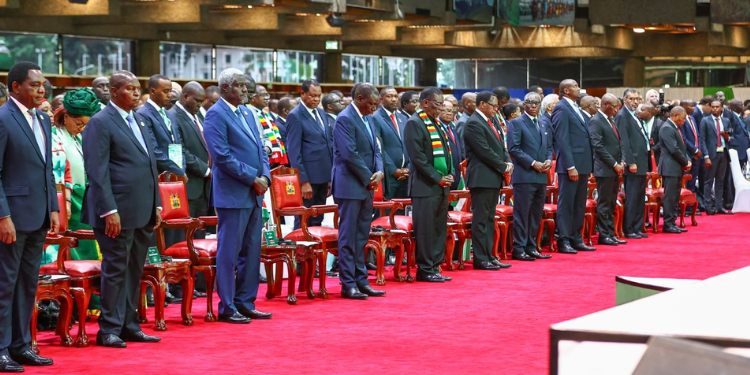
President William Ruto and other African heads of state and government at the Africa Fertiliser and Soil Health Summit, Kenyatta International Convention Centre, Nairobi, on Thursday, May 9, 2024. PHOTO/PCS

Tags: Fuel CrisisMiddle East War
Annah Nanjala Wekesa

Annah Nanjala Wekesa

Annah Nanjala Wekesa is a journalist at The Kenya Times, with a passion for crafting news-worthy stories that leave a lasting impact. She holds a Bachelor of Arts in Communication and Media from Kisii University. She has honed her skills in the art of storytelling and journalism. Her passion lies in the art of storytelling that resonates with audiences, driving a commitment to delivering news-worthy stories through the lens of integrity and precision. She can be reached at [email protected]

Related Posts

Google Logo. Photo/ Google

Google Opens KSh25 Million Grants for Kenyan Game Developers: How to Apply

July 3, 2026
A Photo Collage Of Cbk Governor Kamau Thugge And Kenya Bankers Association Ceo Raimond Molenje. Photo/Kba/Cbk.

Why Your Money in the Bank May Not Be Safe – The Power of Strong Bank Boards

July 3, 2026
An Aerial View Of Nairobi City. Photo/Safari Vacations And Travel Services.

Kenyans Face Fresh Price Shock as Businesses Push Charges to Record High

July 3, 2026
Safaricom Hints At Raising Fuliza Limits For Millions Of Its Customers

Kenyans Pour Out Frustrations as Safaricom Hints at Increasing Fuliza Limit

July 3, 2026
ADVERTISEMENT

The Kenya Times Facebook

LATEST NEWS

  • Trump Pardons 6 Prosecuted Under Biden for ‘Fixing Their Cars’
  • Kaptagat Cycling Challenge Unites Sport, Inclusion and Conservation
  • Trump Weighs Pardon for Sean ‘Diddy’ Combs as Clemency Talks Intensify
  • Grace Sugut: Profile of Eliud Kipchoge’s Wife
  • Jack Smith Warns Trump’s Jan. 6 Pardons Could Threaten Midterm Elections
  • How AI Will Revolutionize Promotions for Govt Employees in Kenya Moving Forward
  • KRA Announces 100% Waiver of Tax Penalties and Interest for Eligible Taxpayers
  • Requirements and Step-by-Step Process of Becoming an Advocate of the High Court of Kenya
  • DAAD Opens Fully Funded Germany Scholarships with Monthly Stipends of Up to KSh207K
  • Cullie Ruto: President Ruto’s Low-Key Daughter Who Graduated from Heriot-Watt University
  • Google Opens KSh25 Million Grants for Kenyan Game Developers: How to Apply
  • Why Your Money in the Bank May Not Be Safe – The Power of Strong Bank Boards
  • Mama Racheal Nakhumicha Kituyi, The Matriarch Behind the Wetang’ula Family Legacy
  • Former PS Appointed Kenya’s Acting Envoy to Canada
  • Kenyans Face Fresh Price Shock as Businesses Push Charges to Record High
ADVERTISEMENT

Company

About Us

Our Authors

Our Experts

Social Media

Policies

Privacy Policy

House Rules

Standards and Policies

Terms and Conditions

Subscription

My Account

Contact Us

Contact Us

Join Our Team

Advertise With Us

© Copyright 2026 | The Kenya Times | All Rights Reserved

Welcome Back!

Sign In with Facebook
Sign In with Google
Sign In with Linked In
OR

Login to your account below

Forgotten Password? Sign Up

Create New Account!

Sign Up with Facebook
Sign Up with Google
Sign Up with Linked In
OR

Fill the forms below to register

All fields are required. Log In

Retrieve your password

Please enter your username or email address to reset your password.

Log In
Your Privacy and Cookies
We use cookies on our website to give you the most relevant experience by remembering your preferences and repeat visits. By clicking “Accept”, you consent to the use of ALL the cookies.
Do not sell my personal information.
Cookie settingsACCEPT
Privacy & Cookies Policy

Privacy Overview

This website uses cookies to improve your experience while you navigate through the website. Out of these cookies, the cookies that are categorized as necessary are stored on your browser as they are essential for the working of basic functionalities of the website. We also use third-party cookies that help us analyze and understand how you use this website. These cookies will be stored in your browser only with your consent. You also have the option to opt-out of these cookies. But opting out of some of these cookies may have an effect on your browsing experience.
Necessary
Always Enabled
Necessary cookies are absolutely essential for the website to function properly. This category only includes cookies that ensures basic functionalities and security features of the website. These cookies do not store any personal information.
Functional
Functional cookies help to perform certain functionalities like sharing the content of the website on social media platforms, collect feedbacks, and other third-party features.
Performance
Performance cookies are used to understand and analyze the key performance indexes of the website which helps in delivering a better user experience for the visitors.
Analytics
Analytical cookies are used to understand how visitors interact with the website. These cookies help provide information on metrics the number of visitors, bounce rate, traffic source, etc.
Advertisement
Advertisement cookies are used to provide visitors with relevant ads and marketing campaigns. These cookies track visitors across websites and collect information to provide customized ads.
Others
Other uncategorized cookies are those that are being analyzed and have not been classified into a category as yet.
SAVE & ACCEPT
LOGIN | REGISTER
  • Login
  • Sign Up
  • Cart
No Result
View All Result
  • News
    • Latest News
    • Breaking News
    • Investigations
    • Explainers
    • Fact Check
  • Politics
    • Global Politics
    • Conflicts & Security
    • Elections
    • Diplomacy
    • Government & Policy
    • Political Analysis
  • Business
    • Global Economy
    • Markets
    • Technology
    • Startups
    • Energy
    • Finance
  • World News
    • Americas
    • Asia
    • Asia Pacific
    • Africa
    • Europe
    • Middle East
  • Africa
    • East Africa
    • West Africa
    • Southern Africa
    • Central Africa
  • Health
    • Global Health
    • Public Health
    • Health Policy
    • Medical Research
    • Diseases & Conditions
    • Mental Health
    • Nutrition
    • Climate & Health
    • Health Explainers
  • Sports
    • World Cup 2026
    • Athletics
    • Basketball
    • Boxing
    • Cricket
    • Football
    • Formula 1
    • Golf
    • Rugby
  • Weather
    • Climate Business
    • Climate Change
    • Climate Solutions
    • Living Green
  • Culture
    • Arts
    • Film & TV
    • Food
    • Lifestyle
    • Music
    • Travel
  • Opinion
    • Editorials
    • Letters
  • Behind The Brand
  • Contact Us

Not enough quota to unlock this post
Unlock left : 0
Are you sure want to cancel subscription?