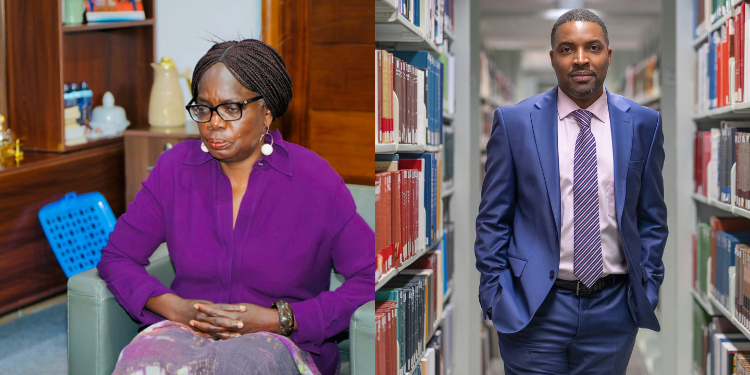
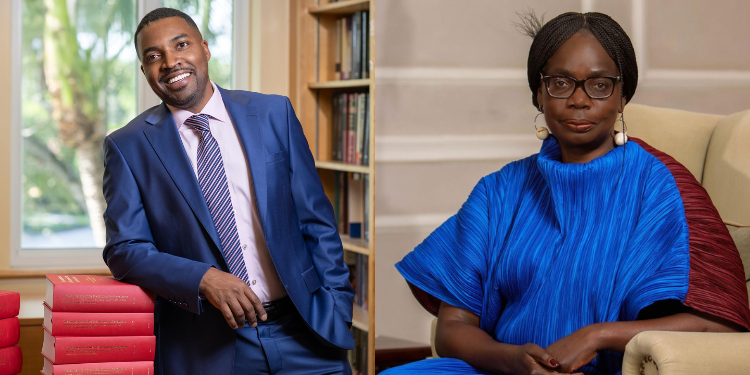
Kenya’s Phoebe Nyawade Okowa and Sierra Leone’s Charles Chernor Jalloh are among the African legal experts competing for a seat at the International Court of Justice (ICJ).
Both candidates have built extensive careers in international law, combining academic achievements, legal practice and experience in global legal institutions.
The contest highlights two different profiles: Okowa has experience in international judicial practice and courtroom advocacy, while Jalloh has a long record in international law development, research, and work through the United Nations.
Qualifications to Become an ICJ Judge
The International Court of Justice, established under the United Nations Charter, sets requirements for individuals seeking appointment as judges.
Article 2 of the ICJ Statute provides that judges must be selected from among persons of high moral character who either:
- Possess the qualifications required in their respective countries for appointment to the highest judicial offices; or
- Are jurists of recognized competence in international law.
Candidates are not required to have previously served as judges, but they must demonstrate exceptional expertise in international law.
They are expected to have knowledge and experience in areas such as international treaties, state responsibility, human rights law, maritime disputes, international organizations, and dispute resolution.
ICJ judges are elected independently by both the United Nations General Assembly and the Security Council. They serve nine-year terms and do not represent their countries while sitting on the Court.
Also Read: Kenya Takes Njoki Ndung’u and Phoebe Okowa Campaigns to AU Executive Council in Addis Ababa
Phoebe Okowa’s Academic Background and Legal Career
Phoebe Nyawade Okowa is one of Kenya’s most recognized international law scholars and practitioners.
Okowa studied law at the University of Nairobi, where she earned a Bachelor of Laws (LLB) degree with First Class Honors. She later pursued postgraduate studies at the University of Oxford, obtaining a Bachelor of Civil Law (BCL) degree and a Doctor of Philosophy (DPhil) in Law.
She built her academic career as a specialist in public international law and has served as a Professor of Public International Law at Queen Mary University of London.
Her legal career includes extensive involvement in international dispute resolution.
Before joining the ICJ, Okowa served as counsel in proceedings before international courts and tribunals, including the International Court of Justice and the International Tribunal for the Law of the Sea.
She has participated in cases involving issues such as maritime boundaries, state responsibility, international environmental law and advisory proceedings before international courts.
Okowa has also contributed to international law development through her role at the United Nations International Law Commission (ILC). She became the first African woman elected to the ILC and served as a member of the Commission, where she also chaired its Drafting Committee, a key role in preparing legal texts and proposals.
Her appointment to the ICJ gave her direct judicial experience at the world’s highest court for international disputes.
Charles Jalloh’s Academic Credentials and International Law Experience
Charles Chernor Jalloh is a Sierra Leonean international lawyer, academic and expert in international criminal law and international institutions.
Jalloh began his legal studies at Fourah Bay College in Sierra Leone and obtained his Bachelor of Laws degree.
He later pursued advanced legal education in the United States, earning a Master of Laws (LLM) degree from the University of Connecticut and a Juris Doctor (JD) degree from the University of Pittsburgh.
He is a Professor of Law at the University of Miami School of Law, where he teaches and researches international law, international criminal justice and human rights.
Jalloh has built a strong reputation through his academic publications and research on international criminal law, international humanitarian law and the role of African states in global justice systems.
His international legal experience includes serving as a member of the United Nations International Law Commission since 2017. Within the commission, he has worked on issues involving the identification and development of rules of international law and served as Special Rapporteur on “Subsidiary Means for the Determination of Rules of International Law.”
He has also participated in international legal proceedings as counsel and adviser, including matters before international tribunals.
Also Read: Kenyan Lawyer Becomes First in 33 Years to Receive Prestigious Yale Law School Scholarship
Comparing Their Professional Qualifications
| Category | Phoebe Okowa | Charles Jalloh |
| Nationality | Kenya | Sierra Leone |
| Legal field | Public international law | International law and international criminal law |
| First degree | LLB, University of Nairobi | LLB, Fourah Bay College |
| Advanced studies | BCL and DPhil in Law, University of Oxford | LLM, University of Connecticut; JD, University of Pittsburgh |
| Academic role | Professor of Public International Law, Queen Mary University of London | Professor of Law, University of Miami |
| UN International Law Commission | Member; chaired Drafting Committee | Member since 2017; Special Rapporteur |
| International court experience | Counsel before ICJ, ITLOS and arbitral tribunals; ICJ judge | International legal counsel and adviser |
| Judicial experience | Served as an ICJ judge | No prior ICJ judicial service |
Follow our WhatsApp Channel and X Account for real-time news updates.