White House Press Secretary Karoline Leavitt faced sharp questioning on Monday, March 30, over President Donald Trump’s threat to destroy key parts of Iran’s civilian infrastructure if Tehran does not reopen the Strait of Hormuz.
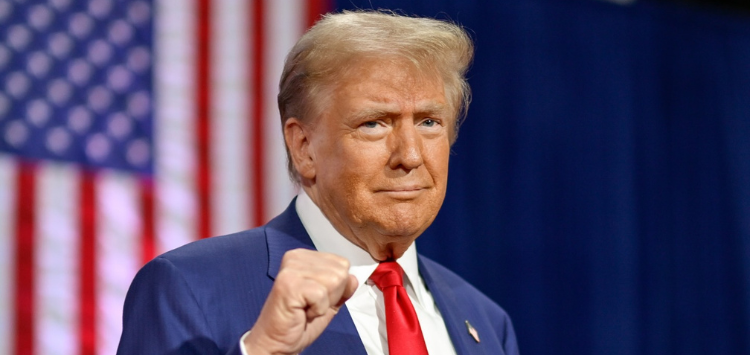
Trump posted on social media early Monday that the U.S. would “completely obliterate” Iran’s electricity-generating plants, oil wells, Kharg Island, and possibly desalination plants unless a deal comes quickly. He depicted it as payback for decades of Iranian actions against Americans.
During the afternoon briefing, NBC News correspondent Garrett Haake pressed Leavitt directly.
“Why is the president threatening what would amount to potentially a war crime with the U.S. military, and how do you square that with the administration repeatedly saying that the U.S. does not target civilians?” Haake asked.
Leavitt responded that Trump’s message to Iran is simple: make a deal or face overwhelming force.
“The president has made it quite clear to the Iranian regime at this moment in time… their best move is to make a deal,” she said.
“Or else the United States Armed Forces has capabilities beyond their wildest imagination and the president is not afraid to use them.”
Also Read: Tough Moment for Trump as Americans Fear for Their Lives after He Warned of Massive Iran Bombing
When Haake followed up about “potential war crimes,” Leavitt pushed back.
“That’s not what I said, Garrett,” she replied. She added that the administration will always act within the law but will proceed with “Operation Epic Fury” to achieve its goals.
She then moved on to another reporter when pressed on how striking desalination plants would advance those objectives.
Legal experts have warned that striking power plants and water facilities could violate the Geneva Conventions, which require distinguishing between military and civilian targets.
Retired Admiral James Stavridis told outlets that going after water supplies would be “extremely hard to justify under international law.”
The exchange came as the U.S.-led campaign against Iran, now more than a month old, has already claimed at least 13 American lives and driven up gas prices nationwide to an average of $3.99 a gallon.
The Strait of Hormuz, a narrow waterway that carries about one-fifth of global oil, is still a flashpoint after Iran restricted passage through it.
Trump has sent mixed signals in recent days, claiming major progress toward ending the conflict while issuing fresh warnings.
Also Read: Trump Urged to Hit Spain with Sanctions as Madrid’s Latest Move Sparks Outrage in GOP Camp
The White House says private talks with Iranian officials are continuing and going better than public statements suggest.
Leavitt insisted Monday that Iran appears more open to negotiations behind the scenes.
“Despite all the public posturing and false reporting, talks are continuing and going well,” she said. “What is said publicly is, of course, much different from what’s being said to us privately.”
The briefing shows growing friction as the administration pursues military objectives without formal congressional authorization.
Recent polls have shown declining public support for deeper involvement as the conflict drags on and energy costs climb.
Trump issues tough warning to Iran.
Operation Epic Fury has targeted Iranian missile sites, naval forces, and other military assets, with the Pentagon reporting thousands of strikes so far. But the new threat redirects attention to infrastructure that directly influences millions of Iranian civilians.
“If the Hormuz Strait is not immediately ‘Open for Business,’ we will conclude our lovely ‘stay’ in Iran by blowing up and completely obliterating all of their Electric Generating Plants, and Kharg Island (and possibly all desalination plants!), which we have purposefully not yet ‘touched.”
“This will be in retribution for our many soldiers and others that Iran has butchered and killed over the old Regime’s 47-year Reign of Terror,” Trump posed on Truth Social.
Leavitt ended the discussion by stressing Trump’s determination.
“The president is going to move forward unabated,” she said, “and he expects the Iranian regime to make a deal with the administration.”
The White House is clearly facing the challenge of selling a tough military position while trying to close out the conflict amid biting fuel prices at home and ongoing casualty reports.