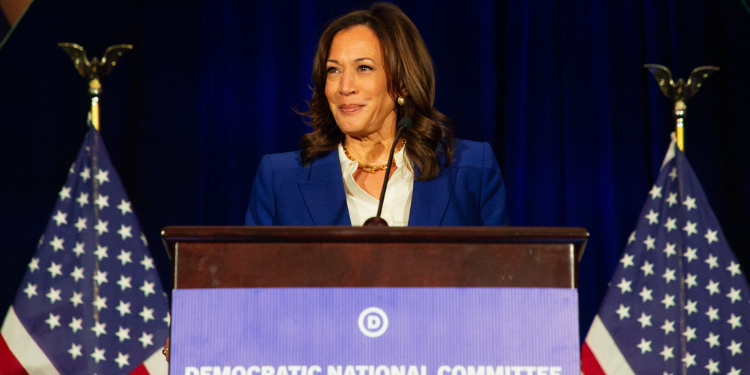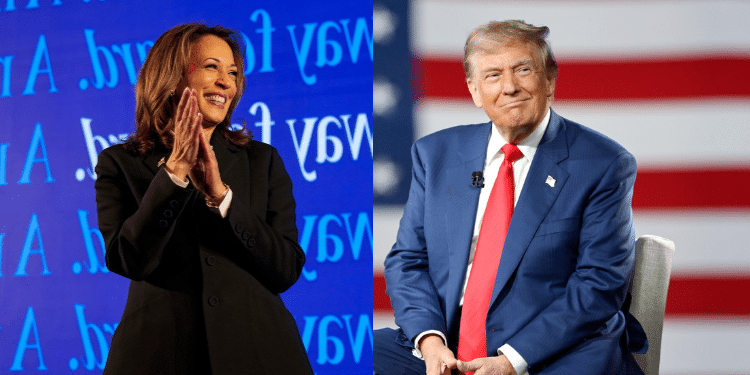
Former Vice President Kamala Harris on Friday, May 8, accused President Donald Trump of trying to rig the 2026 midterm elections after the Virginia Supreme Court struck down a voter-approved congressional map.
In a 4-3 ruling, the court struck down the results of an April referendum that would have adopted new district lines drawn by Democrats.
The justices said the Democratic-controlled legislature failed to follow proper procedures under the state constitution when it put the amendment on the ballot.
The existing maps, which give Democrats a narrow 6-5 edge in Virginia’s congressional delegation, will remain in place.
Trump celebrated the ruling and claimed victory for the Republican Party and for Americans at large.
“Huge win for the Republican Party, and America, in Virginia,” he wrote. “The Virginia Supreme Court has just struck down the Democrats’ horrible gerrymander. MAKE AMERICA GREAT AGAIN!”
Kamala Harris Claims Trump Wants to Rig Midterms
Hours later, Harris accused Trump and Republicans of undermining democracy. In an X post, she said the ruling aids “Donald Trump’s effort to rig the 2026 elections” and is part of the Republicans’ plot to undermine voting rights.
She argued the court ignored the clear will of more than three million Virginians who supported the new maps in the referendum.
“We are rightfully outraged, but we will not give up. We must continue our fight to restore the power of the people,” Harris concluded.
Harris and Trump’s reactions after the Virginia Supreme Court rulings show how redistricting has become one of the most bitter battlegrounds ahead of the midterm elections in November.
Republicans currently hold the House majority, and both sides are fighting aggressively over district lines in key states.
Virginia Republicans praised the court’s decision. House Speaker Mike Johnson called it a victory for fair representation and said the rejected maps amounted to an “egregious gerrymander.”
Also Read: Democrats File Motion to Delay Virginia Supreme Court Ruling, Vow Emergency Appeal
GOP state lawmakers described the ruling as a straightforward defense of constitutional rules rather than a partisan outcome.
Democrats saw it differently, with Gov. Abigail Spanberger expressing disappointment but telling supporters the fight was far from over. “We, the voters, will have the final say,” she said.
Virginia Attorney General Jay Jones said his office was reviewing all options, including a looming appeal to the U.S. Supreme Court.
The disputed maps would have given Democrats a strong advantage in Virginia, potentially shifting the state’s delegation to as much as 10-1 or 9-2 in their favor, according to earlier analyses.
Democrats pushed the referendum after Republicans gained seats elsewhere through their own map changes in states like Texas and Florida.
Article XII, Section 1 of the state constitution lays out specific steps the legislature must take to place constitutional amendments on the ballot.
The majority of the judges found that those steps were not properly completed, even though voters approved the measure.
Also Read: Kamala Harris Under Fire From Democrats as 2028 Presidential Ambitions Raise Party Concerns
The three dissenting justices said the court should have respected the will of the voters. Chief Justice S. Bernard Goodwyn dissented, saying the decision could erode public confidence in the referendum process.
The case is the latest in a string of mid-decade redistricting fights. After the 2020 census, most states redrew their maps.
Since then, both parties have sought to tweak the lines before 2030, often through courts or ballot measures. Virginia’s effort stood out because it went directly to voters.
Republicans say Democrats tried to bypass normal checks when they advanced the maps.
Democrats have been responding by saying that Republicans have done the same thing in states they control and that the court’s decision effectively nullifies the voice of Virginia voters.
With House control at stake in the 2026 midterms, Virginia’s 11 congressional districts have become a flashpoint in the national fight over gerrymandering and election rules.