A federal judge in Washington has struck down President Donald Trump’s executive order aimed at defunding National Public Radio (NPR) and the Public Broadcasting Service (PBS).
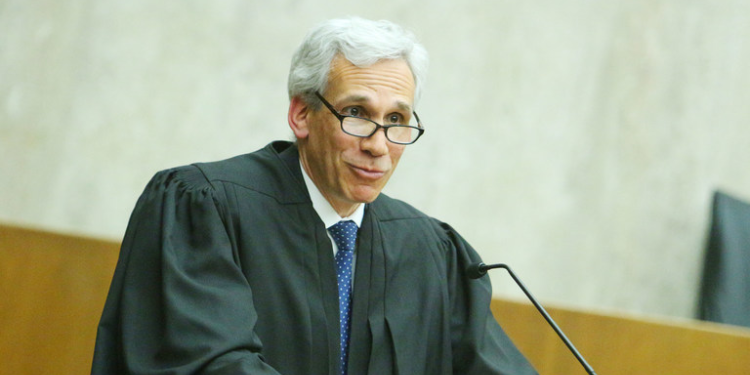
U.S. District Judge Randolph Moss ruled on Tuesday, March 31, that the directive violated the First Amendment and represented unconstitutional retaliation against disfavored viewpoints.
The judge, who was nominated to the bench by President Barack Obama, ruled permanently blocking the administration from enforcing the order.
Moss wrote that “it is difficult to conceive of clearer evidence that a government action is targeted at viewpoints that the President does not like and seeks to squelch.” He concluded that the directive amounted to viewpoint discrimination, which the Constitution does not permit.
The judge noted that Trump’s executive order simply directs that all federal agencies “cut off any and all funding” to NPR, which is based in Washington, and to PBS, which is based in Arlington, Virginia.
Plaintiffs’ attorney Theodore Boutrous hailed the decision as “a victory for the First Amendment and for freedom of the press.”
He added: “As the Court expressly recognized, the First Amendment draws a line, which the government may not cross, at efforts to use government power — including the power of the purse — to punish or suppress disfavored expression by others. The Executive Order crossed that line.”
PBS chief Paula Kerger said she was thrilled with the decision. The executive order, she said, is “textbook” unconstitutional viewpoint discrimination and retaliation.
Trump’s order to end funding for NPR and PBS
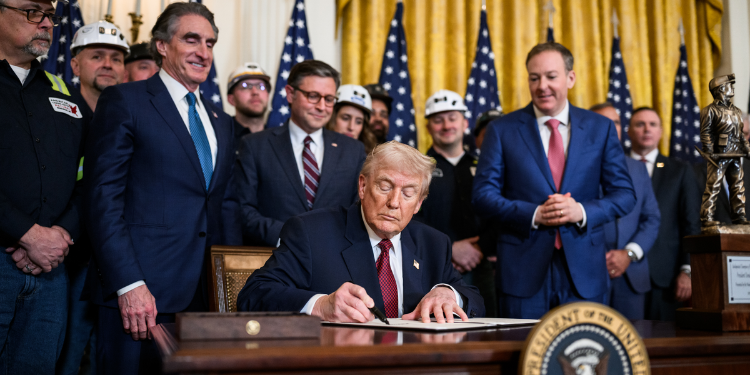
The executive order, signed on May 1, 2025, was titled “Ending Taxpayer Subsidization of Biased Media.” In the order, President Trump argued that NPR and PBS no longer deserved taxpayer support in an era of abundant private media options.
“Government funding of news media in this environment is not only outdated and unnecessary but corrosive to the appearance of journalistic independence,” the order stated.
Trump further declared:
“At the very least, Americans have the right to expect that if their tax dollars fund public broadcasting at all, they fund only fair, accurate, unbiased, and nonpartisan news coverage.”
The order directed the Corporation for Public Broadcasting (CPB) to cease both direct and indirect funding of NPR and PBS. It instructed the CPB Board to cancel existing grants and revise eligibility criteria to ensure that no federal funds flowed to the broadcasters.
Section 2 of the order instructed the CPB Board to “cease direct funding to NPR and PBS, consistent with my Administration’s policy to ensure that Federal funding does not support biased and partisan news coverage.”
It further directed the Board to cancel existing funding “to the maximum extent allowed by law” and to revise eligibility criteria for grants to prohibit direct or indirect funding of NPR and PBS.
Also Read: Judge Reverses Trump Cuts, Orders Return of Over 1,000 Workers
On its part, Section 3 extended the directive to all federal agencies, requiring them to “identify and terminate, to the maximum extent consistent with applicable law, any direct or indirect funding of NPR and PBS.”
President Trump further ordered that agencies review contracts and grants with the broadcasters and take corrective action in cases of noncompliance.
Additionally, the Secretary of Health and Human Services was tasked by the president with determining whether NPR and PBS complied with nondiscrimination statutes and had the authority to impose corrective measures.
Court battle and defense
Opponents, however, saw the directive as a direct attack on press freedom. NPR accused the administration of punishing it for the content of its journalism, while PBS warned that the order threatened the survival of public broadcasting.
NPR also claims Trump wants to punish it for the content of its journalism.
“Public media exists to serve the public interest — that of Americans — not that of any political agenda or elected official,” said Katherine Maher, NPR’s president and CEO. She called the decision a decisive affirmation of the rights of a free and independent press.
The CPB, which distributes federal funds to local stations, announced last August that it would begin winding down operations after Congress defunded it, intensifying concerns about the future of public media.
The executive order sought to accelerate that process by cutting off remaining support for NPR and PBS.
Also Read: Court Sides with 17 States Over Trump Order Forcing Colleges to Reveal Race Data
President Trump defended the directive at a press conference last year, saying he would “love to” defund NPR and PBS because he believed they were biased in favor of Democrats.
His administration framed the order as a matter of fiscal responsibility and fairness, arguing that taxpayer dollars should not subsidize partisan coverage.
Judge Moss, in his ruling, noted that the administration failed to provide any precedent supporting its position.
“The Federal Defendants fail to cite a single case in which a court has ever upheld a statute or executive action that bars a particular person or entity from participating in any federally funded activity based on that person or entity’s past speech,” he wrote.
The court’s ruling prevents the administration from enforcing the order, ensuring that NPR and PBS remain eligible for federal support distributed through the CPB and other agencies.