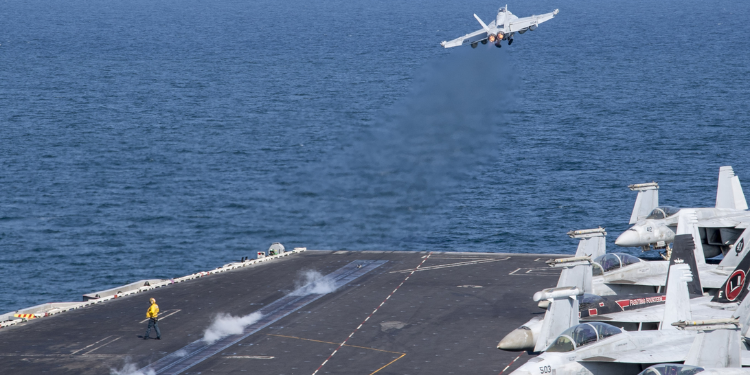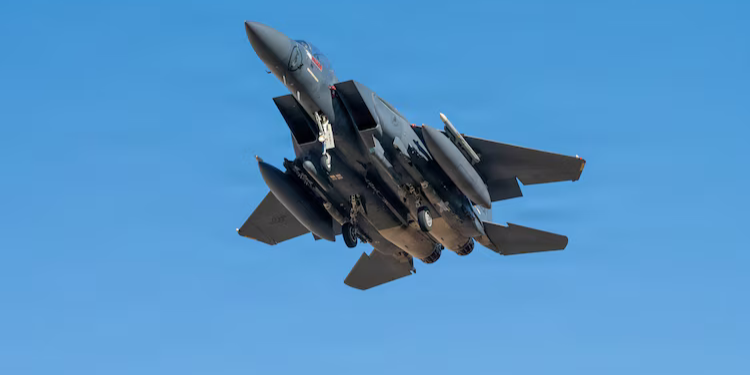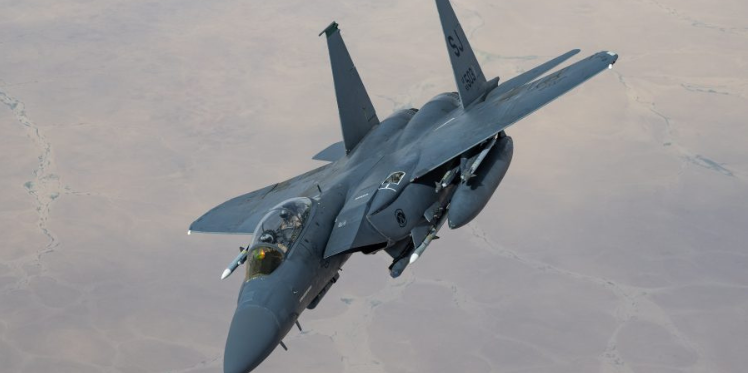
U.S. Central Command issued a sharp denial on Sunday, March 22, to persistent Iranian claims that its forces shot down an American F-15 fighter jet, calling the reports outright false and pointing to an unbroken record of air superiority in the escalating conflict.
In a post shared on X, CENTCOM stated plainly: “Rumors claim the Iranian regime recently shot down a U.S. F-15 over Iran. FALSE. U.S. forces have flown more than 8,000 combat flights during Operation Epic Fury. No U.S. fighter aircraft have been shot down by Iran. TRUE.”
The statement came amid a new wave of Iranian media assertions, including from Islamic Revolutionary Guard Corps channels, alleging the downing of an F-15E Strike Eagle in recent days.
Tehran has repeatedly aired such claims since the U.S.-led air campaign began in late February, often with grainy video or photographs that military analysts have deemed inconclusive or old news.
CENTCOM’s response has painted a clear picture of the scale of Operation Epic Fury, the joint U.S.-Israeli effort targeting Iranian ballistic missile sites, naval assets, nuclear-related facilities, and IRGC infrastructure and even leaders.
Also Read: Iran Confirms ‘Shooting Down’ Another U.S. Fighter Jet
Command clearly emphasized that American and allied aircraft have conducted thousands of sorties without a single combat loss to enemy action.
Three F-15 Fighter Jets Lost
The only confirmed F-15 losses happened on March 1 over Kuwait in what CENTCOM called a “tragic friendly fire incident.“
Kuwaiti air defenses mistakenly shot down three U.S. F-15E Strike Eagles amid the chaos of Iranian missile and drone attacks.
All six pilots ejected safely and were recovered in stable condition, and the incident was later acknowledged by the Kuwaitis.
No additional U.S. aircraft have been lost since, according to repeated CENTCOM updates.
Earlier this month, after IRGC statements claimed an F-15 was downed near Iran’s southern or central regions, CENTCOM labeled those accounts “baseless and NOT TRUE.”
Similar rejections followed other reported shoot-downs, including one allegedly south of Tehran. In each case, the command has stressed that Iranian announcements aim to project strength domestically while undermining confidence in the U.S.-led operation.
Military officials speaking on background said the fog of war, combined with Tehran’s well-documented use of propaganda, makes such claims predictable.
Just like the Military officials, Trump has also been saying that Iran has lost significant missile stocks, naval vessels, and air defense coverage, adding that claiming to knock down advanced American jets is one way to try to change the narrative.
Operation Epic Fury has focused on degrading Tehran’s ability to strike U.S. forces, allies, or international shipping through the Strait of Hormuz.
Strikes have hit hardened coastal missile sites, oil export terminals, reducing Iran’s capacity by an estimated 90 percent in some assessments, and production facilities tied to its ballistic missile program.
So far, no ground troops have been committed, with the campaign relying on exact airstrikes and naval interdictions. However, Trump and even Israeli PM Benjamin Netanyahu have teased the possibility of deploying ground troops.
Also Read: Panic as US F-35 Lightning II Fighter Jet Reportedly Shot by Iranian Forces
Iranian officials have countered by reporting continued missile and drone launches against U.S. bases and Israeli targets, including Saturday’s attack in Israel that left close to 100 people injured.
The Strait of Hormuz has seen disruptions, pushing global oil prices higher, but U.S. Navy escorts have kept key lanes open for commercial traffic.
At this moment, no side is showing any immediate signs of de-escalation, even though Trump has been claiming that Iran has been calling for talks so that the war ends. Trump has maintained that the terms Iran wants the war to end are far below those of the U.S. war objectives.
Trump’s war goals include ensuring Iran does not obtain nukes, and does not attack the U.S.A and its allies, among others. Pursuing regime change is not one of the objectives, but it is not a bad one for the U.S. and Israel if it comes to pass.