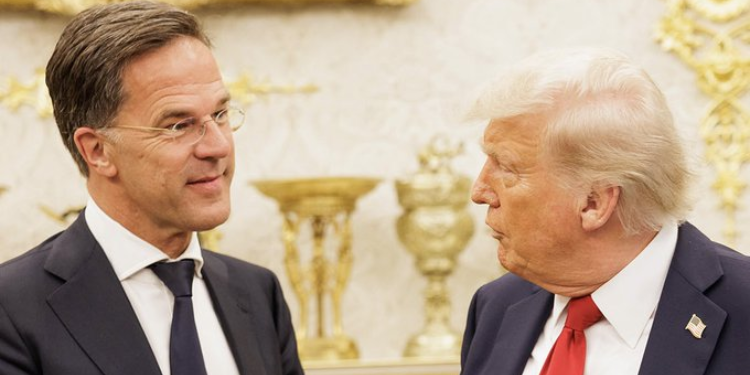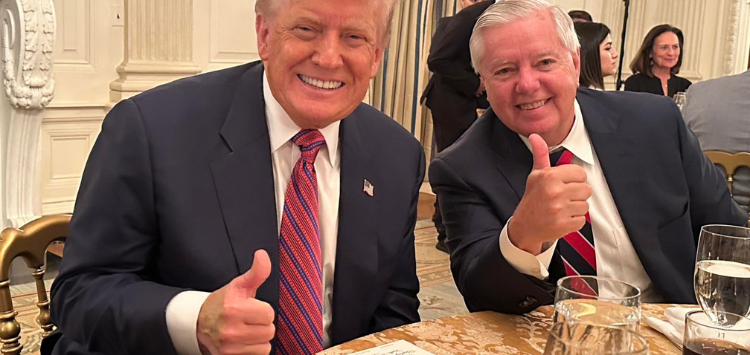
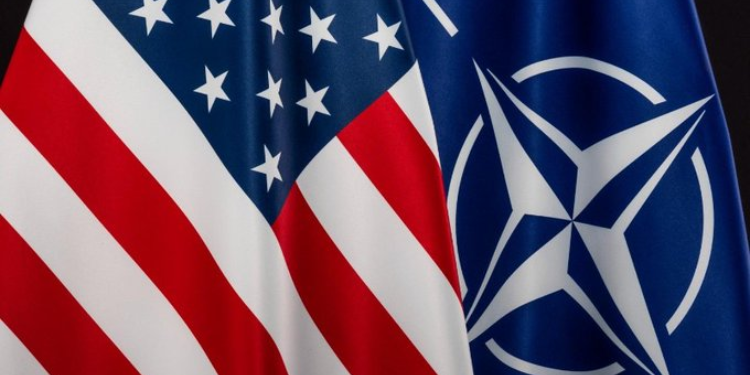
United States President Donald Trump is scheduled to meet NATO Secretary General Mark Rutte on Wednesday, April 8, at the White House.
White House Press Secretary Karoline Leavitt, while confirming the meeting, noted that the discussions are also expected to focus on the possibility of a U.S. withdrawal from the transatlantic defense alliance.
The meeting comes amid heightened tensions between Washington and European allies over military cooperation in the Middle East.
Leavitt, speaking at a press conference earlier today, acknowledged that the issue of NATO membership remains under active consideration.
“It’s something the President has discussed, and I think it’s something the President will be discussing in a couple of hours with Secretary General Rutte,” she said.
She added that further remarks may come directly from Trump following the meeting later this afternoon.
Secretary General Rutte began a three-day visit to Washington on Wednesday, with his agenda dominated by talks on NATO’s future and allied responses to ongoing conflicts. He is expected to meet Trump alongside Secretary of State Marco Rubio and Defense Secretary Pete Hegseth.
Also Read: Marco Rubio on the Spot as His Post Warning Against Solo NATO Withdrawal Resurfaces
Rutte will also hold meetings with members of Congress and deliver a speech at the Ronald Reagan Presidential Foundation and Institute on Thursday.
The visit follows a temporary easing of tensions with Tehran after both parties agreed to a two-week ceasefire and the reopening of the Strait of Hormuz.
While the terms remain unclear, the development has shifted focus back to NATO’s role in broader security commitments.
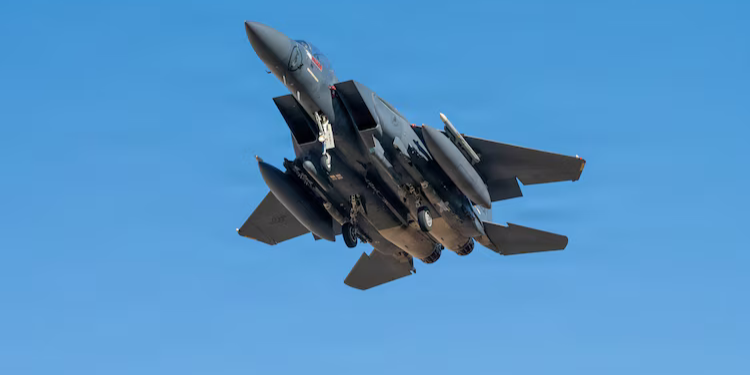
U.S. frustration has grown over European allies’ refusal to join military operations against Iran or to allow U.S. aircraft involved in the conflict to use their airspace.
Trump’s criticism of NATO allies
President Trump has repeatedly criticized NATO allies for what he describes as insufficient support during active conflicts.
He has argued that the United States bears a disproportionate burden in securing Europe and has questioned whether continued membership serves U.S. interests.
In remarks earlier this month, Trump labeled NATO a “paper tiger” and suggested that adversaries such as Russia recognize its weakness without U.S. leadership.
At an Easter lunch last week, Trump singled out France and the United Kingdom, calling them “very bad allies” and expressing doubt about their reliability in a crisis.
His frustrations were echoed by Rubio and Hegseth, who both suggested the alliance may need to be reassessed after the war.
Founded in 1949, NATO was established by the United States, Canada, and European nations to deter Soviet expansion and foster political integration in Europe.
Today, the alliance includes 32 members and remains a cornerstone of Western defense. The U.S. has been a core member since its inception, though President Trump has long questioned its relevance and criticized allies for failing to meet defense spending commitments.
Also Read: NATO Chief Moves to Salvage Alliance After Trump’s Exit Threat
At the 2025 Hague summit, NATO members pledged to invest 5% of GDP annually on defense by 2035, a move Trump hailed as a “big win.”
Allied responses
European leaders have responded cautiously to Trump’s latest statements. British Prime Minister Keir Starmer defended his decision not to join the Iran conflict, saying, “This is not our war, and we’re not going to get dragged into it.”
He reaffirmed the U.K.’s commitment to NATO, calling it “the single most effective military alliance the world has ever seen.”
Poland’s Defense Minister Władysław Kosiniak‑Kamysz urged calm, writing on X: “There is no NATO without the USA, but there is no strong United States without allies either. The alliance works both ways.”
Finland’s President Alexander Stubb described his March conversation with Trump as “constructive,” emphasizing the importance of dialogue on NATO, Ukraine, and Iran.
Earlier, Secretary Rubio, in a Fox News interview, said the U.S. may need to “re‑examine” its relationship with the alliance after the war, questioning whether it still serves its purpose.
Hegseth added that NATO’s credibility is undermined when allies hesitate to assist.