Virginia voters narrowly approved a constitutional amendment on April 21 that allows the state General Assembly to redraw congressional districts for the 2026 elections.
The measure passed with 51.5% voting yes and 48.5% voting no, according to the Associated Press, based on more than 97% of votes counted. The yes side received about 1,574,519 votes to 1,485,670 for no, a margin of roughly 88,800 votes.
The ballot question asked: “Should the Constitution of Virginia be amended to allow the General Assembly to temporarily adopt new congressional districts to restore fairness in the upcoming elections, while ensuring Virginia’s standard redistricting process resumes for all future redistricting after the 2030 census?”
Democrats Push
A yes vote gives the Democratic-controlled legislature power to implement a new map this year before returning redistricting authority to the Virginia Redistricting Commission after the 2030 census.
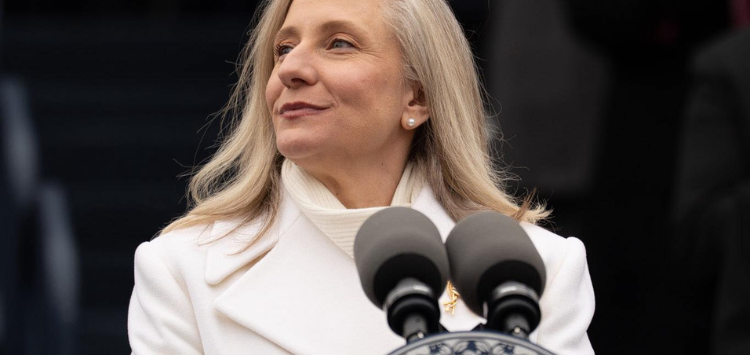
Democrats Push for New MapDemocrats in Virginia have controlled the governorship and both chambers of the General Assembly. Gov. Abigail Spanberger, a Democrat, signed legislation setting up the referendum.
The proposed new map would shift Virginia’s current 6-5 Democratic advantage in its 11 congressional seats to as much as 10-1 in favor of Democrats, according to maps released by Democratic lawmakers.
Also Read: Win for Democrats After Virginia Vote Delivers Exactly What the GOP Feared
Early in-person and Election Day votes leaned no, but mail-in and later-reported votes from Democratic strongholds in Northern Virginia pushed the measure over the line. Mail-in ballots favored yes by about 72%.
Virginia Governor’s Statement
Spanberger issued a statement after the results: “Virginia voters have spoken, and tonight they pushed back against a President who claims he is ‘entitled’ to more Republican seats in Congress.”
She added that Virginians “responded the right way: at the ballot box.”U.S. House Minority Leader Hakeem Jeffries reacted by saying House Democrats had “crushed Donald Trump’s national gerrymandering scheme” and added, “Maximum warfare, everywhere, all the time.
“Republican Opposition and Legal ChallengesFormer Republican Gov. Glenn Youngkin opposed the measure. In a statement, he said: “Thank you to all the voters who turned out to vote against this egregious power grab.
The race was much closer than the left expected because Virginians know a 10-1 map is not Virginia.” He called the process “the result of a process that’s unconstitutional and illegal” and urged the Virginia Supreme Court to block it.
Multiple lawsuits challenging the amendment’s legality remain pending before the Virginia Supreme Court.
Critics argue the process used to place the measure on the ballot violated state rules, including questions about legislative session extensions and ballot language. Oral arguments in the cases are scheduled for Monday.
The current congressional map was drawn by a bipartisan redistricting commission following changes approved by voters in 2020. That system took map-drawing power away from the legislature to reduce partisan control.
Also Read: Governor Spanberger Hails Virginia Redistricting Win as Pushback Against Trump
Why This Matters
The vote gives Democrats in Virginia the immediate ability to draw new district lines that could add several Democratic seats ahead of the 2026 midterm elections.
This occurs as both parties pursue map changes in various states to gain an edge in the U.S. House.
Virginia’s current 6-5 split makes the state competitive. A shift to 10-1 would reduce Republican representation in a state that has alternated control in recent cycles.
The outcome depends in part on the Virginia Supreme Court’s upcoming rulings on the pending lawsuits. If the court upholds the amendment, the new map would apply for elections through 2030. If it strikes down the process, the existing map would remain in place.
The narrow margin, less than 3 percentage points, shows division among Virginia voters on the issue. Turnout reached levels higher than typical for a special election, driven by heavy campaigning from both sides.