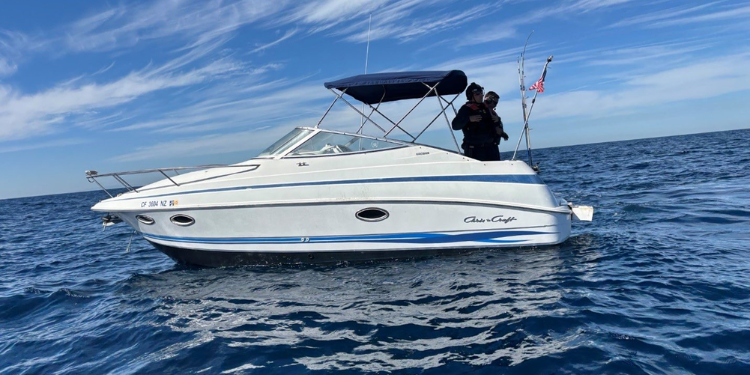
Four passengers aboard a United States-registered speedboat have been killed in the Caribbean after a confrontation with authorities from Cuba.
In a statement issued on Wednesday, February 25, Cuba’s Interior Ministry said the incident occurred after a fast-moving vessel entered Cuban territorial waters without authorization.
According to the Cuban government, the vessel was registered in Florida and had approached the El Pino channel in Villa Clara province before the confrontation.
“Early in the morning of this February 25, 2026, a fast speedboat in violation was detected within Cuban territorial waters, bearing a Florida, United States registration, which approached within 1 nautical mile to the northeast of the El Pino channel, in Cayo Falcones, Corralillo municipality, Villa Clara province,” part of the statement reads.
Cuba strikes US speedboat
The ministry noted that the confrontation began when Cuban Border Guard units moved in to identify the vessel, after which shots were allegedly fired from the speedboat toward Cuban personnel, leaving the commander of the Cuban vessel injured.
Authorities said four individuals aboard the boat were killed during the exchange, while six others sustained injuries and were taken for medical treatment.
“As a surface unit of the Border Guard Troops, with 5 combatants, approached for identification purposes, fire was opened from the violating speedboat against the Cuban personnel, resulting in the commander of the Cuban vessel being injured.
As a consequence of the confrontation, as of the close of this information, on the foreign side, four aggressors were killed and six injured, who were evacuated and received medical assistance.”
Cuba has reaffirmed its commitment to protecting its territorial waters, with the ministry maintaining that “national defense is a fundamental pillar for the Cuban State in support of safeguarding its sovereignty and stability in the region.”
Investigations into the incident are ongoing as Cuba seeks to establish the full circumstances surrounding the confrontation.
U.S. Congressman Carlos Gimenez of Florida while reacting to the attack condemned the Cuban government, accusing Havana of carrying out a deadly attack against American citizens.
“The dictatorship in #Cuba has just attacked a boat from Florida & murdered those on board. This regime must be relegated to the dustbin of history!” he said.
The attack follows a U.S. military operation in the Caribbean Sea earlier this month that left three suspected drug traffickers dead during an anti-narcotics mission.
The United States Southern Command (SOUTHCOM) Commander Francis L. Donovan said U.S. forces targeted a vessel believed to be operating along established drug-trafficking routes.
“On Feb. 13, at the direction of #SOUTHCOM commander Gen. Francis L. Donovan, Joint Task Force Southern Spear conducted a lethal kinetic strike on a vessel operated by Designated Terrorist Organizations. Intelligence confirmed the vessel was transiting along known narco-trafficking routes in the Caribbean and was engaged in narco-trafficking operations,” read part of the statement.
Also Read: US Forces Strike Vessel in Caribbean, Kill Three in Anti-Drug Operation
Francis confirmed the death of three suspected narco-terrorists and said no American personnel were injured during the operation.
Rising tensions in the Caribbean
The two incidents come as Washington increases pressure on Cuba after major geopolitical developments in the region, including the removal of Venezuela’s president, Nicolas Maduro, and a shift in U.S. foreign policy toward the Western Hemisphere.
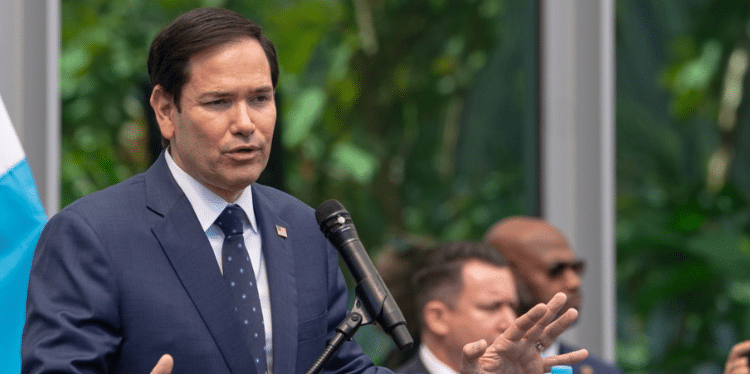
U.S. Secretary of State Marco Rubio is expected to address Caribbean leaders’ concerns about Cuba during a Caribbean Community (CARICOM) summit.
Rubio, a Cuban American long critical of Havana’s leadership, is also seeking continued regional cooperation on Venezuela and Haiti during the meeting in Saint Kitts and Nevis.
After attending President Donald Trump’s State of the Union address in Washington on Tuesday night, Rubio traveled overnight to the summit. He became the highest-ranking U.S. official to visit the small Caribbean nation.
Venezuela halted key oil shipments to Cuba following a January 3 operation in which U.S. forces captured Venezuelan leader Nicolas Maduro. This deepened the island’s economic crisis, marked by fuel shortages and frequent power outages.
Speaking at the CARICOM summit, Jamaican Prime Minister Andrew Holness warned that worsening conditions in Cuba could destabilize the region and trigger increased migration.
“Humanitarian suffering serves no one,” Holness said. “A prolonged crisis in Cuba will not remain confined to Cuba.”
Also Read: Trump Vows U.S Air Strikes on Mexican Cartels as Drug Deaths Increase
Holness said Jamaica supports democratic governance and free-market principles but called for humanitarian assistance and dialogue between Havana and Washington.
“Jamaica supports constructive dialogue between Cuba and the United States aimed at de-escalation, reform, and stability. We believe there is space, perhaps more space now than in years past, for pragmatic engagement.”
Saint Kitts and Nevis Prime Minister Terrance Drew also warned that instability in Cuba could have broader regional consequences.
“A destabilized Cuba will destabilize all of us,” the PM said.
Drew, who studied medicine in Cuba, said worsening living conditions on the island include food shortages, power outages, and deteriorating public services.
The United States has maintained sanctions on Cuba for decades after Fidel Castro’s 1959 revolution, and tensions remain high despite intermittent diplomatic engagement.
Although Washington has recently held quiet discussions with Havana, the Trump administration has warned that countries supplying oil to Cuba could face sanctions, even as some proposed restrictions — including limits on remittances — have not yet been implemented.
The United States however on Wednesday said it will ease restrictions on Venezuelan oil exports to Cuba’s private sector for humanitarian reasons, as the island reels from an energy crisis.
The Treasury Department said in a notice it would allow “transactions that support the Cuban people, including the Cuban private sector,” such as oil exports “for commercial and humanitarian use.”
Follow our WhatsApp Channel and X Account for real-time news updates.