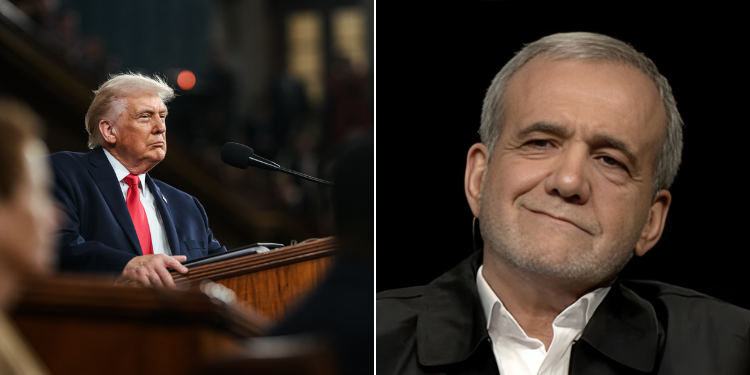
The U.S. and Iran agreed to halt strikes against each other, a senior U.S. official said, as the two sides prepare to meet Tuesday in Doha to resolve disputes over the Strait of Hormuz.
The agreement comes amid fresh exchanges of fire that have tested a June 17 ceasefire memorandum signed by President Trump and Iranian President Masoud Pezeshkian.
As reported by the Axios, the pause in attacks aims to create space for direct talks hosted by Qatar. Issues on the table include reopening the strait to unrestricted commercial shipping, enforcement mechanisms, and steps to stabilize the broader truce.
Ceasefire Under Immediate Pressure
The 11-day-old ceasefire has faced repeated violations. U.S. Central Command reported strikes on Iranian missile storage sites and coastal radar positions near the strait following Iranian drone attacks on commercial tankers. Iran called the U.S. operations a breach and threatened to suspend diplomacy.
President Trump stated on Truth Social that Iran violated the agreement first and warned of consequences if attacks continued.
Iranian Revolutionary Guard Corps officials said their actions responded to U.S. aggression and insisted any further strikes would end negotiations.
Also Read: Trump Warns Iran “Will No Longer Exist” After Fresh U.S. Airstrikes Over Ceasefire Violations
Shipping data shows reduced traffic through the strait since the conflict escalated, raising insurance rates and forcing some tankers to reroute. The waterway handles roughly 20 percent of global oil shipments.
Qatar Meeting Focuses on Core Disputes
Qatar has arranged the Tuesday session in its capital. Mediators from Pakistan are also expected. Discussions will target Iranian restrictions on vessels and U.S. demands for full freedom of navigation without tolls or inspections tied to the conflict.
Previous rounds in Switzerland produced limited technical agreements but left political questions unresolved.
Both delegations have signaled willingness to separate immediate de-escalation from longer-term nuclear and sanctions issues within the 60-day framework set by the June memorandum.
U.S. officials described the Doha meeting as a test of whether the ceasefire can hold long enough for substantive progress. Iranian state media said Tehran would insist on sanctions relief commitments before making concessions on the strait.
Also Read: US Strikes Iran After Trump Says Tehran Violated Ceasefire With Strait of Hormuz Ship Attack
Strikes Follow Pattern of Retaliation
The latest violence fits a cycle that began earlier in 2026. After initial U.S. and Israeli operations against Iranian targets, Iran launched missiles and drones at regional sites and restricted strait access. An April ceasefire provided a brief pause, but tensions reignited over shipping and military positioning.
In May and June, negotiators in multiple locations worked toward the current memorandum. The deal included commitments to end hostilities in Lebanon, reduce certain military activities, and begin reconstruction planning. Implementation has lagged.
Commercial shipping incidents in recent days, including a drone hit on a tanker, prompted the latest U.S. response. Centcom said the strikes were limited and defensive. Iran reported damage to its facilities and civilian risks.
Failure in Doha could trigger wider military action. Trump has said the U.S. is prepared to “complete the job” if Iran does not comply. Iranian leaders have pledged a “crushing response” to new attacks.