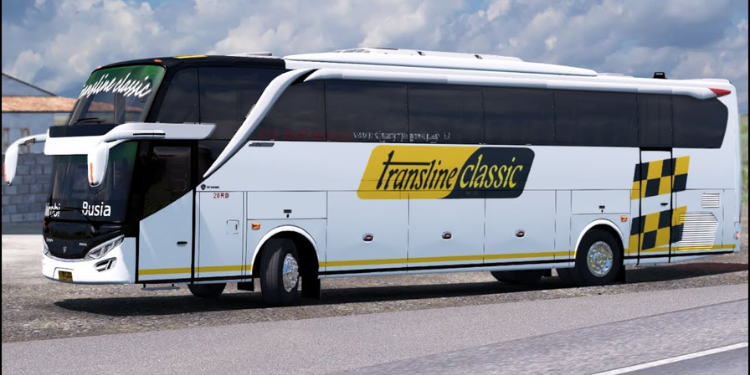
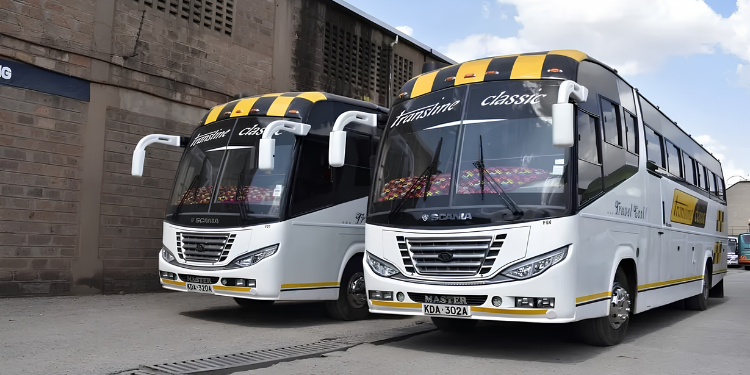
Transline Classic is a Kenyan long‑distance bus company founded in 2005 in Nairobi. It operates passenger and parcel transport services, linking Nairobi with western Kenya and Nyanza.
Transline Classic Ownership and Founders
Transline Classic was founded by Evans Nyagaka Anyona, who is the principal founder and largest known shareholder.
Founded in 2005 in Nairobi, the company was started by Evans Nyagaka Anyona, a businessman from Kisii who rose from small-scale trade into the transport sector.
His entry into the industry began with a modified pickup operating as a matatu, before gradually expanding into a fleet through reinvestment and partnerships.
In its early phase, Transline relied on 14-seater matatus operating along the Nairobi–Kisii route, which later became the backbone of its growth.
Also Read: From Matatu Touts to Millionaires: The Rise of Umoinner Sacco
As passenger demand grew, Anyona brought in partners, including James Bichange and Haron Kamau, allowing the company to expand through a shared investment model in which vehicles and capital were pooled.
Shift From Matatus To Long-Distance Buses
The company’s turning point came with the introduction of government regulations requiring long-distance operators to phase out smaller public service vehicles, forcing Transline to invest in larger buses.
This shift allowed the company to increase capacity and compete on major inter-county routes.
Transline expanded rapidly along the western corridor, adding routes linking Nairobi to Kisii, Kisumu, Eldoret, Kakamega, Bungoma, and Busia, as well as Nyanza towns such as Migori and Homa Bay.
The Nairobi–Kisii route remained its strongest base, providing consistent passenger demand and anchoring further expansion.
By around 2012, the company had built a fleet of about 24 vehicles, and it has since grown to operate more than 50 buses serving thousands of passengers across its network.
Its model focuses on high-frequency departures rather than luxury, with buses running regularly on busy routes such as Nairobi-Kisumu.
Early partnerships later gave rise to new ventures.
Haron Kamau went on to establish Overseas buses, while Anyona later launched ENA Coach, another major operator in the long-distance market.
Also Read: Double M Buses: Owner, History, Rise, and Decline Explained
Despite these developments, Transline continues to operate under a shared investment model, with multiple stakeholders contributing vehicles and capital.
Fares and Steady Demand
Transline’s passenger base is driven by demand-sensitive pricing rather than fixed rates.
Fares on routes such as Nairobi to Kisii do not follow a set figure, with passengers typically paying between Ksh1,200 and Ksh1,800 under normal conditions, and fares rise further during weekends, holidays, and peak travel periods.
This variation reflects changes in fuel costs, passenger numbers, and travel seasons, which directly influence daily pricing at booking offices and stages.
The company’s buses offer standard passenger features including air conditioning, reclining seats, charging ports, and onboard entertainment, with Wi-Fi available on newer units.
While not positioned as luxury coaches, they meet the needs of budget-conscious travelers moving between Nairobi and upcountry destinations.
Operations remain largely traditional, with bookings made at physical offices such as Afya Center in Nairobi or by phone, and payments commonly made via M-Pesa.
In addition to passenger services, the company also transports parcels along its routes, providing an extra source of revenue.
Follow our WhatsApp Channel and X Account for real-time news updates.