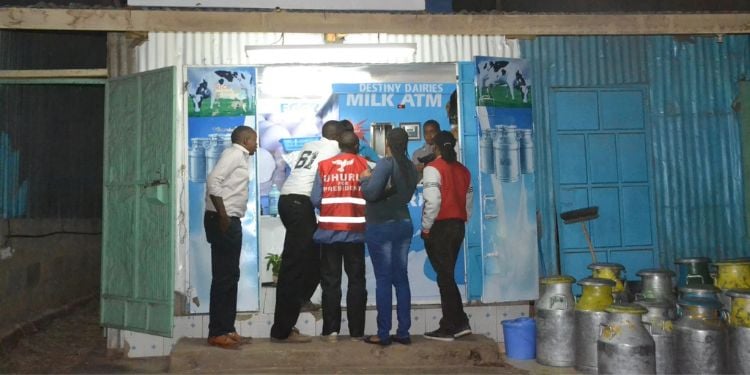
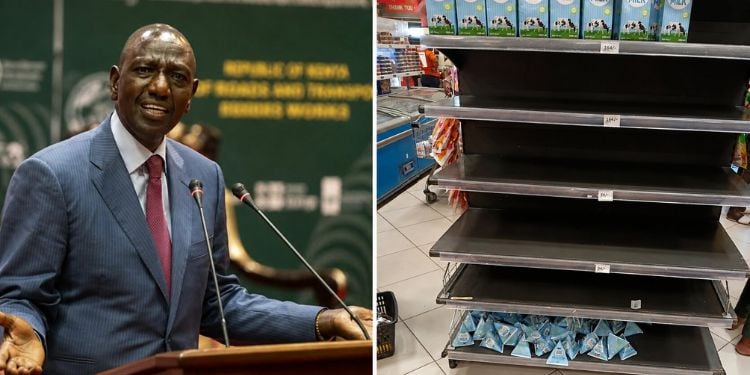
Kenya is turning to neighboring Uganda for milk supplies to address a shortfall that has persisted for weeks.
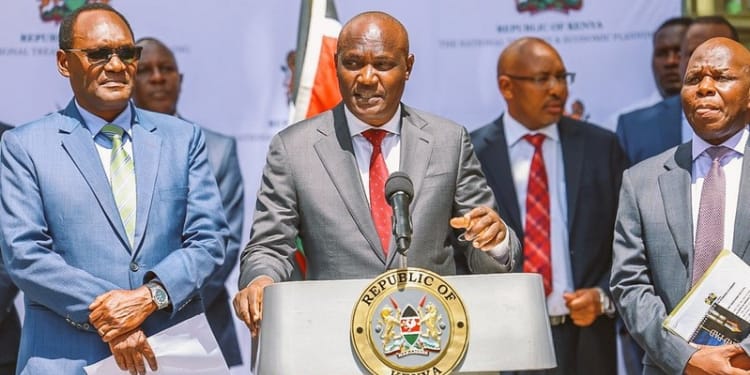
Speaking at a family day hosted by the Catholic Diocese of Nakuru, Trade Cabinet Secretary Lee Kinyanjui said Kenya’s dairy sector cannot currently meet local demand.
“Locally, we are not able to meet our demand, so we are actually importing from our neighboring countries like Uganda, and we believe that this is not where the country should be,” he said.
Kinyanjui called for increased domestic milk production, saying the government will support farmers to boost output and help Kenya achieve self-sufficiency.
He added that the government will also assess milk consumption patterns as part of efforts to address the supply gap.
“So we ask the farmers, we will support you to ensure that you can produce for the nation for self-sufficiency,” CS Kinyanjui said.
Kenya Dairy Board Confirms Milk Crisis
The Kenya Dairy Board (KDB) confirmed temporary milk supply constraints in some parts of the country, with reduced availability of some brands and pack sizes reported in several outlets.
Also Read: Earnings of Tea and Coffee Farmers in Mt Kenya Rise as Reforms Take Effect
In a statement on Tuesday, September 1, KDB reassured consumers that milk remains available in the market despite the supply challenges.
“Kenya Dairy Board wishes to reassure the public, consumers and dairy industry stakeholders that milk continues to be available in the market, despite temporary supply constraints being experienced in some parts of the country,” stated board Managing Director Dr William Maritim.
The Board said formal milk deliveries to processors fell by 3.7 percent, from 84.4 million liters in June 2026 to 81.3 million liters in July 2026, and KDB is currently compiling formal milk intake data for August.
“Formal milk deliveries to processors declined by 3.7 percent from 84.4 million liters in June 2026 to 81.3 million liters in July 2026. The Board is currently compiling formal milk intake data for August 2026. Preliminary indications suggest a further decline in milk deliveries, reflecting the prevailing seasonal production conditions,” he added.
Ministry Moves to Address Milk Supply Shortage
The Ministry of Agriculture and Livestock Development has outlined measures to address reduced milk supplies in shops, assuring consumers that the disruption is temporary and prices will not rise.
Also Read: Kenyatta Family and Other Billionaires Behind Kenya’s Biggest Milk Brands
Livestock Development Principal Secretary Jonathan Mueke said the decline in milk supply has largely been linked to limited rainfall and pressure on fodder, which have affected production in some parts of the country.
The ministry plans to work with animal feed manufacturers to identify available stocks and distribute them to dairy farmers through cooperatives and processors.
Mueke said the government understands the supply gap and will monitor milk production daily while working on short-, medium-, and long-term measures to restore normal supply.
Follow our WhatsApp Channel and X Account for real-time news updates.