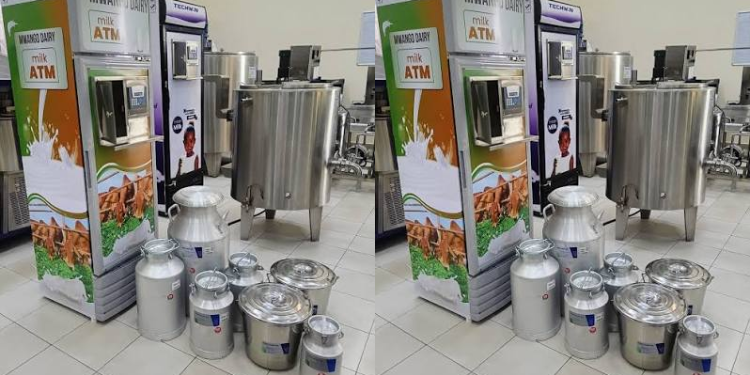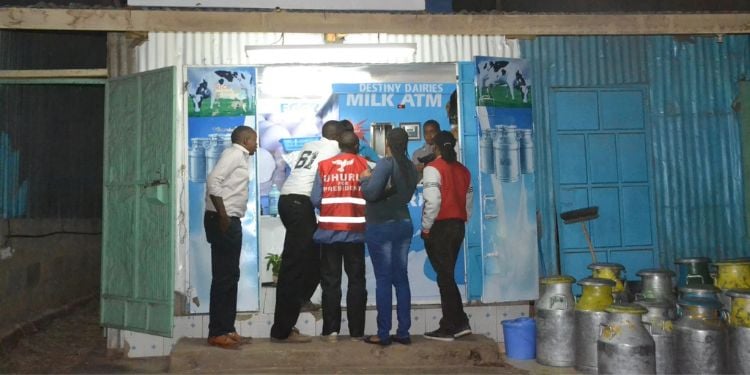
The ongoing milk supply constraints in Kenya are putting fresh milk businesses under the spotlight, with densely populated residential areas in Nairobi and its outskirts emerging as potential markets for entrepreneurs looking to operate milk ATMs.
According to the Kenya Dairy Board (KDB), the formal milk deliveries to processors declined by 3.7 percent between June and July 2026, reducing from 84.4 million liters to 81.3 million liters.
Some retailers have reported low stocks, fewer available brands, and delayed replenishment in some parts of Nairobi and surrounding areas.
Despite the opportunities created by supply constraints, the Kenya Dairy Board has warned against panic buying and stressed that the country is not facing a complete lack of milk.
On September 3, KDB Chairman Genesio Mugo described the shortage as minimal and urged consumers to buy only what they normally require.
“We want to send a message that the shortage is not big at all; it is minimal, and therefore there is no cause for alarm and no need for panic buying. Let us buy the normal amount that you require, because there will be milk tomorrow,” KDB Chairman Genesio Mugo stated.
The Board has also linked the current disruption largely to seasonal conditions and expects supplies to improve with the October-December rains.
Following the milk shortage, entrepreneurs can venture into the milk business in estates within Nairobi and surrounding areas, including Huruma, Roysambu, and the Thika Road corridor, among other areas.
Kasarani and Thika Road Corridor
Kasarani is one of the Nairobi residential areas that could attract fresh-milk businesses because of its large population and extensive apartment developments.
Research on Nairobi’s informal milk market has previously examined Kasarani alongside Dagoretti North and Dagoretti South, reflecting the presence of consumers and vendors in the area.
The wider Thika Road corridor, including Kahawa Sukari, Kahawa Wendani and Githurai, also has extensive residential development and high daily movement of residents.
Also Read: Milk ATM Licenses in Kenya: KDB, Public Health and County Permits You Need Before You Sell
Embakasi and Nairobi Eastlands
Embakasi is another area likely to attract attention from entrepreneurs because of its extensive residential settlements.
Eastlands estates such as Umoja I and II, Pipeline, Kariobangi, Komarock, and Mukuru kwa Njenga also have large residential populations and numerous neighborhood retail outlets.
Additionally, Embakasi, including Utawala, Jetty, Airport South and Kwa Njenga, and the wider Embakasi East, West, North, Central and South constituencies offer a broad residential market where milk ATMs could serve households looking for fresh milk.
Kawangware Already Seeing Supply Pressure
Kawangware traders have reported that distributors were delivering smaller quantities of milk, even as demand remained present.
Some retailers across Nairobi have also reported price increases and shortages of particular brands and pack sizes.
Following the packaged milk shortage, consumers are considering alternative sources, including fresh milk sold through dispensers in the area, opening opportunities for Milk ATM setups in the area.
Ruiru
The opportunity also extends beyond Nairobi County. Ruiru has become an important residential center within the Nairobi metropolitan area as housing development has expanded along the Nairobi-Thika corridor.
Ruiru town and the residential areas around Kihunguro and the Ruiru-Juja corridor could be considered by businesses seeking densely populated markets outside Nairobi.
Ruiru also sits within a wider peri-urban dairy supply network serving Nairobi, making supply logistics an important factor when assessing potential outlets.
Ruaka, Kiambu Road and Thindigua
Ruaka is another Nairobi metropolitan market that has undergone rapid residential and commercial development, with apartment buildings becoming increasingly common.
This creates a potential market for businesses that provide frequently purchased household products within walking distance.
Additionally, the ongoing residential development along the Kiambu Road-Thindigua corridor offers potential locations for milk businesses.
Also Read: Kenyatta Family and Other Billionaires Behind Kenya’s Biggest Milk Brands
Syokimau, Mavoko, and Athi River
The southern Nairobi metropolitan corridor also offers potential locations, with Syokimau offering a mix of apartments and gated communities.
Mavoko and Athi River, on the other hand, combine residential areas with industrial and commercial activity.
Katani is another area to consider for a milk ATM amid the shortage.
What Entrepreneurs Need Before Opening a Milk Business
The Kenya Dairy Board requires dairy businesses to obtain a regulatory permit, including a dairy produce dispenser regulatory permit for milk dispensing businesses.
The Board also inspects premises and requires them to be clean, adequately equipped, and well maintained.
An entrepreneur therefore needs to establish not only whether an estate has enough customers, but also whether the proposed premises can meet regulatory requirements and whether a reliable supplier can deliver regularly.
Follow our WhatsApp Channel and X Account for real-time news updates.