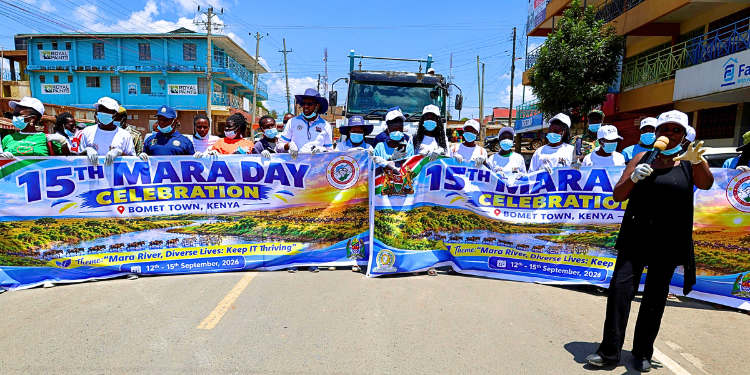
Kenya and Tanzania have renewed calls for urgent action to protect the Mara Basin as stakeholders marked the 15th anniversary of Mara Day, warning that deforestation, pollution, water abstraction, and climate change threaten the future of the shared ecosystem.
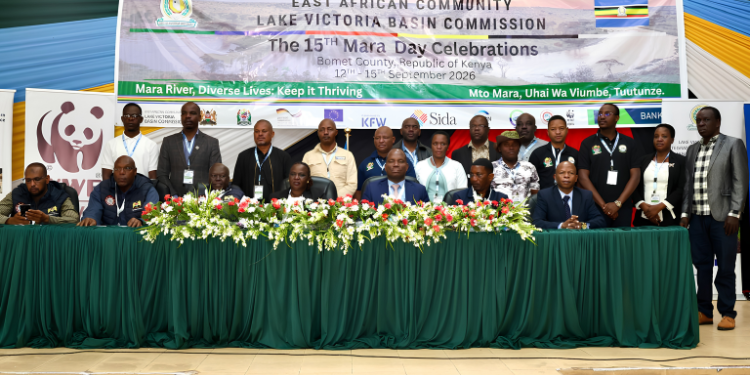
The annual conservation event, coordinated by the Lake Victoria Basin Commission under the East African Community, brought together governments, conservation organizations, researchers, communities and development partners to assess the state of the basin and chart a path forward.
This year’s celebrations were held under the theme “Mara River, Diverse Lives: Keep It Thriving” and “Mto Mara, Uhai wa Viumbe, Tuuutunze”.
Speakers warned that the river system, which supports communities, wildlife, agriculture, tourism, and local economies in both countries, faces mounting pressure from human activities and environmental change.
Mara Day Milestone Rekindles Debate on Basin Protection
Delivering the keynote address, Kevin Gichangi of WWF-Kenya described the Mara River as a lifeline linking people, forests, grasslands, wildlife and economic activities from Kenya to Tanzania.
He said continued forest loss, unsustainable agriculture, wetland and riparian degradation, increasing water abstraction, pollution, and climate change were undermining the basin’s health.
“To manage water effectively, we need to come together as a team. Fragmentation is what weakens our collective efforts,” said Gichangi.
He noted that upstream activities directly affect downstream communities and ecosystems, reinforcing the need for coordinated management between Kenya and Tanzania.
During stakeholder discussions, participants identified degradation of source areas in the Upper Mara, livestock pressure in sensitive catchments, soil erosion, sedimentation, and declining forest cover as among the most pressing environmental concerns.
Stakeholders also cited increasing use of agricultural chemicals, encroachment on riparian land, wastewater discharge from growing urban centers, vehicle washing in rivers, and excessive water abstraction as major threats to water quality and quantity.
Participants warned that river flows have declined in some downstream sections while pollution levels continue to rise.
The forum further highlighted governance challenges, including differing policies and management approaches between Kenya and Tanzania and among counties sharing the ecosystem.
Participants called for greater harmonization of conservation, land-use and water-management frameworks.
Community representatives urged conservation partners to ensure environmental protection efforts directly benefit local people.
Proposed livelihood options included beekeeping, bamboo production, and other nature-based enterprises designed to improve incomes while supporting conservation efforts.
Youth representatives identified unemployment and growing water scarcity as key concerns, while women highlighted the effects of erratic rainfall and declining water availability on households and livelihoods.
Stakeholders Call for Joint Action
Speaking during the opening session, Dr. Masinde Bwire, Executive Secretary of the Lake Victoria Basin Commission, said the Mara River is a vital transboundary ecosystem that supports livelihoods, biodiversity and economic development across Kenya and Tanzania.
Also Read: How Much Kenyans Will Pay to Visit National Parks Under New KWS Fees
He called for stronger cooperation, community participation, and institutional collaboration to address growing threats facing the basin.
Representing Tanzania, Gerald Kusaya, Regional Administrative Secretary for Mara Region, reaffirmed his country’s commitment to protecting the shared resource and urged stakeholders to build on the gains achieved through transboundary cooperation.
He said conservation should be viewed as an investment in future generations and the communities that depend on the ecosystem.
Bomet Deputy Governor H.E. Dr. Shadrak Rotich said conservation efforts should place communities at the center of decision-making because they interact directly with the basin’s natural resources.
He challenged stakeholders to ensure discussions translate into measurable action and called for stronger links between science, policy and local knowledge.
Representing IUCN, Damas Mbaga called for stronger environmental institutions, improved enforcement and greater public awareness, saying conservation initiatives would be more effective if governments, communities and development partners worked through integrated approaches.
Gichangi later told the forum that protecting the river was a collective responsibility.
“Enforcement is the responsibility of everyone,” he said.
Meanwhile, Dr. Joash Oruta, Deputy Director for Regional Coordination at the Water Resources Authority, called for stronger implementation of water-allocation plans, protection of environmental flows and evidence-based management of the resource.
He said planning must account for climate change, population growth and rising demand for water.
Stakeholders also supported Payment for Ecosystem Services programs that would reward communities protecting forests, water sources and critical catchment areas, arguing that conservation is more sustainable when local people derive tangible benefits from it.
Follow our WhatsApp Channel and X Account for real-time news updates.