


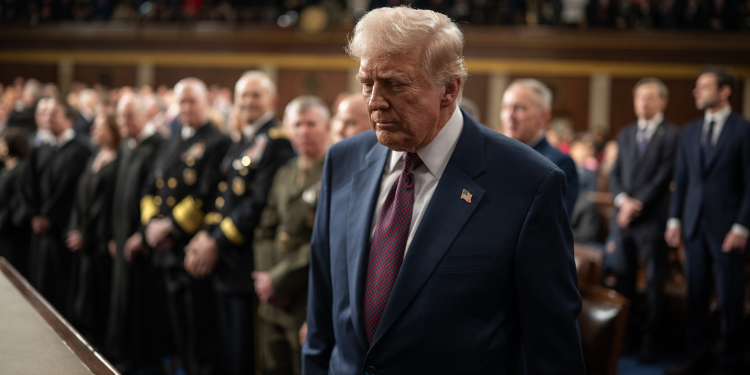
President Donald Trump has been urged to contemplate possible African partners after facing widespread rejections from traditional allies and major powers for help in securing the vital Strait of Hormuz amid the ongoing and escalating U.S.-Israel-Iran conflict.
The narrow waterway, through which roughly one-fifth of the world’s oil passes daily, has been disrupted by Iranian actions since the war intensified earlier this month.
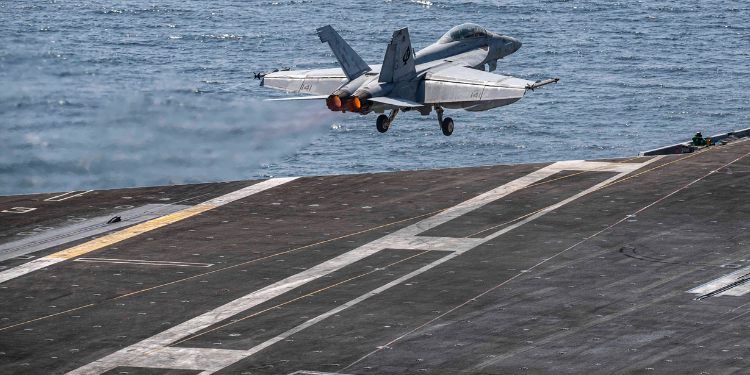
Trump has repeatedly called for an international naval coalition to escort commercial vessels and reopen safe passage, warning that global energy markets face severe threats without coordinated action.
Over the weekend, AP reports that Trump revealed that he had reached out to key allies, asking them to deploy their warships and facilitate the smooth passage of commercial ships through the Strait of Hormuz.
However, according to reports and public statements, multiple key nations have so far declined to provide warships or offered only cautious, non-committal responses to U.S. requests for warships or direct military support in the region.
These include: European powers such as Germany, which explicitly rejected involvement, stating it’s “not NATO’s war”. France revealed that it is reviewing options, but no commitment was made.
Also Read: Reason NATO Won’t Join Donald Trump in War With Iran
Just a few days after President Trump made his request, the French President Emmanuel Macron held talks with the Iranian President, Massoud Pezeshkian, urging him not to target France or other nations not involved in the current conflict.
“I called on him to put an immediate end to the unacceptable attacks Iran is carrying out against countries in the region, whether directly or through proxies, including in Lebanon and Iraq,” the French President said, adding “I reminded him that France is acting within a strictly defensive framework intended at protecting its interests, its regional partners, and freedom of navigation, and that it is unacceptable for our country to be targeted.
The United Kingdom has so far revealed no plans to send vessels despite the discussion. Italy refused.
Asian nations
Japan has explicitly rejected the call due to pacifist constitutional limits, while South Korea has made no firm commitment. China, on the other hand, dodged direct engagement with no positive response.
President Trump specifically mentioned China, noting that it is one of the nations that gets most of its fuel through the Strait of Hormuz and that it should be among the first nations to deploy its warships.
Australia has stated it has no plans to deploy naval assets despite Trump’s calls.
Gulf Arab states have also shown limited willingness to join any U.S.-led effort beyond defensive postures, in the midst of ongoing regional missile and drone incidents.
It is believed that most nations that have declined Trump’s request are not ready to cross Iran’s red line. Iran has also been allowing some countries’commercial ships to safely pass through the Strait of Hormuz without attacking them.
The apparent lack of enthusiasm from these partners has prompted commentary on social media and in diplomatic circles, including pointed observations from Nigerian activist and former senator Shehu Sani, who now urges the U.S. to consider Africa for this key mission.
On Monday, March 16, Sani took to social media and sarcastically suggested that with Arabs, Europeans, Chinese, and Australians all declining, the U.S. should now look to African countries—commonly sidelined in such global security coalitions except when their resources or UN votes are needed.
Also Read: Germany Refuses Trump’s Call to Secure Strait of Hormuz
Arabs are called to join the war, but they declined. Europeans are called; they refused. The Chinese and Australians are called, but they rejected. Why is he not calling on African Countries to join?” Sani said in a social media post, which has since gone viral.
Reactions
Experts observe that African militaries generally lack the blue-water naval capacity for sustained operations in the Persian Gulf, and many governments emphasize domestic challenges over entanglement in Middle Eastern conflicts.
So far, no African nation has publicly signaled a willingness to join any Hormuz mission, even as the effects of rocketing fuel prices bite.
The White House has not indicated any plan to contact specific African capitals, though Trump has emphasized in recent remarks that he is testing allies’ reliability.
He has expressed frustration with partners who benefit from U.S. security guarantees yet hesitate when Washington seeks reciprocal support.

Why isn.t isreals navy guarding ships moving through the Hormuz canal?