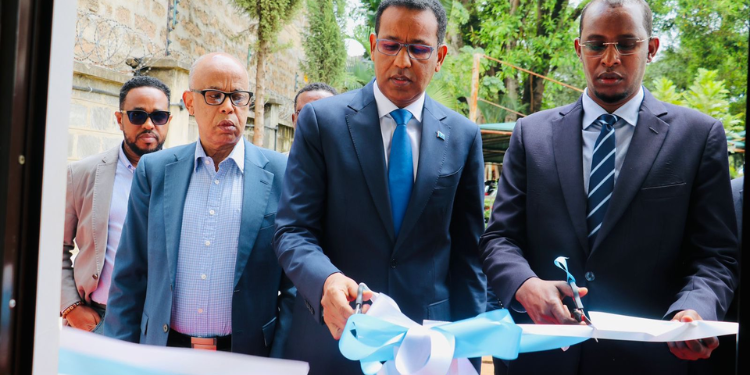
The Somali government has opened a National Identification and Registration Agency (NIRA) office at the Somali Embassy in Nairobi, just weeks before the planned reopening of the Kenya–Somalia border in April.
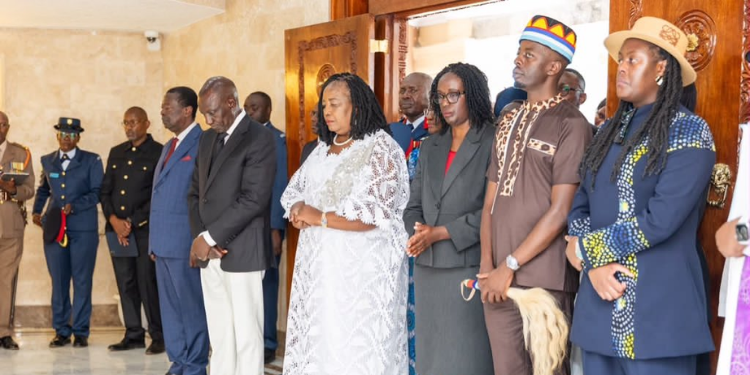
The launch took place on March 27 and was led by the Somali Ambassador to Kenya, Jabril Ibrahim Abdulle.
According to the embassy, the office will make it easier for Somali citizens living in Kenya to register and obtain their national identification cards without travelling back home.
“Somalis living in Kenya can now register and obtain their National ID Card at the Embassy, marking the 30th NIRA office established abroad as we expand access to the Somali National ID,” Ambassador Jabril stated.
Under the Vienna Convention on Consular Relations, which both Kenya and Somalia have ratified, foreign embassies are legally mandated to provide consular services to citizens living abroad.
Also Read: China Blasts Somalia for Hijacking Its Vessel and Crew
Reactions as Somalia Opens ID Office in Nairobi After Ruto Directive on Border Reopening
The Nairobi office was launched ahead of the anticipated reopening of the Kenya–Somalia border, which has remained closed for over a decade due to security concerns tied to the Islamist militant group Al-Shabaab.
The border was shut in October 2011 after Kenya launched a major military incursion into Somalia to push back the Al-Qaeda-linked group.
Al-Shabaab has orchestrated several deadly attacks in Kenya, including a 2013 assault on a Nairobi shopping centre that killed 67 people, and the 2015 Garissa University attack that left 148 dead.
The plan to reopen the border had been announced in 2023 but was postponed due to security concerns.
According to President William Ruto, the reopening will occur in phases, focusing on key crossing points that connect communities and trade routes. Security forces will be deployed in large numbers to ensure the move does not compromise safety.
Despite these assurances, many Kenyans remain skeptical, fearing a return of attacks on people and critical infrastructure. Kenya has also expressed concern about the potential smuggling of illicit weapons and contraband.
Also Read: Somalia Intervenes After Kenya–Tanzania Embassy Clash Goes Public
The move to open the Somalia ID office has sparked mixed reactions on social media, with many expressing concerns about identity verification, national security, and integration of foreign nationals.
It also comes ahead of the 2027 elections, fueling debates over national security, voter registration, and the management of cross-border populations.
@Nairobee254 questioned how undocumented Somalis ended up in Kenya and what documents they used to enter the country.
@potatoprohet criticized the timing, saying: “Somalia opening an ID registration office in Nairobi just weeks before the border reopens while millions of Kenyans are still struggling to get their own IDs. This isn’t ‘diplomatic ties’—this smells like a setup for mass registration of Somalis and others integrating into our system.”
@NarrativeEast took a neutral stance: “Documentation is how states regain control of movement, identity, and trade. For Kenya, the real test is enforcement—who is being registered, how the data is verified, and how it integrates with our own systems.”
@LiamMartinBear raised national security concerns, while @korir_raphael warned: “Without airtight verification systems and real-time coordination, this could open the door to identity fraud and cross-border threats.”
NIRA ID System and Vetting Policy
The Somali Embassy’s ID office marks the 30th such facility established outside Somalia, part of a broader effort to ensure citizens in the diaspora are included in national systems.
The NIRA national ID card is biometric, featuring a unique 11-digit number assigned for life, allowing secure identification across government platforms without duplication.
This development follows President Ruto’s February 5, 2025, decree eliminating vetting requirements for residents of Northeastern Kenya applying for national IDs.
Previously, a section of Kenyans—mainly Somalis, Nubians, and Arabs—were subjected to additional scrutiny and required to appear before a vetting committee composed of government officials and local elders.
“If it’s about vetting, let all children of Kenya be vetted equally without any discrimination,” Ruto said when signing the decree.
The vetting committee had discretionary power to determine who qualified for national identification.
Soon after signing the decree, many leaders came out to criticise the presidential decision, arguing that his move would pose a threat to national security and make the country more vulnerable to terrorism.