
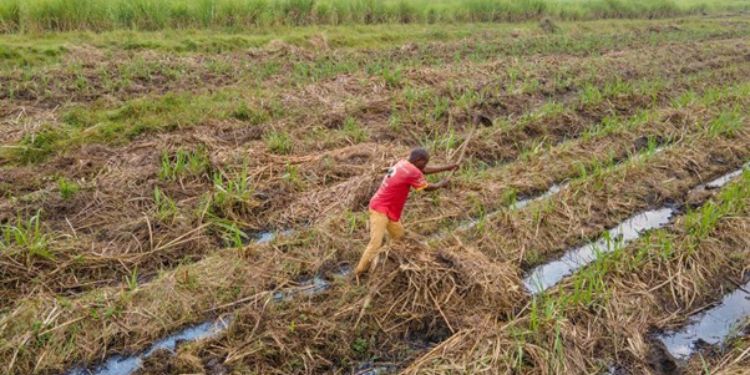
Farmers have been placed at the centre of Kenya’s sugar sector recovery, with KSh1.2 billion mobilised through the Sugar Development Levy to accelerate cane development and stabilise long-term production.
The funding supports the expansion of cultivation areas and the rollout of early-maturing cane varieties developed by the Sugar Research Institute as the industry rebuilds after a challenging production cycle.
The farmer-focused interventions come amid concerns raised by recent economic indicators from the Kenya National Bureau of Statistics (KNBS) over potential pressure on sugar prices.
Industry regulators, however, have assured Kenyans that sugar supply remains stable and that the current measures are designed to secure both availability and affordability as production recovers.
National sugar production declined to 613,000 metric tonnes in 2025, meeting 61 per cent of the country’s annual demand of 1.2 million tonnes.
This marked a 25 per cent drop from the historic 815,000 metric tonnes recorded in 2024, a decline that authorities say was anticipated as the sector entered a major reform phase and was compounded by dry weather conditions that persisted into early 2026.
Sugar Board Chief Executive Officer Address
In a press release, Kenya Sugar Board Chief Executive Officer Jude Chesire said the reduced output was the result of deliberate, long-term decisions rather than a breakdown in supply.
“Farmers remain central to the recovery strategy, and the investments being made today are designed to restore productivity while protecting farmer incomes,” Chesire said.
Also Read: Nzoia Sugar Makes Major Comeback, Hits Full 3,000-Tonne Daily Production
A significant factor behind the production dip was the cane maturity profile following the 2024 heavy harvest.
Much of the cane available in 2025 was still in developmental stages and could not be harvested without compromising sucrose content and farmer earnings.
This led to the temporary closure of seven sugar factories in Lower and Upper Western regions to allow the crop to reach optimal maturity.
At the same time, structural reforms in the milling sector reduced short-term output. Four state-owned sugar factories were closed to facilitate leasing to private investors, who undertook rehabilitation and modernisation works worth KSh12.5 billion.
While the upgrades limited milling capacity for about nine months, regulators say they were essential to improve efficiency and payment reliability. Kwale Sugar also remained non-operational during 2025.
Also Read: Uncertainty for Sugar Sector as Kenya Exits COMESA Safeguard After 24 Years
Dry spells in key growing zones further slowed cane development, reduced yields per hectare, and affected factory throughput.
Despite these challenges, the government and industry regulators have put in place market-stabilisation measures to prevent artificial shortages and speculation, ensuring that sugar remains available as production recovers.
With millions of tonnes of cane already in the ground and harvesting expected to resume strongly from October–November 2026, officials say the farmer-centred recovery strategy is laying the foundation for a more resilient and sustainable sugar industry.
Follow our WhatsApp Channel and X Account for real-time news updates.