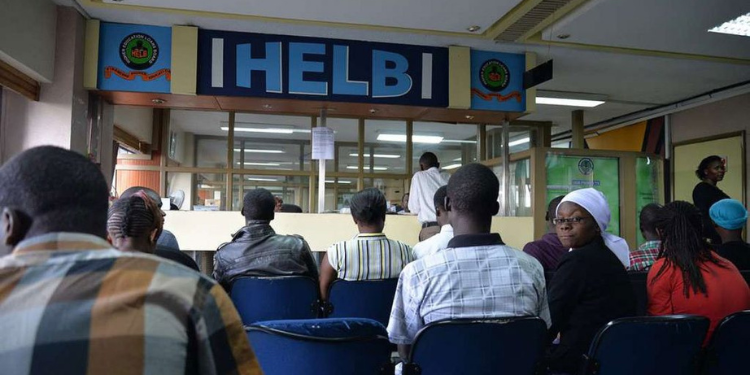
The Higher Education Financing (HEF) program is a government initiative that provides scholarships, loans, and bursaries to support Kenyan students pursuing university and TVET education.
The government established the Universities Fund (UF) and the Universities Fund Grants Management Department (GMD) to apportion funds to universities in Kenya.
Under this model, universities and TVET institutions no longer receive block funding in the form of capitation, as was the case with the Differential Unit Cost Model.
Instead, student funding will be provided through scholarships, loans, and household contributions, based on a graduated scale determined by the Means Testing Instrument (MTI).
According to the board, scholarships are non-repayable funds provided through the University’s Fund and awarded on the basis of financial need.
Loans are repayable financial support issued by the Higher Education Loans Board with 4% annual interest to cover tuition and living costs, while household contributions are the portion of education expenses expected to be paid directly by parents or guardians, depending on their assessed financial capacity.
HEF operates through an online portal designed to streamline access to funding based on student need and eligibility.
Applications are conducted entirely online through the HEF portal, where students must register, complete their profiles, upload supporting documents, and submit their requests for consideration.
Successful applicants receive financial support directly through approved disbursement channels.
HEF applications require specific documents and structured steps for Kenyan students seeking scholarships and loans through the portal.
This checklist outlines the key preparation requirements ahead of the 2025–2026 application cycle, based on official guidelines.
Full Checklist for Students Ahead of 2026 HEF Applications
The following are the requirements for the application of the Scholarship and loan:
- Valid email address and registered telephone number (under applicant’s National ID)
- KCPE and KCSE index numbers with the year of examination
- Passport-size photo (JPEG/JPG/PNG format)
- Copy of National ID or Maisha Card (both sides in PDF)
- Valid bank account details or M-PESA number (registered under applicant’s name and ID)
- Parents’ National ID numbers and registered telephone contacts
- Death certificate of parent(s) if deceased (PDF format)
- Birth certificate (PDF) for applicants below 18 years
- Two guarantors’ ID numbers and registered telephone numbers (parents/guardians allowed)
- Sponsorship letter (PDF) if the applicant received sponsorship in secondary school
Also Read: Private Universities in Kenya Eligible for HELB in 2026
Student Categorization in the New Funding Model
BAND 1
The government scholarship will cover 70%, the loan will cover 25%, making the total support 95%. The family will contribute 5%, and the upkeep loan will be Ksh 60,000.
BAND 2
The government scholarship will cover 60%, the loan will cover 30%, making the total support 90%. The family will contribute 10%, and the upkeep loan will be Ksh 55,000.
Also Read: Mistakes Students Should Avoid When Applying for Courses on KUCCPS Portal
BAND 3
The government scholarship will cover 50%, the loan will cover 30%, making the total support 80%. The family will contribute 20%, and the upkeep loan will be Ksh 50,000.
BAND 4
The government scholarship will cover 40%, the loan will cover 30%, making the total support 70%. The family will contribute 30%, and the upkeep loan will be Ksh 45,000.
BAND 5
The government scholarship will cover 30%, the loan will cover 30%, and together they will provide 60% of the total support. The family will contribute 40%, and the upkeep loan will be Ksh 40,000.