Customers using M-PESA for their transactions incur no fees when making payments via the Buy Goods (Till) option, with the notable exception being payments at fuel stations, where specific charges may apply.
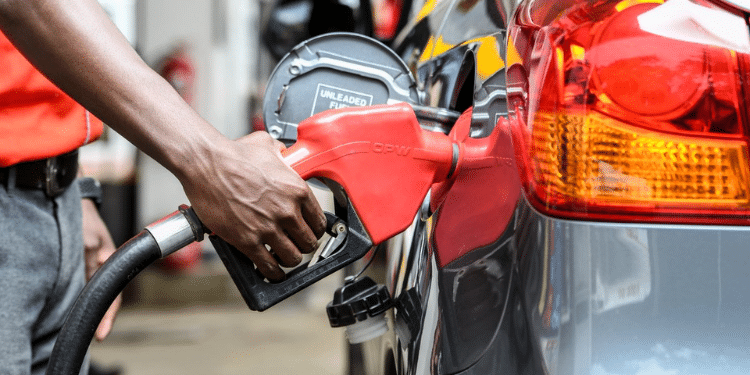
Motorists across Kenya have increasingly noticed that paying for fuel via the till numbers can be more expensive than paying in cash.
This exception is largely tied to how M-Pesa merchant payments work within the fuel retail sector, rather than systematic overcharging at the petrol station.
The Role of M-Pesa Buy Goods Till Numbers
Businesses receiving payments via a Buy Goods Till are charged a maximum of 0.55% of the transaction amount, capped at KSh 200 per transaction.
| TRANSACTION | FEE |
| Collections KSh 200 and below | FREE |
| Collections above KSh 200 | 0.55% of transaction |
| Maximum charge per transaction | KSh200 |
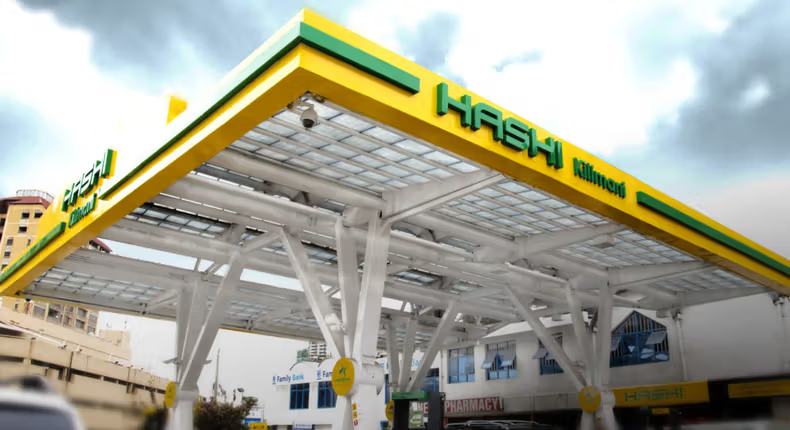
Petrol stations use Lipa na M-Pesa Buy Goods till numbers, not ordinary person-to-person M-Pesa transfers.
These Buy Goods payments are classified as merchant transactions, which attract merchant service fees charged by Safaricom to the business receiving the payment.
Unlike personal transfers, where the sender pays the fee, Buy Goods fees are deducted from the merchant’s settlement.
Fuel retailing operates on thin profit margins, often just a few shillings per litre.
As a result, petrol stations frequently recover the cost of M-Pesa merchant fees by fixing them into the fuel price or applying a slightly higher pump rate for digital payments.
Safaricom does not directly deduct any extra charge from the customer’s M-Pesa wallet when paying via a till number.
However, the merchant absorbs the transaction cost.
To remain commercially viable, many fuel dealers pass this cost on indirectly, making M-Pesa payments appear more expensive than cash.
Also Read: Kenya’s Power Players: Profile of Paul Russo, KCB CEO
This is why motorists may notice that a full tank paid in cash seems cheaper, even though M-Pesa charges are not listed separately.
Compliance and Petrol Station Operational Costs
Fuel prices in Kenya are regulated by the Energy and Petroleum Regulatory Authority (EPRA), which sets maximum pump prices. However, the regulations do not explicitly prohibit stations from factoring in payment method costs, provided the displayed pump price reflects the final amount payable by the customer.
In practice, this allows petrol stations to maintain compliance with price controls while still recovering digital transaction costs through their pricing structure.
Beyond transaction fees, petrol stations face significant regulatory and compliance expenses.
These include electronic tax registers, real-time sales reporting to the Kenya Revenue Authority, licensing fees, and audits by multiple regulators.
Digital payments increase transparency and improve compliance efficiency, but they also entail system and settlement costs that businesses must absorb.
Mobile payments offer petrol stations clear advantages: reduced cash-handling risks, faster transactions, and lower exposure to theft or banking delays.
Also Read: Kenya’s Power Players: Rita Kavashe Profile, CEO of Isuzu Motors
However, these operational benefits do not always fully offset merchant service fees, especially for high-volume, low-margin fuel sales. The result is a cost gap that ultimately shows up in pricing.
Fuel Station Customer Charges (2025)
| AMOUNT RANGE | CUSTOMER FEE |
| Ksh 1 – 100 | FREE |
| Ksh 101 – 500 | Ksh 7 |
| Ksh 501 – 1,000 | Ksh 13 |
| Ksh 1,001 – 1,500 | Ksh 23 |
| Ksh 1,501 – 2,500 | Ksh 33 |
| Ksh 2,501 – 3,500 | Ksh 52 |
| Ksh 3,501 – 5,000 | Ksh 69 |
| Ksh 5,001 – 7,500 | Ksh 87 |
| Ksh 7,501 – 10,000 | Ksh 95 |
| Above Ksh 10,000 | Ksh 108 |
Global View on Digital Fuel Payments
In many countries, digital and card-based payments at fuel stations incur merchant fees, which are often absorbed by either the station or, in some cases, passed on to consumers.
For example, in the United States and parts of Europe, credit and debit card payments at pumps often include small surcharges or slightly higher prices than cash, primarily to cover processing fees charged by banks and payment networks.
Similarly, in countries such as South Africa and Nigeria, petrol stations that accept mobile money or card payments often factor in transaction costs, particularly in low-margin markets.
These practices are generally legal, provided the pricing is transparent and does not violate consumer protection regulations.
Follow our WhatsApp Channel and X Account for real-time news updates.