
The effects of the Iran–US–Israel conflict may feel distant, but are hitting home in ways Kenyans can no longer ignore, from record fuel prices to stalled exports and growing uncertainty for thousands of citizens working in the Gulf.
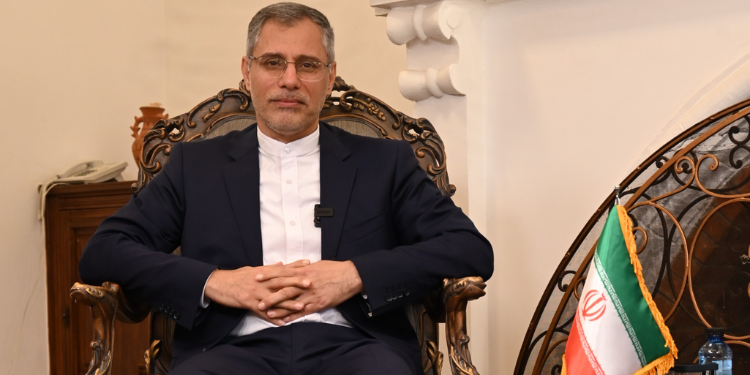
In an exclusive, wide-ranging interview with The Kenya Times, Iran’s Ambassador to Kenya, Dr. Ali Gholampour, addressed the war’s origins, its human and economic toll, and the increasingly strained diplomatic space Kenya now finds itself navigating.
Over the course of the conversation, the Ambassador laid out Tehran’s perspective on how the conflict escalated, framing it not as a sudden outbreak but the culmination of decades of tension.
He defended Iran’s military response — including strikes beyond its borders — as lawful self-defense under international law, while pushing back against claims that the country is responsible for global economic disruption.
At the same time, Dr. Gholampour acknowledged the scale of the crisis, from thousands of casualties across the region to the fragile ceasefire now holding under intense pressure.
A major focus of the interview was the Strait of Hormuz — a critical global oil route now effectively disrupted. With Kenya already feeling the consequences through sharp fuel price increases and inflation risks, the Ambassador was pressed directly on why neutral countries should bear the cost of a conflict they did not start.
Dr. Gholampour responded by emphasizing the broader geopolitical dynamics at play. Closer to home, the discussion turned to Kenya–Iran relations, which have come under strain following Nairobi’s public condemnation of Iranian strikes on Gulf states.
The Iranian Ambassador addressed the diplomatic exchanges directly, while maintaining that Kenya remains an important partner — even as tensions test that relationship. He also spoke to the real economic impact on Kenyan exporters.
Beyond policy and politics, the interview explored the human dimension — from the uncertainty facing over 400,000 Kenyans in the Gulf to the internal situation in Iran following the war, protests, and a sudden leadership transition.
With the future of the ceasefire unclear and nuclear negotiations potentially back on the table, the conversation ultimately pointed to a conflict that is far from resolved.
Watch the full, unfiltered conversation through the link below.