The Kamba community in Paraguay is divided into two main groups: Kamba Cuá and Kamba Kokue.
Their roots in the South American nation trace back to 1820, when they arrived alongside General José Gervasio Artigas during his exile in Paraguay.
The group, comprising about 250 African spearmen, their families, and other followers, settled in the country and established permanent communities.
How the History of Kamba Cua Dates Back
According to the Travel Noire publication, Kamba Cuá and Kamba Kokue are among the country’s most prominent Afro-descendant communities.
Their story dates back to the Spanish colonial era. After Spanish rule was established in Paraguay in 1524, the first enslaved Africans were brought into the territory in 1556.
Over centuries, thousands more arrived through both legal and illegal slave trade routes.
According to Argentine historian José Ignazio Telesca, many enslaved Africans entered Paraguay legally through the colonial ports of Buenos Aires, Montevideo, and Córdoba in present-day Argentina, while others were trafficked across the border from Brazil.
He notes that by 1811, people of African descent—both enslaved and free—accounted for about half of Paraguay’s population.
Also Read: ‘I Feel Sorry for Him, Like All Slaves; Tucker Carlson Fires Back at Trump
The Kamba community’s history took a defining turn in 1820, when Uruguayan revolutionary General José Gervasio Artigas arrived in Paraguay in exile with a regiment of about 250 African spearmen and their families.
Recognizing their exceptional skill with spears, bows, and arrows, Artigas valued the Kamba as disciplined and capable fighters.
In appreciation of their loyalty, Paraguay’s ruler José Gaspar Rodríguez de Francia granted them 100 hectares of land at Campamento Loma, a settlement on the outskirts of the capital, Asunción.
The area became known as Kamba Cuá, where the community established itself through farming while preserving its cultural traditions.
Also Read: Little-Known Facts About Haiti; Where Kenya & U.S Have Interests
Building History in Paraguay
The community prospered for decades and remained deeply connected to its African heritage until General Higinio Morínigo came to power in 1940.
His government confiscated nearly all of the Kamba Cuá’s land, leaving them with only three hectares of the original 100.
Soon afterward, Paraguay adopted policies promoting the country as an entirely “white” nation.
Interracial marriages were encouraged as part of a broader effort to gradually diminish the visibility of the Black population.
Despite these hardships, the Kamba communities endured. An informal census conducted in 2009 estimated that Paraguay was home to about 422 Kamba Cuá families and 385 Kamba Kokue families.
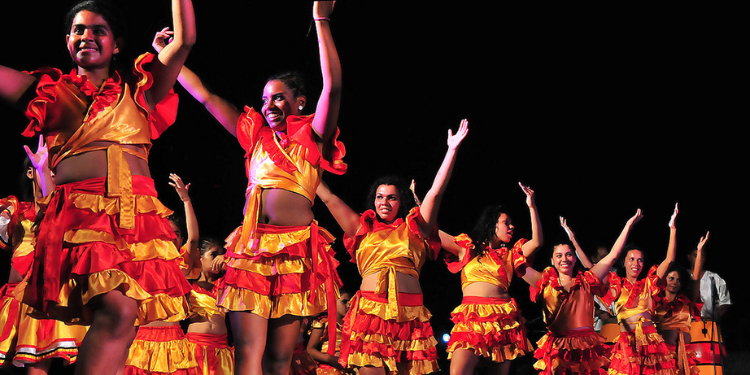
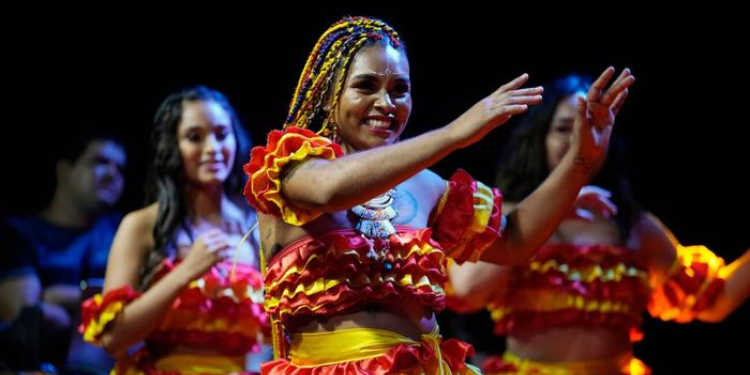
Currently, the Kamba Cuá use their vibrant cultural performances not only to celebrate their ancestry but also to draw attention to their long struggle for recognition.
Through traditional dances, they continue advocating for equal economic and social rights while strengthening and preserving their African identity for future generations.
Follow our WhatsApp Channel and X Account for real-time news updates.