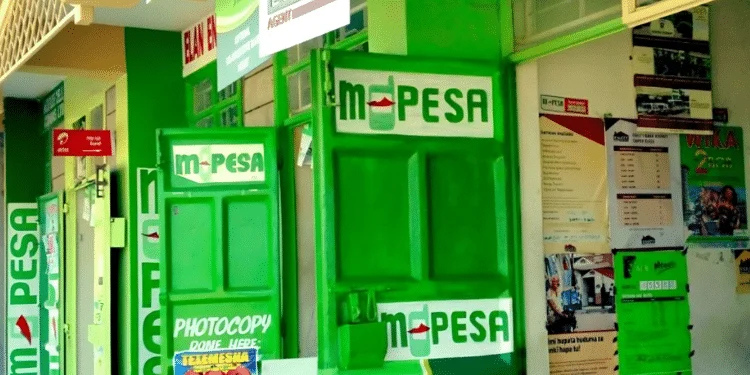
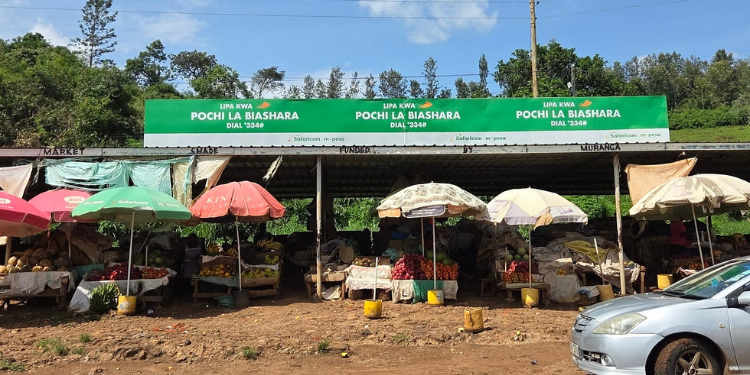
Safaricom’s M-Pesa Pochi la Biashara has overtaken Lipa na M-Pesa business tills in the number of active merchants, marking a shift in how Kenyan businesses receive digital payments.
The telco giant has revealed that Pochi la Biashara now has 2.1 million active merchants, more than double the 1 million active Lipa na M-Pesa business till numbers currently in use.
Despite its rapid growth, Pochi generated KSh 4 billion in revenue during the 2026 financial year, compared to KSh 9.3 billion generated by business tills since most of Pochi La Biashara merchants are small-scale traders.
With the high number of Pochi la Biashara users in the country, the milestone shows how both small-scale and large retailers have preferred the payment option.
The Kenya Times has exclusively conducted interviews with business owners and customers in Mwihoko, Kiambu County, to determine why they have switched to the payment option and the preferred payment methods.
Why Businesses are Preferring Pochi La Biashara
Several business owners who spoke to The Kenya Times said Pochi la Biashara has become their preferred payment option due to its perceived security and operational convenience.
Also Read: How to Register Your Number to Pochi la Biashara
Mama Mwangi, a vegetable vendor, stated that she has been using Pochi la Biashara for 1 year. Before then, she was using the send money option, and the payment method was not secure because several customers reversed payments.
She also said that she joined the payment option herself on her phone, and it was fast, unlike other methods which require a merchant to register and undergo a verification process.
“I decided to use Pochi la Biashara because of people reversing money since it can’t be reversed,” said Mama Mwangi.
She also revealed that she chose pochi because of the ability to transfer funds from the Pochi wallet to a personal M-Pesa wallet at no additional cost.
For many informal businesses, separating business transactions from personal M-Pesa activity without incurring additional charges has become a practical way to save on costs.
Businesses Using Multiple Payment Options
Some business owners, especially those selling multiple items, have several payment options at their shops.
Grace, who sells cereals, gas, and household items, has Pochi la Biashara, Lipa na M-Pesa, and Equity Paybill.
Grace said that she operates all three payment channels to cater to different customer preferences and business needs.
According to Grace, till numbers and paybills offer an additional layer of security due to the structured nature of the transactions and the difficulty of reversing payments once completed.
However, she noted that, unlike Pochi, transferring money from till and paybill business wallets incurs transaction charges starting at Ksh20.
“Most customers I have who buy goods below Ksh100, they prefer using Pochi la Biashara is free. On the other hand, paybill is here for customers who buy goods more than Ksh500 because the transaction is Ksh5 as compared to Ksh for Pochi. Customers who have Equity they prefer using the direct bank transaction, but when I’m moving the money directly to my M-Pesa, I’m deducted a transaction of around Ksh20,” said Grace.
She also highlighted operational challenges associated with business payment systems. Because merchants are often unable to access customer contact details immediately after a transaction, she has to physically verify payments. When a customer makes a wrong payment, Safaricom will take a long time to reverse the money.
Why Customers Prefer using Lipa na M-pesa
Several customers expressed their preferred methods of payment in relation to the cost and convenience.
Melody Mark, a student at Kibabii University, said that she prefers using tills when paying because the option has no transaction charges and is simple.
Triza Wacira, a medical researcher at KIMFRI, says she prefers making payments using Till option because its free regardless of the amount. According to her, the send money option is long since you have to confirm the number twice. She also argues that if she send money to the wrong number, its hard to retrieve than sending money to the wrong till.
“I prefer Till number because it’s easier paying without having to verify the phone number twice .Till number too if I send to the wrong number, it’s easier to get my money back than to the phone,”said Triza.
Also Read: Safaricom Explains How Users Can Refresh Fuliza M-PESA Limits
| Feature | Pochi la Biashara | Lipa na M-Pesa Business Till |
| Active Merchants (2026) | 2.1 million | 1 million |
| Active Merchants (2025) | 1.1 million | 700,000 |
| Annual Revenue (FY2026) | KSh 4 billion | KSh 9.3 billion |
| Revenue Growth Rate | 86% year-on-year | 21.7% year-on-year |
| Registration Requirement | None | Requires business registration and approval process |
| Key Fraud Protection | Reversals blocked without merchant consent | Standard reversal dispute process |
| Privacy Support | Customer and merchant details are masked | Standard transaction identification |
| Fund Transfer Costs | Free transfer from Pochi wallet to M-Pesa | Charges apply when transferring from business wallet |
| Primary Users | Informal traders, freelancers, micro-businesses | SMEs, formal businesses, retail outlets |
| Key Advantage | Simplicity, privacy and lower operating costs | Structured business payments and wider merchant acceptance |
Follow our WhatsApp Channel and X Account for real-time news updates.