Monday, June 29, 2026
  • News
    • Latest News
    • Breaking News
    • Fact Check
    • Investigations
    • Explainers
  • Politics
    • Global Politics
    • Elections
    • Government & Policy
    • Diplomacy
    • Conflicts & Security
    • Political Analysis
  • Business
    • Global Economy
    • Markets
    • Technology
    • Startups
    • Energy
    • Finance
  • World News
    • Americas
    • Asia
    • Asia Pacific
    • Africa
    • Europe
    • Middle East
  • Africa
    • Central Africa
    • East Africa
    • West Africa
    • Southern Africa
  • Health
    • Global Health
    • Public Health
    • Health Policy
    • Medical Research
    • Diseases & Conditions
    • Mental Health
    • Nutrition
    • Climate & Health
    • Health Explainers
  • Sports
    • World Cup 2026
    • Athletics
    • Basketball
    • Boxing
    • Cricket
    • Football
    • Formula 1
    • Golf
    • Rugby
  • Weather
    • Climate Business
    • Climate Change
    • Climate Solutions
    • Living Green
  • Culture
    • Arts
    • Film & TV
    • Food
    • Music
    • Lifestyle
    • Travel
  • Opinion
    • Editorials
    • Letters
  • Behind The Brand
REGISTER
LOGIN
No Result
View All Result
The Kenya Times
  • News
    • Latest News
    • Breaking News
    • Fact Check
    • Investigations
    • Explainers
  • Politics
    • Global Politics
    • Elections
    • Government & Policy
    • Diplomacy
    • Conflicts & Security
    • Political Analysis
  • Business
    • Global Economy
    • Markets
    • Technology
    • Startups
    • Energy
    • Finance
  • World News
    • Americas
    • Asia
    • Asia Pacific
    • Africa
    • Europe
    • Middle East
  • Africa
    • Central Africa
    • East Africa
    • West Africa
    • Southern Africa
  • Health
    • Global Health
    • Public Health
    • Health Policy
    • Medical Research
    • Diseases & Conditions
    • Mental Health
    • Nutrition
    • Climate & Health
    • Health Explainers
  • Sports
    • World Cup 2026
    • Athletics
    • Basketball
    • Boxing
    • Cricket
    • Football
    • Formula 1
    • Golf
    • Rugby
  • Weather
    • Climate Business
    • Climate Change
    • Climate Solutions
    • Living Green
  • Culture
    • Arts
    • Film & TV
    • Food
    • Music
    • Lifestyle
    • Travel
  • Opinion
    • Editorials
    • Letters
  • Behind The Brand
  • News
    • Latest News
    • Breaking News
    • Fact Check
    • Investigations
    • Explainers
  • Politics
    • Global Politics
    • Elections
    • Government & Policy
    • Diplomacy
    • Conflicts & Security
    • Political Analysis
  • Business
    • Global Economy
    • Markets
    • Technology
    • Startups
    • Energy
    • Finance
  • World News
    • Americas
    • Asia
    • Asia Pacific
    • Africa
    • Europe
    • Middle East
  • Africa
    • Central Africa
    • East Africa
    • West Africa
    • Southern Africa
  • Health
    • Global Health
    • Public Health
    • Health Policy
    • Medical Research
    • Diseases & Conditions
    • Mental Health
    • Nutrition
    • Climate & Health
    • Health Explainers
  • Sports
    • World Cup 2026
    • Athletics
    • Basketball
    • Boxing
    • Cricket
    • Football
    • Formula 1
    • Golf
    • Rugby
  • Weather
    • Climate Business
    • Climate Change
    • Climate Solutions
    • Living Green
  • Culture
    • Arts
    • Film & TV
    • Food
    • Music
    • Lifestyle
    • Travel
  • Opinion
    • Editorials
    • Letters
  • Behind The Brand
No Result
View All Result
The Kenya Times ~ Trending, Breaking News and Videos
No Result
View All Result
ADVERTISEMENT

Why Blaming Migrants Won’t Fix South Africa’s Economic Crisis

The ConversationbyThe Conversation
June 29, 2026
Reading Time: 10 mins read
South Africa’s Economic Crisis: Migrants Are Not The Root Cause

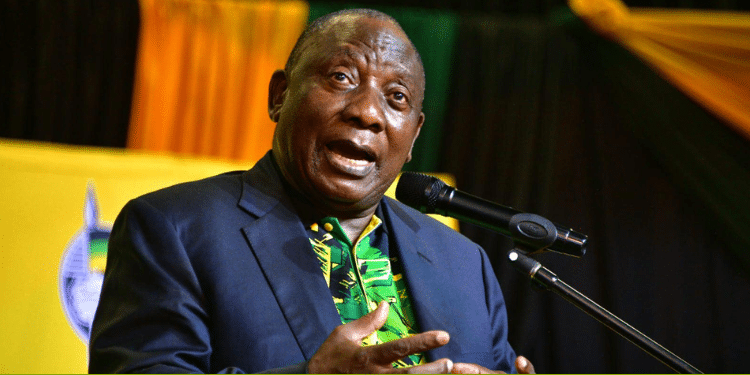
South Africa's President Cyril Ramaphosa | PHOTO | Cyril Ramaphosa.

FacebookTwitterLinkedInRedditWhatsApp
Advertisement

South Africa is in the midst of its most significant anti-immigrant mobilisation in years. The emergence of the March and March movement, calls for the mass deportation of undocumented migrants by 30 June 2026, growing anti-immigrant violence, and the repatriation of foreign nationals by several African governments have pushed immigration to the centre of national debate.

The anti-immigrant protest movement argues that it is responding to rising unemployment, deteriorating public services and growing insecurity.

The question is not whether these grievances have merit. They do. It’s whether immigrants are, in fact, responsible for them.

This article draws from research by the Southern Centre for Inequality Studies at the University of the Witwatersrand. It examines the drivers and consequences of inequality. It focuses on the world of work, public spending, production and ownership, technological change and innovation, and the effects of climate change.

Our research provides important context for understanding the economic and social conditions in which anti-migrant sentiment has exploded – and its underlying causes. Immigration is not irrelevant to the multiple and overlapping crises facing South Africans. But it’s not their primary cause.

Joblessness and informality

Few issues illustrate this more clearly than employment.

South Africa has one of the highest unemployment rates in the world. More than four in every ten working-age adults who want work are unable to find it (this includes discouraged work seekers). The scale of this crisis understandably creates pressure to identify a cause and demand action.

Many South Africans have concluded that immigrants are taking jobs away from local workers. Our analysis of public opinion data shows that as many as 70% of South Africans believe that immigrants take jobs from people born in the country.

These views help explain the growing support for anti-immigrant mobilisation. But public perceptions do not always align with reality.


Also Read: South Africa Braces for HIV Funding Loss as Trump Administration Changes Course


Administrative tax data suggests that foreign nationals occupy a very small share of formal employment in South Africa. Our researchers have found that less than 4% of formal jobs are held by foreigners. This share has remained largely unchanged for more than a decade.

The picture is somewhat different in the informal economy, where foreign-born workers represent a limited but larger 20% share of participants.

Related research by Southern Centre for Inequality Studies scholars together with the international informal workers’ organisation StreetNet and Women in Informal Employment: Globalizing and Organizing (WIEGO) in South Africa found that as the informal sector expands amid rising unemployment, competition has increased. This has made livelihoods more precarious and earnings more difficult to sustain.

Competition is particularly rife among spaza shop owners (informal neighbourhood grocery stores) and street traders, who purchase goods in the formal sector and resell them at a small profit margin. Foreign-owned spaza stores tend to run larger and collective operations – a similar role to wholesalers. This enables them to offer a wider range of products for lower prices.

Creating a supportive environment for informal operators would require policy shifts. They could include: access to start-up capital, wholesale sourcing of goods, secure access to public space, investment in affordable public infrastructure and services, and reduced harassment by municipal authorities.

Despite recent government plans to revitalise the township (historically segregated poor neighbourhoods) and rural economies, South Africa’s economic policy remains focused on the formal sector.

The frustrations experienced by South Africans are therefore understandable. But South Africa’s unemployment crisis is simply too large to be explained by immigration alone.

For example, our research suggests that the unemployment rate would fall by only six percentage points – from 43.6% to 37.6% – if all foreigners’ jobs were somehow handed to unemployed South Africans.

This is a relatively modest reduction given the scale of South Africa’s unemployment crisis. It highlights that foreigners do not dominate the labour market overall, even if some sectors and locations have higher concentrations of immigrant workers.

Yet, not only is it unrealistic to expect that jobs could be swapped one-to-one between immigrants and South Africans. It could even result in net overall job losses for South Africans because of the reduction in entrepreneurship, investment and skills which foreigners bring.

This was the conclusion of a World Bank report which found that one immigrant worker actually generates approximately two jobs for locals.

The economic contribution of migrants may also help explain why attitudes towards immigration vary across South Africa. A Southern Centre for Inequality Studies scholar found that residents of more deprived municipalities were sometimes more supportive of cross-border movement than those living in better-resourced areas. One possible explanation is that direct contact with migrants helped challenge stereotypes and helped make their economic contributions more visible.

If immigration is not the primary cause of joblessness, why does the perception resonate so strongly?

Part of the answer lies in the economic pressures experienced by ordinary households.

Economic pressures facing households in South Africa 

Households face rising costs associated with food, transport, electricity and other essentials. These pressures come on top of the deterioration of public services. Power outages, unreliable public transport, overcrowded schools, and long waits at public clinics have become part of everyday life for many South Africans. This has reinforced a sense that living standards are steadily declining.

Our research confirms that the reduction in government borrowing, mainly through reduced budgets and the collection of more revenue, has been squeezing out public services for a decade. This has contributed to worsening teacher-learner ratios, longer waiting periods at public health facilities, and increasing backlogs at courts.

These pressures are likely to intensify in the years ahead for a number of reasons.


Also Read: Trump Allows 10,000 White South Africans into the US in Secret Plan


First, climate change places disproportionate burdens on vulnerable groups, such as women, particularly through its effects on care work, livelihoods and access to essential resources.

Our recent research also suggests that the green transition will create highly uneven labour market impacts across South Africa. Some communities will bear significant job losses and economic disruption that could intensify social and political tensions.

Second, the limits of South Africa’s social protection are becoming more apparent. Social grants have become a lifeline for millions of households and play a vital role in preventing destitution. But they cannot substitute for decent work and economic opportunity. Our research on social protection shows people want something more than survival. They want meaningful work, dignity, independence and opportunities to build better lives.

The challenge facing South Africa is not simply to reduce poverty, but to expand opportunity. South Africa’s economic prosperity is actually tied to trade and investment with the rest of Africa. Anti-immigrant politics may deliver short-term political gains. But they risk damaging the relationships and openness on which South Africa’s long-term growth depends.

A warning signal

The rise of anti-immigrant sentiment is a warning signal. It reflects genuine frustration with economic conditions and declining opportunities faced by the average South African. Ignoring those frustrations would be a mistake.

But so too would be blaming migrants for a crisis they did not create. Economic hardship may help explain anti-immigrant sentiment, but it cannot justify directing hostility or violence towards people whose rights and dignity deserve equal protection.

South Africa’s challenges demand better policy, not scapegoating, prejudice or violence against migrants.

The statement on which this article is based was signed by the following Southern Centre for Inequality Studies research staff: Comfort Molefinyana,
David Francis, Geci Karuri-Sebina, Glen Robbins, Gontse Mabaso, Imraan Valodia, Julia Taylor, Khanimamba Masuluke, Khumisho Moguerane, Niall Reddy, Nirvana Pillay, Nishal Robb, Rahul Gandhi, Rashaad Mohamed Amra, Rheyna Pattni, Rozeena Das, Ujithra Ponniah.
The Conversation

Justin Visagie, Associate Professor at the Southern Centre for Inequality Studies, University of the Witwatersrand and Ruth Castel-Branco, Senior lecturer, University of the Witwatersrand

This article is republished from The Conversation under a Creative Commons license. Read the original article.
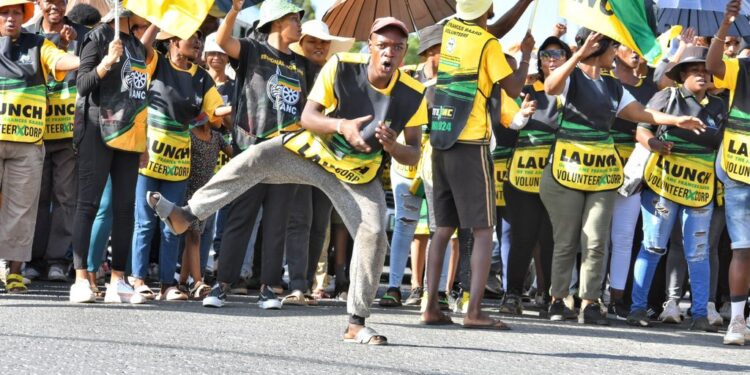

South Africans During An Anc Rally. South Africa’s Economic Crisis: Migrants Are Not The Root Cause
South Africans during an ANC rally. PHOTO/RSA Presidency.
Tags: South AfricaSouth Africa Xenophobia
The Conversation

The Conversation

The Conversation is an independent news organization that publishes evidence-based articles written by experts to help readers understand diverse topics. We cover a wide range of areas including arts, culture, education, health, politics, science, and more¹. Their content is characterized by in-depth analysis, research, news, and ideas from leading academics and researchers. The Conversation aims to provide academic rigor with journalistic flair.

Related Posts

Safaricom Says Users Can Review Fuliza M-Pesa Limit Via 334#

M-PESA or Bank Savings: Which is Actually Giving Better Interest Rates in Kenya Right Now?

June 29, 2026
Kenyans Gear Up For 2027 Elections In Which President William Ruto Is Seeking Reelection

Opinion | Time for Kenyans to Decide Real Change or Continue with Failed Leadership

June 26, 2026
The Central Bank Of Kenya Headquarters. Banks Charge Rates Based On Cbk Base Rate

Why Banks Charge What They Do and How to Get Cheaper Credit – Advice by a Banking Economist

June 26, 2026
10 Little-Known Facts About President Ruto That Might Surprise You

Opinion | Why Kenya’s Finance Act 2026 Falls Short: Six Critical Tests It Fails

June 25, 2026

Leave a Reply Cancel reply

Your email address will not be published. Required fields are marked *

ADVERTISEMENT

The Kenya Times Facebook

LATEST NEWS

  • Why Blaming Migrants Won’t Fix South Africa’s Economic Crisis
  • Three Courts to Wipe Out Decades of Records in 90-Day Notice
  • Nairobi’s Upper Hill to Host One of the City’s Tallest Skyscrapers in New Proposal
  • World Cup Round of 32 Matches and Kenyan Kick-Off Times
  • SACCO Report Exposes Kenya’s Fastest-Growing Loan Category – Here’s Why It’s Booming
  • TSC Outlines Subject Requirements for CBC Technical Teacher Recruitment
  • Kenyan Govt Officials Risk Jail for Blocking Citizens on Official Social Media Accounts
  • M-PESA or Bank Savings: Which is Actually Giving Better Interest Rates in Kenya Right Now?
  • Another Public Holiday for Kenyans? Lawyer Sparks Debate with Declaration
  • Full Breakdown of Kenya’s KSh156.8 Billion Pending Debt
  • Absa Kenya Appoints New Interim CEO as Abdi Mohamed Steps Down
  • NTSA Issues New Directive on Private Vehicle Inspections, School Bus and PSV Rules
  • U.S., Iran Finally Agree to Halt Strikes Ahead of Qatar Talks on Strait of Hormuz
  • Sisters Caught Smiling as They’re Arrested Over Fatal Stabbing of Texas Mother of Five
  • Mamdani Speaks on Plan to Change Constitution So He Can Run for President
ADVERTISEMENT

Company

About Us

Our Authors

Our Experts

Social Media

Policies

Privacy Policy

House Rules

Standards and Policies

Terms and Conditions

Subscription

My Account

Contact Us

Contact Us

Join Our Team

Advertise With Us

© Copyright 2026 | The Kenya Times | All Rights Reserved

Welcome Back!

Sign In with Facebook
Sign In with Google
Sign In with Linked In
OR

Login to your account below

Forgotten Password? Sign Up

Create New Account!

Sign Up with Facebook
Sign Up with Google
Sign Up with Linked In
OR

Fill the forms below to register

All fields are required. Log In

Retrieve your password

Please enter your username or email address to reset your password.

Log In
Your Privacy and Cookies
We use cookies on our website to give you the most relevant experience by remembering your preferences and repeat visits. By clicking “Accept”, you consent to the use of ALL the cookies.
Do not sell my personal information.
Cookie settingsACCEPT
Privacy & Cookies Policy

Privacy Overview

This website uses cookies to improve your experience while you navigate through the website. Out of these cookies, the cookies that are categorized as necessary are stored on your browser as they are essential for the working of basic functionalities of the website. We also use third-party cookies that help us analyze and understand how you use this website. These cookies will be stored in your browser only with your consent. You also have the option to opt-out of these cookies. But opting out of some of these cookies may have an effect on your browsing experience.
Necessary
Always Enabled
Necessary cookies are absolutely essential for the website to function properly. This category only includes cookies that ensures basic functionalities and security features of the website. These cookies do not store any personal information.
Functional
Functional cookies help to perform certain functionalities like sharing the content of the website on social media platforms, collect feedbacks, and other third-party features.
Performance
Performance cookies are used to understand and analyze the key performance indexes of the website which helps in delivering a better user experience for the visitors.
Analytics
Analytical cookies are used to understand how visitors interact with the website. These cookies help provide information on metrics the number of visitors, bounce rate, traffic source, etc.
Advertisement
Advertisement cookies are used to provide visitors with relevant ads and marketing campaigns. These cookies track visitors across websites and collect information to provide customized ads.
Others
Other uncategorized cookies are those that are being analyzed and have not been classified into a category as yet.
SAVE & ACCEPT
LOGIN | REGISTER
  • Login
  • Sign Up
  • Cart
No Result
View All Result
  • News
    • Latest News
    • Breaking News
    • Investigations
    • Explainers
    • Fact Check
  • Politics
    • Global Politics
    • Conflicts & Security
    • Elections
    • Diplomacy
    • Government & Policy
    • Political Analysis
  • Business
    • Global Economy
    • Markets
    • Technology
    • Startups
    • Energy
    • Finance
  • World News
    • Americas
    • Asia
    • Asia Pacific
    • Africa
    • Europe
    • Middle East
  • Africa
    • East Africa
    • West Africa
    • Southern Africa
    • Central Africa
  • Health
    • Global Health
    • Public Health
    • Health Policy
    • Medical Research
    • Diseases & Conditions
    • Mental Health
    • Nutrition
    • Climate & Health
    • Health Explainers
  • Sports
    • World Cup 2026
    • Athletics
    • Basketball
    • Boxing
    • Cricket
    • Football
    • Formula 1
    • Golf
    • Rugby
  • Weather
    • Climate Business
    • Climate Change
    • Climate Solutions
    • Living Green
  • Culture
    • Arts
    • Film & TV
    • Food
    • Lifestyle
    • Music
    • Travel
  • Opinion
    • Editorials
    • Letters
  • Behind The Brand
  • Contact Us

Not enough quota to unlock this post
Unlock left : 0
Are you sure want to cancel subscription?