Kenyan migrant worker Mercy Chete has transformed the isolation of domestic work in Saudi Arabia into a platform for storytelling, establishing herself as an author whose work explores struggle, resilience, and the search for identity far from home.
In an interview with The Kenya Times‘ Jason Ndunyu, the 27-year-old writer explained how working as a domestic worker near Riyadh led her to writing, which became both a refuge and a source of purpose during long workdays and restricted freedom.
Mercy writes late into the night after completing her daily chores, often working until early morning in a small room near the rooftop stairs where she lives.
For the author, writing is more than a pastime. It helps her endure distance, loneliness, and responsibility, providing a private space to reflect. As she puts it, writing became “my breath — my escape, my resistance, my voice.”
Chete was born in Nakuru and, in 2012, moved with her family to Lukusi Market in Webuye East after her father purchased land there. As the second of three children, she credits education with shaping her early life and ambitions.
She scored 291 marks in the Kenya Certificate of Primary Education (KCPE) and joined Kituni High School in Webuye West with strong academic promise. However, her education was interrupted when her father lost his job during her second year.
Unable to pay school fees, Mercy was sent home. At the same time, her father developed depression and alcoholism, leaving the family in emotional and financial distress.
For nearly a year and a half, Chete and her brother remained out of school, watching their ambitions stall. They later enrolled at Lutacho Day Secondary School, but the interruptions continued as unpaid fees repeatedly forced her out of class.
A bursary from a local Member of County Assembly (MCA) offered temporary relief, but it was not enough to stabilize her education.
“I was constantly in and out of school due to unpaid fees. Although the local MCA once supported us with a bursary, it was not sustained,” Chete recalls.
Despite these challenges, she completed her Kenya Certificate of Secondary Education (KCSE) in 2017 with a D+. Mercy believes this grade reflected her circumstances rather than her ability, describing it as “not a reflection of my ability, but of a broken system and circumstances beyond my control.”
Interrupted education and early responsibility
In 2018, her father died from complications of amoebic dysentery. At the time, her brother was preparing for KCSE, and her younger sister was in Form Two. Soon after, their mother was diagnosed with cervical cancer and became unable to work.
With the family’s main sources of support gone, Mercy took responsibility for supporting the household.
She later became a single mother after her relationship ended during pregnancy. To support her child and family, she took on various casual jobs, though survival remained uncertain.
Also Read: The Untold Story of Sofiya Nzau: Former Househelp Now Topping Global Charts
When her son turned two, Mercy made what she describes as the hardest decision of her life: leaving him behind to travel to Saudi Arabia for domestic work.
“It was not a dream — it was survival,” she says.
Mercy was placed in a rural area outside Riyadh, where the unfamiliar environment increased her sense of isolation. Her employers did not speak English, making communication difficult in the early months.
Chete’s employers restricted her movement within the compound, and her daily routine remained unchanged. She woke around 8 a.m., worked throughout the day, and often slept until midnight. She lived in a small room near the rooftop stairs, sleeping on a thin mattress on the floor.
“Saudi Arabia is a complex country. It offers opportunity and kindness to some, but deep suffering to many domestic workers. While I encountered understanding employers, countless others experience abuse, neglect, and silence. Both truths exist, and both deserve to be told.”
Over time, Mercy learned Arabic and adapted to her environment. Although she did not experience physical abuse, the lack of freedom and constant supervision weighed heavily on her.
“Saudi Arabia was nothing like what I had imagined or what many people back home believe,” the author adds.
She describes the psychological strain of working without independence as one of the hardest parts of the experience, saying the reality often feels like “modern-day slavery.”
Mercy Chete finds a voice in confinement
It was within this confinement that writing became part of her life.
Chete had always enjoyed reading but began writing as a quiet way to cope with loneliness. As an introvert, she turned inward, filling empty hours with thoughts and imagination. Gradually, this habit became more meaningful.
“There was no single dramatic moment that pushed me to write,” she explains. “It was exhaustion, silence, and overthinking that slowly transformed into imagination.”
She began working on her first book, Our Buried Truths, late at night after completing her duties, often sacrificing sleep to write. When she shared chapters on Facebook, the positive response surprised her.
For the first time, she felt recognized as a storyteller rather than solely as a domestic worker or single mother.

Since then, Mercy has written several books that explore endurance, resilience, and the hidden struggles of women.
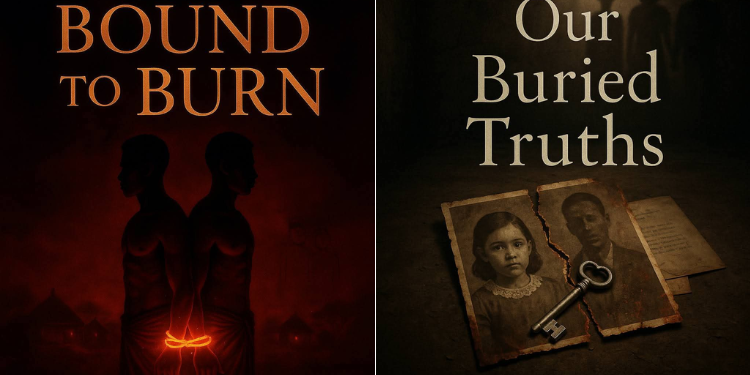
Our Buried Truths, the work she considers closest to her heart, explores trauma, silence, and family secrets, marking what she describes as her discovery of authorship.
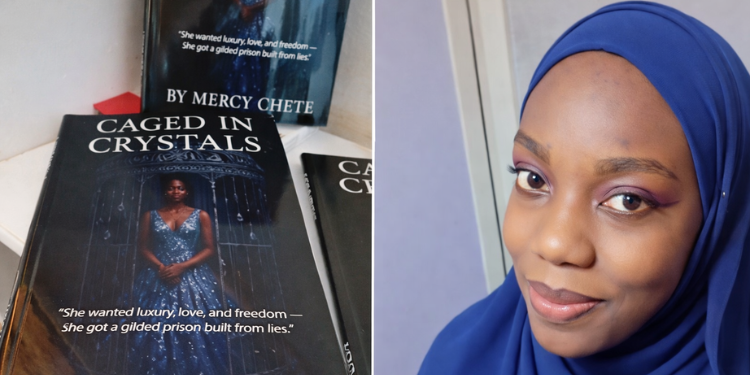
Another book, Caged in Crystals, examines the contrast between glamour and confinement and is available on Amazon and at Nuria Bookstore.
Her other works include Bound to Burn, which explores forbidden love and resistance within restrictive traditions, and When Silence Screams, which addresses unspoken pain and social neglect. She has also written a poetry collection, Mercy Scribbles, which explores politics, identity, and belonging.
Although her stories are fictional, Mercy says they draw heavily from real experiences, both her own and those of people around her.
“Fiction gives me safety, but truth gives my stories weight,” she says.
From survivor to witness
Living abroad has shaped her writing voice in unexpected ways. Within the constraints of domestic work, she learned to observe closely and reflect deeply.
She believes many people at home do not fully understand the emotional and psychological challenges faced by domestic workers overseas.
“Many people back home do not see the emotional, psychological, and systemic abuse domestic workers endure. The lack of legal protection, isolation, and government neglect are realities rarely discussed,” Chete says.
Also Read: Meet Kenya’s 15-Year-Old Author Who Won Three Gold Medals at Yale
Mercy is currently working on a book about the experiences of migrant domestic workers, aiming to document stories that often go untold.
Writing, she says, has changed how she sees herself. According to Chete, it has transformed her from someone struggling quietly into someone able to speak through stories — “from a survivor into a witness, from silence into speech.”
Her message to young women facing adversity is straightforward.
“Even in confinement, your mind is free. Use it. Build something from your pain. You are not invisible.”
Today, Mercy’s journey continues between long workdays and late-night writing sessions, shaped by responsibility, distance, and persistence.
“I did not come from privilege or comfort,” she says. “I came from disruption, loss, and survival. Writing did not save me from hardship — but it gave me meaning within it.”
Despite being far from home, she continues to dream of a future centered on writing. She hopes to publish more widely, see her stories adapted for film or theatre, and eventually return to Kenya to pursue writing full-time.
Her book Caged in Crystals is currently available at Nuria Bookstore in Kenya, while digital editions of Caged in Crystals and Bound to Burn can be accessed on Amazon.
Follow our WhatsApp Channel and X Account for real-time news updates