



Ekaya Duncan, 24, CEO of Mainplug TV and a sickle cell warrior, explains that his journey with the condition began in infancy, marking the start of a lifelong medical and personal battle.
Speaking to The Kenya Times, Ekaya narrates that doctors detected the condition when he was still a baby. “I was diagnosed at 3 months,” he stated, noting that his parents were forced to adapt quickly to a demanding care routine.
“So the symptoms that made my parents to come and realise that I have sickle cell, was my legs starting to swell, and my arms as well, my eyes turned yellow, a condition known as jaundice, in sickle cell terms, so at that age, I used to cry a lot, you know, a small child when he is sick, he can’t talk, he can’t communicate, so the only communication that my parents came to understand that I had sickle cell disease, I was crying a lot, my legs were swollen, my arms were swollen, and there is that pain crisis, so my mother decided to take me to the hospital, at first, she knew that it was just a normal disease, like malaria, or like a child has a problem, I know it’s like that when you are young,” he narrated.
According to him, early childhood involved frequent hospital visits and constant monitoring, especially during seasons when infections and fever spikes were common.
Duncan Ekaya notes that his family had no prior awareness of the condition before his diagnosis, making the period particularly challenging. “They had to learn everything from scratch,” he said.
Living With Crises and Daily Challenges
Growing up, Ekaya often experienced painful episodes that affected his schooling, mobility, and social life.
He explains that the unpredictable nature of the condition influenced nearly every aspect of his routine.
“A crisis could start at any time. Sometimes I would wake up fine, and by afternoon I was in severe pain,” he said.
Notably, he added that the episodes affected his ability to attend classes consistently, and teachers had to adjust to his frequent medical absences, highlighting that hydration, controlled activity levels, and avoiding cold weather became central to managing his health.
“You learn to listen to your body. When you ignore the signs, it gets worse,” he noted.
Also Read: Ex-Churchill Show Comedian Reveals Struggles with Sickle Cell Disease
The repeated hospitalisations and blood checks became familiar parts of his life from childhood into adulthood.
Support, Treatment, and Survival Strategies
Duncan acknowledges that consistent medical support played a critical role in managing the condition, noting that specialised clinics, counselling, and treatment plans helped him navigate the most difficult periods.
He also credits his family for providing constant reinforcement when he struggled physically and mentally.
“My family has been my backbone. They understood the routine and made sure I never felt alone,” he said.
Access to medication, pain-relief options, and regular tests meant that Duncan could stabilise his health even during severe episodes, pointing out that mental resilience became just as important as medical treatment.
“You do not just manage pain; you manage fear, fatigue, and uncertainty,” he explained.
Advocacy, Awareness and Life Today
As an adult, Duncan has taken an active role in awareness campaigns aimed at educating families and communities about early diagnosis, management and stigma reduction.
Ekaya frequently speaks about the importance of newborn screening and the need for consistent medical follow-up.
Also Read: World Sickle Cell Day
“Many families only know about the condition when it is too late. Awareness saves lives,” he said.
He also advocates greater access to medication and supportive care, stressing that early intervention significantly improves outcomes.
Through public forums and social initiatives, he addresses misconceptions surrounding the condition and encourages young patients to remain optimistic.
He says that his journey continues to be shaped by discipline, community support and informed medical care.
“You must accept it, understand it, and find ways to live fully,” he stated, noting that despite the difficulties, he remains committed to supporting others on the same path.
Sickle Cell Disease and Its Causes
Sickle Cell Disease (SCD) is a serious inherited blood disorder that affects the shape and function of red blood cells.
According to the World Health Organization (WHO), SCD is caused by a mutation in the gene that encodes hemoglobin, the protein in red blood cells that carries oxygen throughout the body. In individuals with SCD, this mutation leads to the production of an abnormal form of hemoglobin, hemoglobin S (HbS).
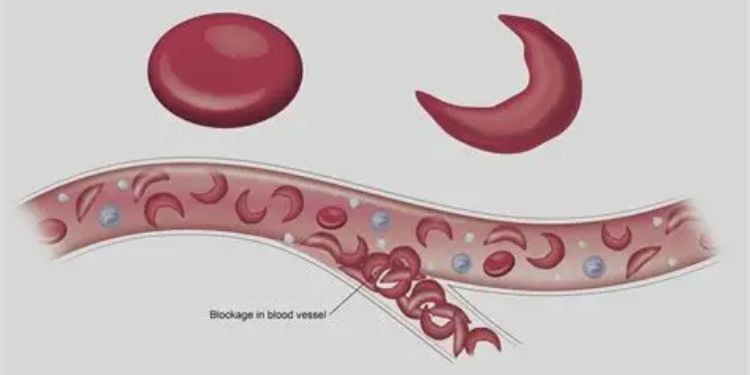
Red blood cells containing hemoglobin S become rigid and adopt a characteristic crescent or “sickle” shape, rather than the usual round, flexible form. These sickled cells have a shorter lifespan and can block blood flow in small blood vessels, leading to pain crises, organ damage, and an increased risk of infections.
WHO notes that the condition is inherited in an autosomal recessive pattern, meaning a child must receive the defective gene from both parents to develop the disease. Individuals who inherit the gene from only one parent are carriers, often referred to as having sickle cell trait, and usually do not experience symptoms but can pass the gene to their offspring.
The organization emphasizes that while SCD is genetic and cannot be prevented entirely, early diagnosis through newborn screening and proper medical care can help manage symptoms and reduce complications.
Treatments may include medications like hydroxyurea, regular blood transfusions, and access to comprehensive care to improve quality of life.
Follow our WhatsApp Channel and X Account for real-time news updates.




Hi there, just became alert to your blog through Google, and found
that it is really informative. I’m going to watch
out for brussels. I will appreciate if you continue this in future.
Many people will be benefited from your writing. Cheers!
This excellent website definitely has all the information and facts I needed about this
subject and didn’t know who to ask.