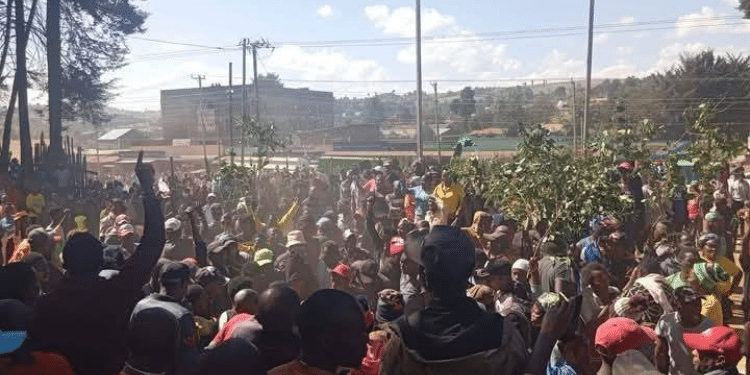
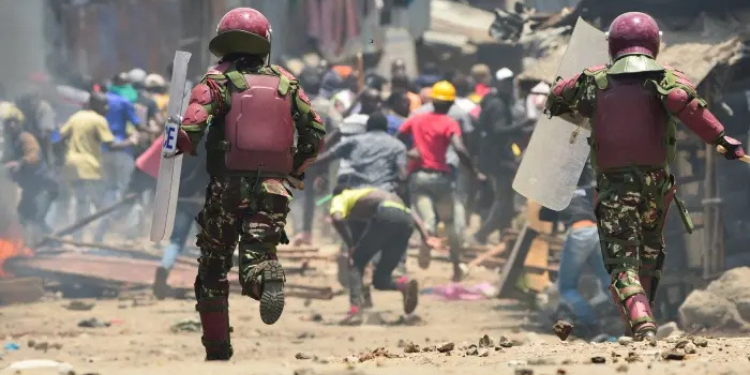
In Kenya, political violence rarely happens by accident. Political leaders have been in the spotlight for exploiting unemployed and underemployed youth, boda boda riders, and casual laborers for their own agendas.
Alarmingly, intelligence reports and historical records indicate that much of the violence witnessed in political rallies was orchestrated by politicians, who mobilized supporters to assert control, intimidate opponents, or disrupt rival activities.
Youth and other groups are often recruited through informal channels that are between political campaigning and militant engagement.
Once mobilized, they disrupt rallies, take control of public spaces, and occasionally challenge opposition gatherings.
In November 2025, Malava by-elections were marred by chaos, leading to several arrests as tensions flared. DAP-K party alleged that “goons” terrorized their candidate, Seth Panyako, and his agents throughout the night.
That same month, armed goons also attacked five Independent Electoral and Boundaries Commission (IEBC) officials during the Narok ward by-election. They stormed the polling station while firing in the air.
In another instance, Homa Bay Town Member of Parliament (MP) Peter George Kaluma and his bodyguard were attacked by suspected goons at Agoro Sare during the Kasipul by-election.
The curse of past election cycles refuses to fade away
To Kenyans, these patterns are not new. Every election cycle, including those in 2007–2008 and 2017, is marred with organized political violence, tied to political operatives.
According to intelligence reports, political violence is usually pre-planned and, in some cases, secretly financed, while political leaders publicly distance themselves from the fallout.
In the 1992 and 1997 elections, youth were mobilized as ethnic warriors during state-sponsored violence, particularly in the Rift Valley and other hotspots.
During the 2007 elections and post-election violence, youth were often manipulated by politicians to carry out both positive and destructive political activities.
Political Leaders Stop Playing Games with Boda Boda and Jobless Youth
In all these cycles, the common observation has been that leaders bear the responsibility of preventing violence from occurring.
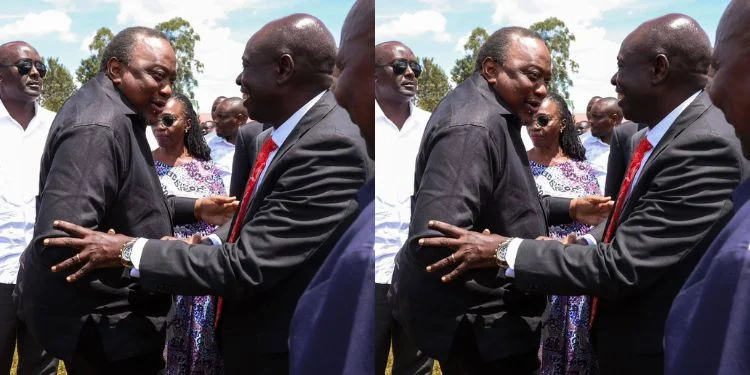
The role of political parties in enabling violence has also been questioned, with critics arguing that they must ensure that party structures do not exploit vulnerable youth or promote violent mobilisation, and they should enforce strong internal accountability measures to discipline members involved in intimidation or clashes.
Political talks that fuel fear, tribalism, or coercion must be closely monitored and addressed wherever there is evidence of incitement.
Further, reports indicate that an increase in cases of organised political violence often correlates with explicit directives or tacit approval from political leadership.
Also Read: Teargas Disrupts Meeting Attended by Gachagua Allies
The repeated use of political violence reduces public trust in leaders and institutions. Young people are often used as tools in political battles, creating the belief that violence is an acceptable way to gain or keep power.
It also increases ethnic and regional tensions, raising the risk that conflict can spread beyond political events.
Hence, political parties need to enforce internal mechanisms that penalize members involved in intimidation.
Also Read: Kindiki Responds to Gachagua’s Post-election Chaos Remarks
How Security Agencies Can Stop Organized Violence
Security agencies should also step up enforcement of the law and act on credible intelligence to prevent mobilization before violence occurs.
Enforcement must also be predictable, fair, and transparent in order to sustain public trust.
Coordinated engagement with communities can also enhance early detection and timely intervention in potential violent mobilization.
Follow our WhatsApp Channel and X Account for real-time news updates.