
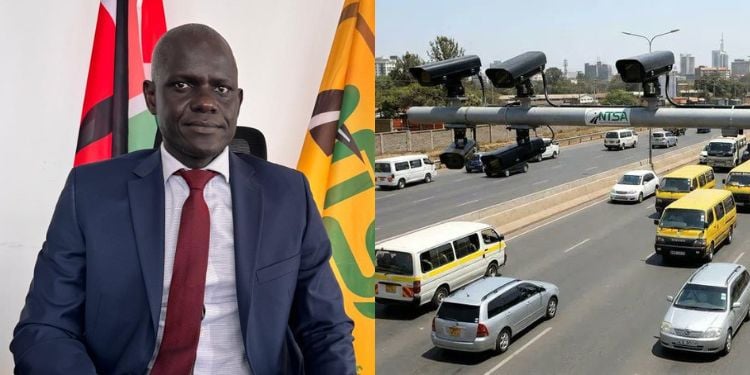
The Kenya Law Reform Commission (KLRC) and the National Transport and Safety Authority (NTSA) are working on a new legal framework that could see motorists who commit minor traffic offences avoid arrest, prosecution and criminal court proceedings.
In a statement on Tuesday, KLRC said it is providing technical assistance to NTSA in a law reform initiative aimed at decriminalizing minor traffic offences and shifting them from the criminal justice system to an administrative enforcement framework.
NTSA and KLRC Push Reforms to Scrap Court Cases and Arrests for Minor Traffic Offences
Under the proposed changes, persons who commit designated minor traffic infractions will no longer be arrested or charged in court.
Instead, NTSA will administer prescribed penalties through a structured administrative process.
“The Kenya Law Reform Commission (KLRC) is offering technical assistance to the National Transport and Safety Authority (NTSA) in undertaking a law reform initiative aimed at decriminalizing minor traffic offences and transitioning them from the criminal justice system to an administrative enforcement framework,” KLRC said.
The exercise will also identify and classify minor traffic offences and assign appropriate penalties for each infraction.
Also Read: NTSA Unveils New Requirements for School Drivers and Vehicles
To safeguard the right to a fair hearing under Article 50(1) of the Constitution, disputes arising from the imposition of administrative penalties will be handled by an independent tribunal.
KLRC said the proposed reforms are expected to improve the efficiency of traffic law enforcement, facilitate the timely resolution of minor traffic offences and reduce the burden on courts by reserving judicial processes for more serious offences.
The commission added that the initiative seeks to support the implementation of Article 159(2)(b) of the Constitution, which calls for disputes to be resolved expeditiously and without unnecessary delay.
For decades, a traffic offence in Kenya often meant a roadside confrontation with police, a court summons, long queues at traffic courts and, in many cases, lost time and productivity for motorists.
The latest proposal builds on a framework introduced by NTSA on June 1, 2026, allowing motorists accused of certain traffic offences to settle prescribed fines without immediately appearing in court.
The system seeks to simplify the handling of minor violations, reduce the burden on courts, improve compliance with traffic laws and harness technology to enhance road safety.
According to NTSA, the framework was developed jointly with the Office of the Attorney General, the National Police Service, the Office of the Director of Public Prosecutions and the Judiciary following a review of the previous enforcement model.
Also Read: NTSA Suspends Licensing of New Saccos For 2 Years
How Kenya’s New Traffic Fines System Will Work
Authorities say the old system placed excessive pressure on traffic courts, many of which handled thousands of relatively minor offences every month.
The new model is intended to ensure that court resources are reserved for serious traffic crimes while straightforward offences are resolved administratively.
“The primary objectives of this framework are to enhance road safety for all users, increase compliance with traffic laws, reduce congestion in traffic courts, and promote transparency, accountability and efficiency in traffic enforcement,” NTSA said.
Traffic cameras and digital monitoring systems installed along roads will automatically capture offences and relay the information to enforcement authorities.
This means motorists may be cited even without direct interaction with a police officer.
Follow our WhatsApp Channel and X Account for real-time news updates.