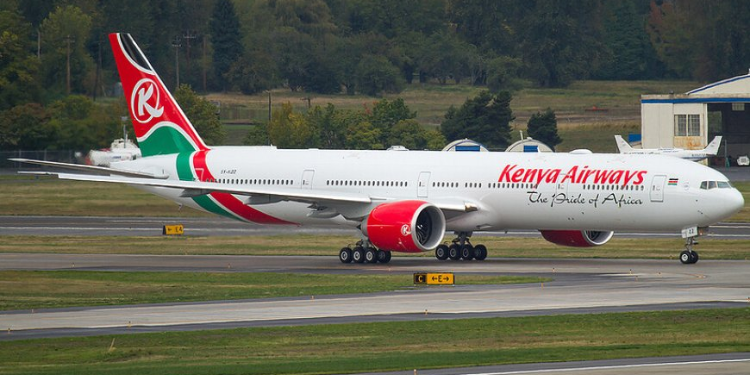

Travelers were left stranded at Amsterdam Schiphol Airport after a Kenyan airline, Kenya Airways, was hit by global flight disruptions affecting major international routes.
According to Travel and Tour The World’s report on June 14, KLM, Kenya Airways, and United Airlines suspended 10 flights and experienced multiple delays, leading to widespread disruption across the international air network.
The operational disruptions led to schedule changes, missed connections, and prolonged wait times for passengers throughout the day.
“Travelers were left stranded at Amsterdam Schiphol Airport after KLM, Kenya Airways, and United Airlines suspended 10 flights and faced several delays, creating disruption across a broad international network. As a result, passengers experienced schedule changes, missed connections, and extended waiting times throughout the day,” the report read in part.
Kenya Airways Among Airlines Affected – What are the Global Routes Disrupted?
The report indicates that the disruptions affected major international routes across the Netherlands, Portugal, Turkey, Brazil, the United States, and several other destinations worldwide.
Key city connections, including Madrid, Malaga, Athens, Leeds, and Chicago, were affected as airlines adjusted flight schedules and managed ongoing airport operational challenges.
Kenya Airways was listed among the carriers affected, alongside KLM and United Airlines, contributing to the broader strain on passenger movement through one of Europe’s busiest aviation hubs.
According to TTW, the situation at Amsterdam Schiphol Airport placed additional pressure on passenger flow management as airport teams and airline operators worked to stabilize operations and assist affected travelers.
Also Read: Kenya Airways Addresses Possible Route Cancellations Amid Rising Fuel Costs
Passengers experienced significant travel disruptions, including extended wait times and rerouted itineraries.
The disruption also led to missed onward connections, particularly for long-haul travelers using Schiphol as a transfer point between Europe, Africa, Asia, and the Americas.
According to the report, the impact extended beyond individual flights, affecting a wide range of global routes and highlighting the interconnected nature of international aviation.
While operations continued, the combination of flight suspensions and delays contributed to congestion within the airport and increased operational strain on airline scheduling systems.
International Cities Affected
According to the reports, the disruption footprint spanned multiple continents, affecting major cities in Europe, North America, the Middle East, Asia, Africa, and Latin America. Amsterdam registered the highest concentration of delays and cancellations, reflecting its role as the central point of disruption.
Also Read: Why a Kenya Airways Plane Has Remained at Bole Airport in Ethiopia for 37 Years
Additional operational challenges were reported across a wide list of international cities, including Madrid, Malaga, Bilbao, Athens, Zurich, Brussels, Berlin, Frankfurt, Hamburg, Düsseldorf, Munich, Nuremberg, Stuttgart, Hanover, Helsinki, Birmingham, Manchester, London, Leeds, Newcastle, Inverness, Glasgow, Edinburgh, Exeter, Cork, Dublin, Copenhagen, Billund, Luxembourg, Bergen, Kristiansand, Oslo, Trondheim, Stavanger, Warsaw, Wroclaw, Gothenburg, Stockholm, Linköping, Gran Canaria, Arrecife, Rabat, Cairo, Hurghada, Marsa Alam, Kigali, Atlanta, Boston, Dallas, Detroit, Newark, Washington, Miami, Chicago, Portland, Philadelphia, Dubrovnik, Split, Zagreb, Barcelona, Girona, Valencia, Nice, Paris, Rennes, Nantes, Basel, Heraklion, Rhodes, Thessaloniki, Budapest, Bari, Genoa, Milan, Bologna, Rome, Naples, Pisa, Florence, Ljubljana, Prague, Tel Aviv, Porto, Lisbon, Bucharest, Antalya, Istanbul, Chisinau, Panama City, Jeddah, Dubai, Incheon, São Paulo, Lima, Willemstad, Mumbai, Delhi, Hong Kong, Shanghai, Doha, Halifax, Montreal, Calgary, and Toronto.
Follow our WhatsApp Channel and X Account for real-time news updates.