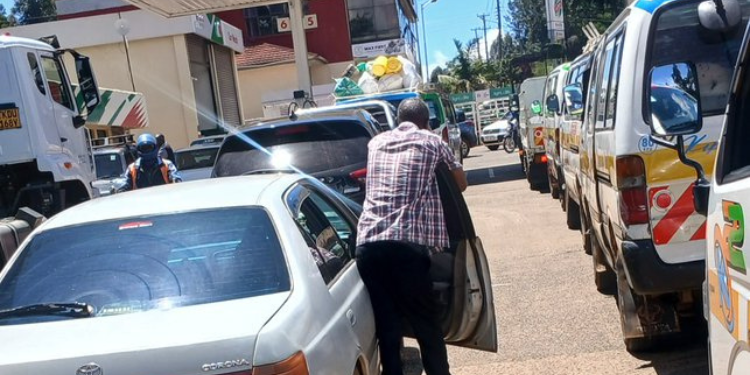
Motorists in Nairobi and other parts of the country have raised concerns over a growing fuel shortage, with several filling stations reportedly running dry.
Drivers say the situation has affected their travel plans, with some urging fellow motorists to refuel whenever possible.
Motorists who took to social media platforms have expressed frustration, with some motorists suggesting the shortages may be artificially induced.
Some drivers reported that major stations had either run out of petrol or were only selling limited premium options.
Fuel Shortage in Nairobi Due to Quality Concerns
Consumer protection officials and industry stakeholders indicated that the shortage may not be caused by hoarding stock, but by the fear of unsafe fuel.
According to Consumer Federation of Kenya (COFEK) Secretary General Stephen Mutoro, some stations have deliberately withheld sales due to concerns about fuel quality.
“Some responsible filling stations are without fuel, but not out of hoarding,” Mutoro stated.
Also Read: CS Opiyo Wandayi Clears the Air on Stabex and G-to-G Fuel Deal
The COFEK leader added that attendants fear Kenya Pipeline depots may be supplying substandard fuel from the MT Paloma cargo, which was flagged for delivering alleged substandard fuel outside the government-to-government fuel importation agreement.
Mutoro urged the Energy and Petroleum Regulatory Authority (EPRA) to conduct tests in every station and certify the fuel as safe.
In addition, the COFEK SG noted that in the absence of official certification, stations must take responsibility for failing to ensure fuel safety before selling fuel to motorists.
“If not, individual filling stations must take responsibility for failing to test the fuel before offering it for sale to motorists,” he added.
Market Structure and Supply Challenges
Speaking earlier on Tuesday, Petroleum Outlets Association of Kenya Chairperson Martin Chomba noted that a large portion of outlets are small independent pumps that depend on oil marketers for supply.
He explained that about 68 percent of fuel outlets are small operators, many of whom are not integrated into centralized supply systems, making them vulnerable to supply disruptions.
Chomba further stated that market forces, including geopolitical tensions, can affect fuel availability and prices.
He highlighted that the government does not directly own fuel stocks, as the sector is largely controlled by private companies, which respond to market realities and business considerations.
Govt Maintains No Fuel Shortage
The fuel shortage comes shortly after Cabinet Secretary for Energy and Petroleum of Kenya, Opiyo Wandayi, stated that Kenya has sufficient petroleum stocks to meet current demand.
Also Read: Ruto Breaks Silence on Fuel Scandal, Gives Way Forward
Opiyo Wandayi assured Kenyans of a stable, uninterrupted fuel supply for both domestic and regional markets.
He also clarified on the government-to-government (G-to-G) fuel procurement frameworks, assuring Kenyans that the arrangements remain stable and beneficial.
Opiyo Wandayi said that the G-to-G fuel deal has cushioned the country against immediate shocks linked to developments in the Gulf and continues to guarantee an adequate supply of petroleum.
Additionally, Prime Cabinet Secretary Musalia Mudavadi revealed that Kenya will have a steady supply of Fuel after facilitating the G2G convention.
“The flow and supply of fuel for Kenyans shall be steady, reliable, and at a fair price. Thank you for the foresight,” said Mudavadi.