Deputy President Kithure Kindiki has raised concerns over possible disruptions to national examinations as Kenya braces for a strong El Niño event expected to trigger above-normal rainfall between October and December.
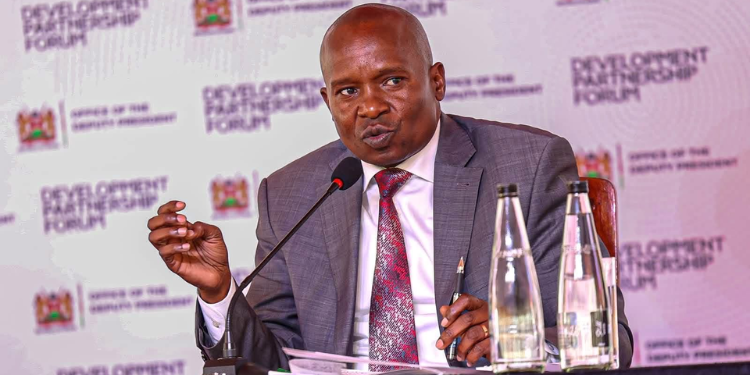
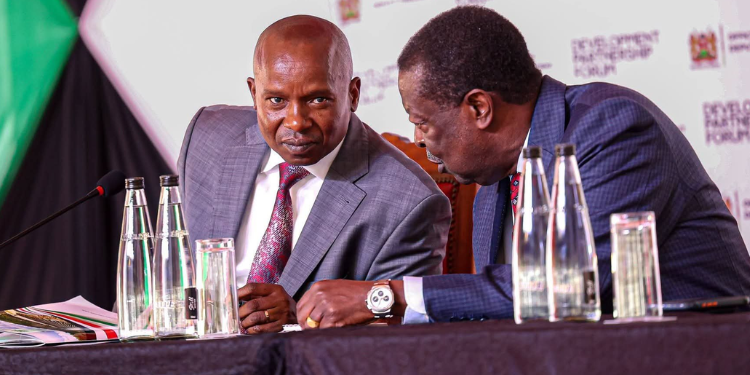
Speaking at the 15th Development Partnership Forum at his official residence in Karen, Nairobi, Kindiki said flooding, landslides, strong winds, and lightning posed a serious threat to communities across the country, with schools and examination centers among the facilities that could be affected.
According to the Kenya National Examinations Council, the first-ever Kenya Junior School Education Assessment (KJSEA) for Grade 9 learners will run from October 26 to October 30, while the Kenya Primary School Education Assessment (KPSEA) is also set to begin on October 26.
The Kenya Certificate of Secondary Education (KCSE) examinations will start with rehearsals on October 16 before written papers continue through November 26.
The Deputy President said the government was already putting contingency measures in place in the education sector to ensure national examinations proceed smoothly despite the anticipated weather conditions.
The forecast rains are expected to coincide with the examination period, raising fears of disruptions in vulnerable areas.
Kindiki said the government has established a multi-agency team to coordinate preparedness efforts and minimize loss of life, property damage, and interruptions to critical services.
“We have put in place measures to minimize loss of life and destruction of property during the rainfall season,” he said.
El Niño Preparations
He said preparations include clearing and unclogging drainage systems, mapping flood hotspots, identifying evacuation areas and removing structures built on riparian land in locations vulnerable to flooding.
Also Read: Relief for Taxpayers as KRA Waives Penalties and Interest After Service Disruptions
Relief supplies are also being pre-positioned while early warning systems are being strengthened to ensure timely information reaches communities at risk.
In addition, emergency response vehicles and equipment will be deployed in areas likely to be affected, with National Government Administration Officers (NGAO) working alongside county governments, the Kenya Red Cross Society and the National Drought Management Authority to coordinate response efforts.
Kindiki also appealed to development partners to support Kenya’s preparedness efforts, saying early action would help prevent a humanitarian crisis if the forecast weather materialises.
He urged partners to redirect some humanitarian and social protection funding towards anticipatory measures.
“No discussion of development cooperation in Kenya today would be complete without addressing an immediate and pressing risk posed by the forecast El Niño-induced short rains,” he said.
The Deputy President recalled the devastation caused by the 1997-98 El Niño rains, which led to widespread flooding, destruction of infrastructure, crop losses and deaths of people and livestock.
According to Kindiki, the Kenya Meteorological Department has indicated an 80 percent or higher probability of a very strong El Niño event during the October-November-December season, with the rains likely to extend into early 2027.
He added that estimates by the Kenya Red Cross show that 46 of the country’s 47 counties could be at risk.
“Turkana is the only county not placed squarely in the above-average rainfall category,” Red Cross stated in an earlier advisory.
The government has urged Kenyans in vulnerable areas to remain alert and follow advisories from relevant agencies as the country braces for what could be one of the most significant rainfall seasons in recent years.
KMSA on OND Rains
The warning comes as the Kenya Meteorological Service Authority (KMSA) forecasts above-average rainfall across most parts of the country during the October-November-December short rains season.
Also Read: TSC Major Shake-Up as Senior Directors Reshuffled Across the Country
The agency says the rains will be fairly to well distributed, with prolonged wet spells and occasional isolated storms.
Above-average rainfall is expected in more than 40 counties, including Nairobi, Mombasa, Kisumu, Nakuru, Kiambu, Kakamega, Bungoma, Busia, Garissa, Mandera and Wajir.
In western Kenya and parts of the Rift Valley, rainfall is expected to continue from September into January, while Nairobi and much of Central Kenya are projected to receive the onset between the second and third weeks of October.
The forecast links the enhanced rains to a strengthening El Niño and a positive Indian Ocean Dipole.
Follow our WhatsApp Channel and X Account for real-time news updates.