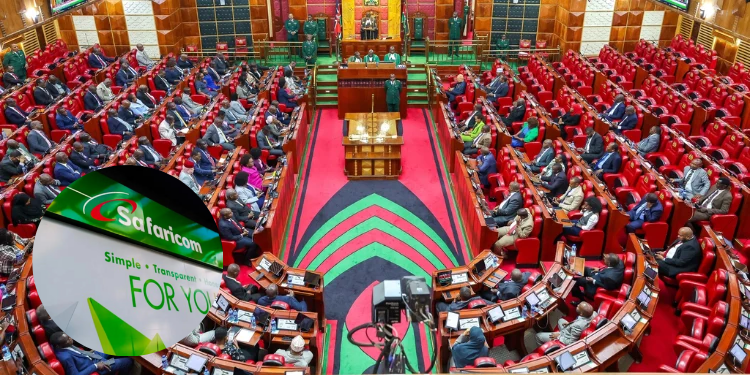
Members of Parliament are set to cut short their Christmas recess after the Executive requested Parliament to fast-track the sale of the government’s 15 per cent stake in Safaricom, a deal valued at about Ksh245 billion.
Under the normal parliamentary calendar, committee sittings were suspended from Monday, December 15, 2025, to Sunday, January 25, 2026, while the National Assembly recess runs from December 5, 2025, to February 9, 2026.
Regular sittings of the House were scheduled to resume on Tuesday, February 10, 2026, at 2.30 pm, subject to change under Standing Order 29.
However, the Finance and National Planning Committee and the Public Debt and Privatisation Committee are now expected to reconvene before the January 25 recess deadline to consider and clear the proposed Safaricom stake sale.
The early recall follows a request by the Executive to complete the transaction within the current financial year.
Any committee sittings held outside the approved House calendar require the authorisation of the Speaker, a provision typically invoked for matters deemed urgent or constitutionally time-bound.
Petition
This comes amid heightened scrutiny of the government’s proposed sale of a 15 per cent stake in Safaricom, following the filing of a petition urging Parliament to closely interrogate the transaction.
Lawyer Francis Wanjiku on December 10, 2025, submitted a memorandum to the National Assembly’s Finance and National Planning Committee and the Public Debt and Privatisation Committee, warning that the divestiture could expose the State to long-term fiscal losses if approved without full disclosure and independent valuation.
The petition questions the pricing of the shares at Ksh34 per share, arguing that while the offer represents a premium to Safaricom’s recent trading averages, it lacks an independent valuation or fairness opinion to justify the price.
Wanjiku cautioned that the absence of such validation could undermine investor confidence and increase Kenya’s sovereign risk premium.
Also Read: List of Safaricom Shareholders and Their Stake After Sale of Govt’s Stake to Vodacom
The transaction proposes selling 6,009,814,200 shares from the government’s current 35 per cent stake, raising Ksh204.3 billion, alongside an upfront payment of Ksh40.2 billion for future dividend rights tied to the State’s remaining 20 per cent stake. The total inflow from the deal is estimated at Ksh244.5 billion.
The petition also raises concerns about the monetisation of future dividends, noting that the upfront payment could result in the government forgoing up to Ksh15.5 billion, compared with projected cumulative dividends of Ksh55.7 billion over the same period.
Alternative structures, including staged monetisation or revenue-sharing mechanisms, were proposed to preserve long-term fiscal value.
“Without an independent validation, investors may interpret the transaction as opportunistic or fiscally pressured, potentially widening sovereign risk premia and reducing appetite for future asset sales.”
Govt defends proposed sale of Safaricom stake
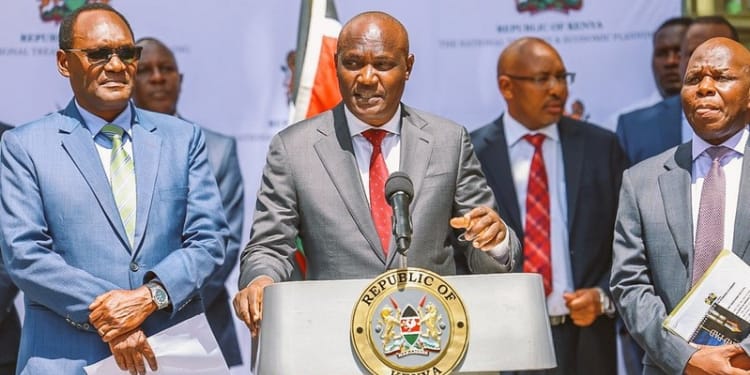
National Treasury Cabinet Secretary John Mbadi has defended the sale, saying the proceeds will be used as seed capital for the National Infrastructure Fund and the Sovereign Wealth Fund as part of a broader strategy to reduce reliance on debt and new taxes.
CS Mbadi has maintained that despite the sale, the government will retain strategic influence through its 20 per cent shareholding, including the right to appoint two directors to Safaricom’s board.
“The sale of a 15 per cent stake, which represents 6,009,814,200 ordinary shares at Sh34 per share, gives us a premium of 26.5 percent. The Kenyan government still holds a significant 20 per cent to influence decision-making,’’ the CS said.
Also Read: Govt Forced to Seek Views of Kenyans on Safaricom Sale After Uproar
If approved, the transaction will see Vodafone Kenya, controlled by Vodacom Group, increase its effective stake in Safaricom to 55 per cent, following a parallel internal restructuring that will result in Vodacom acquiring full ownership of Vodafone Kenya.
Public shareholders will retain 25 per cent, while the government remains a strategic minority shareholder.
The deal, valued at more than Ksh312 billion when combined with the corporate restructuring, requires approvals from Parliament, the Cabinet, the Capital Markets Authority, the Communications Authority of Kenya, the Central Bank of Kenya and regional competition regulators, and is expected to close in the first quarter of 2026.
Follow our WhatsApp Channel and X Account for real-time news updates