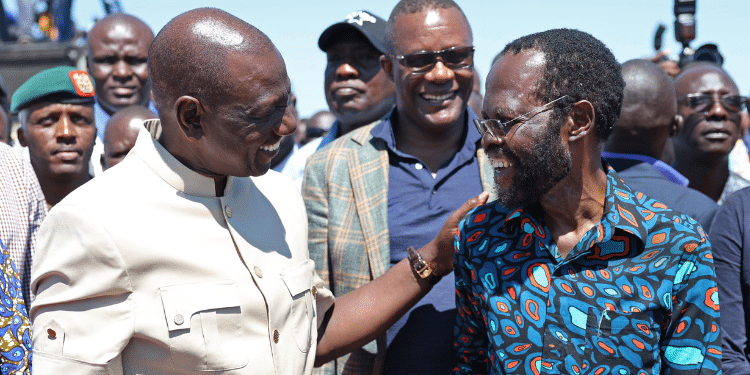
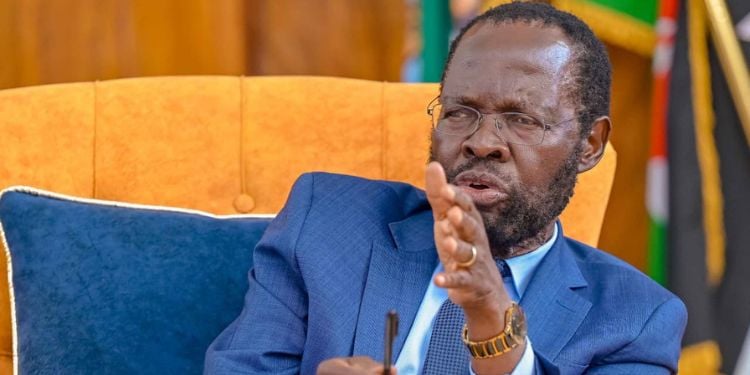
Kisumu Governor Prof Anyang’ Nyong’o has outlined what he described as the three key pillars that will determine the success of President William Ruto’s Vision 2060 development agenda, saying the country’s future depends on political freedom, economic growth and social justice.
Speaking in an interview on August 4, Nyong’o said the long-term national plan should be understood through three broad areas that must work together if Kenya is to achieve sustainable development over the coming decades.
According to the veteran politician and economist, the first pillar is political development, which he said requires a democratic society where citizens are free to express themselves, form political parties and elect leaders without interference.
“We must have a democratic society where everybody’s voice is heard, where people are free to form political parties according to their interest, and where they can vote freely,” he stated.
He also noted that political freedom and democratic governance create an environment where development policies can be debated openly and implemented effectively.
Also Read: Ruto to Unveil New Economic Blueprint to Succeed Vision 2030
The second pillar of Vision 2060 is economic development.
Nyong’o said Kenya must clearly define the type of economy it wants to build and establish measurable targets for growth and investment.
He said national leaders should focus on identifying the desired rate of economic growth and the level of domestic capital needed to support long-term development objectives.
According to him, economic planning must be intentional and guided by clear priorities that can help raise living standards and create opportunities for citizens across the country.
Nyong’o noted that economic growth should not only be measured through statistics but also through its impact on the lives of ordinary wananchi.
The Kisumu Governor also stressed that investments should contribute to national prosperity and support the country’s broader development ambitions.
He added that both political stability and sound economic policies are necessary if Kenya is to compete globally and meet the expectations of future generations.
The success of Vision 2060, he said, will depend on how well leaders align political governance with economic planning.
Building a Just and Equitable Kenyan Society
The third pillar focuses on social development.
Also Read: Professor Hiroyuki Hino: The Economist Helping Ruto Draft Vision 2060 and His Connection to Raila
Nyong’o said Kenya must strive to become a fair and just society where citizens enjoy equal opportunities and where development benefits are shared across regions.
He highlighted the importance of social cohesion, justice and equity, saying no part of the country should be left behind.
Regional balance in government investment, he argued, is essential in ensuring that all communities feel included in national development efforts.
Nyong’o further linked this objective to the country’s devolved system of government established under the Constitution.
He noted that Kenya has both national and county governments that are separate but interdependent, with each level having a role to play in delivering development.
He said constitutional provisions on revenue sharing were designed to ensure counties receive resources to support local development projects.
However, he stressed that counties must demonstrate value for money by showing that public funds are producing visible and measurable results.
According to Nyong’o, county governments should not only receive resources but also contribute meaningfully to national development through effective service delivery and responsible use of public funds.
He concluded that the political, economic and social pillars provide a framework for understanding both the responsibilities of government and the expected outcomes of public investment.
President William Ruto’s Vision 2060 is still in its formative stages and has not yet been published as a final government blueprint.
Instead, it is being developed as a successor to Vision 2030 through a nationwide consultation process launched in July 2026.
What Must Be Done to Make Vision 2060 Work
Nyong’o said one of the key lessons from Vision 2030 is that Kenya lacked sufficient resources to fully achieve its ambitions.
As a result, he argued that Vision 2060 must place greater emphasis on consistently mobilizing resources from both domestic and external sources to fund development projects.
He pointed to the proposed Sovereign Wealth Fund as an example of the kind of innovative financing mechanisms that could help generate resources for long-term investment and development.
According to him, initiatives that expand funding opportunities will be critical to the success of Vision 2060.
Nyong’o also stressed the importance of private sector participation, noting that businesses played a significant role in implementing Vision 2030.
He said organisations such as the Kenya Private Sector Alliance (KEPSA) helped mobilise investment, coordinate private sector activities and strengthen engagement between investors and the government.
He argued that similar collaboration will be necessary if Vision 2060 is to achieve its objectives. In his speech on July 30, President Ruto announced that he had appointed Prof Anyang’ Nyong’o and Prof Hiroyuki Hino to help draft what would become the successor of Kenya’s Vision 2030 roadmap.
The process of drafting Vision 2060 will kick off on August 12, when President Ruto is expected to launch a “national conversation” that will collect views of different stakeholders to inform the masterplan.
Follow our WhatsApp Channel and X Account for real-time news updates.