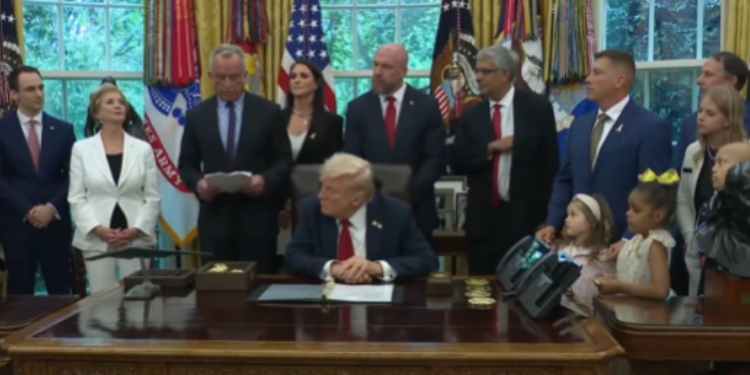
Health insurers have cut back on prior authorization requirements, easing delays for patients across the country, HHS Secretary Robert F. Kennedy Jr. said Wednesday, May 6.
The change stems from a commitment insurers made last June. At a meeting convened by HHS, major health plans covering about 280 million Americans agreed to reduce the administrative barriers that often slow down care.
Since then, participating plans have trimmed prior authorization use by 11 percent compared to the previous year. That means 6.5 million fewer procedures got stuck waiting for insurer approval.
Kennedy called it a big win for the American people and for the Trump administration. “Promises made. Promises kept,” he wrote in a post on X. He noted that skeptics doubted the pledge would deliver results. “They were wrong.”
Prior authorization is a source of frustration
Prior authorization, in which doctors seek insurer approval before providing certain treatments, tests, or surgeries, has long been a source of frustration for patients and doctors. It can delay emergency care, add paperwork, and sometimes result in abandoned treatments.
UnitedHealthcare, the nation’s largest insurer, announced an even bigger step just a day earlier. The company said it will eliminate prior authorization requirements for 30 percent of medical services that currently need approval.
The changes, set to take full effect by the end of 2026, cover select outpatient surgeries, certain diagnostic tests such as echocardiograms, some therapies, and chiropractic care.
UnitedHealthcare said prior authorization now applies to only about 2 percent of its covered services overall, with most requests approved quickly.
Still, removing it in a large share of those cases should further speed things up for patients and doctors.
Also Read: Robert F. Kennedy Jr. Defends Trump’s ‘600% Drug Price Cuts’ With Math That Doesn’t Add Up
The wider industry effort includes groups such as AHIP and the Blue Cross Blue Shield Association. Reports show solid early progress, including bigger reductions in Medicare Advantage plans.
Kennedy praised the co-operation but said more work lay ahead. He wants insurers to move faster to roll out electronic prior authorization systems.
Such tools allow doctors to make requests electronically and often get decisions within hours or days, rather than weeks.
“Patients get timely care, and doctors can focus on medicine, not paperwork,” Kennedy said.
The June 2025 pledge by Kennedy outlined a number of goals, including reducing the number of services that require prior authorization, improving the efficiency of processes, increasing transparency, and ensuring continuity of care when patients change plans.
Doctors and hospitals have welcomed the moves. For years, they have complained that prior authorization wastes time and can harm patients.
Some procedures, such as routine imaging or physical therapy, were often reviewed repeatedly even when doctors considered them standard.
However, not everyone believes the announcement is enough, with patient advocates saying costs, network issues, and other barriers still exist.
Some doctors also say some plans are still slow to approve chronic conditions or specialty drugs.
Still, the reported numbers mark a measurable change in a system long criticized for red tape.
Kennedy signaled the administration will keep pressure on the industry. “We are holding the system accountable and delivering change,” he said. He commended UnitedHealth Group, AHIP, and all participating plans for the steps taken so far.
Amid the rollout of electronic systems and more services moving off the approval list, patients could see shorter waits between diagnosis and treatment.
For a system regularly described as slow and frustrating, even an 11 percent drop translates into millions of smoother experiences.
It is anticipated that the full effects will play out over the next year and beyond. But Wednesday’s update offered a rare piece of good news for anyone who has ever waited on hold with an insurance company while in need of care.