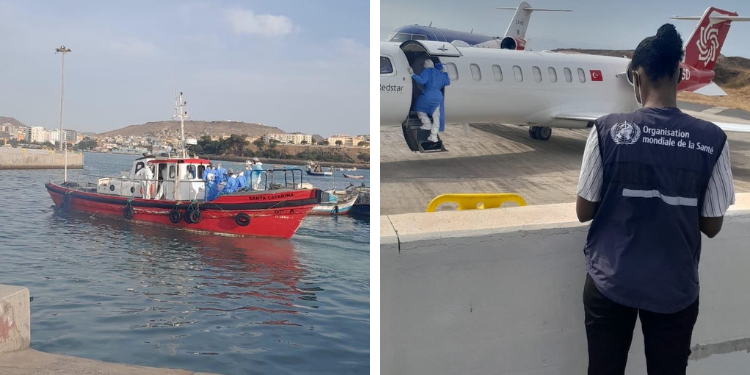
A Dutch-operated cruise ship carrying 146 people has left Cape Verde waters after health officials evacuated three passengers and crew members for suspected hantavirus infection.
The three evacuated on Wednesday, May 6, were a 56-year-old British man, a 41-year-old Dutch crew member, and a 65-year-old German national.
They were flown to the Netherlands for treatment. None has tested positive for hantavirus so far, but two are showing symptoms, officials said.
The MV Hondius is now on a three-day voyage to Tenerife in Spain’s Canary Islands. Spanish authorities approved the move, but the president of the Canary Islands has strongly opposed it.
Three people from the ship have died since it left Ushuaia, Argentina, on April 1. One death was confirmed as hantavirus.
The other two remain under investigation. The confirmed case was a German woman who died on board on May 2. A Dutch woman whose husband died on the ship on April 11 later died in South Africa on April 26.
Also Read: Germany Addresses Reports of Possible Suspension of Spain from NATO After Pentagon Email
The World Health Organization has recorded eight hantavirus cases linked to the vessel, three confirmed and five suspected.
South African tests identified the Andes strain of the virus in two confirmed patients. This strain, common in Latin America, has caused limited person-to-person spread in past outbreaks.
Health experts believe the virus spread through close physical contact on the ship rather than casual exposure.
How hantavirus is spread
Hantavirus is typically carried by rodents, but the Andes strain can be transmitted between humans.
The ship operator, Oceanwide Expeditions, said the German evacuee was closely associated with the German woman who died on May 2.
All 146 people still on board currently show no symptoms. Infectious disease specialists and WHO staff have joined the ship for the journey to Tenerife.
Spain’s health minister, Mónica García, said everyone on the vessel will receive medical checks upon arrival.
Foreign passengers fit to travel will be sent home. Spanish nationals will quarantine at a military hospital in Madrid. Officials say the risk to people in the Canary Islands is low.
The president of the Canary Islands, Fernando Clavijo, told Spanish radio that he does not want the ship to dock.
“I cannot allow the boat to enter the Canaries,” he said as reported by the BBC. “This decision is not based on any technical criteria, and we have not been given enough information.”
Also Read: Spain Reopens Its Embassy in Iran After Ceasefire
The ship had been anchored off Cape Verde after being denied permission to dock. It visited remote South Atlantic islands during its polar expedition before the outbreak became clear.
Two British passengers who left the ship earlier are now self-isolating at home in the UK. They have no symptoms.
A Dutch woman who left the ship at St Helena on April 24 flew to South Africa but was later barred from a connecting KLM flight from Johannesburg to Amsterdam because of her condition. She died two days later.
Testing continues for others who were on the ship. Contact tracing is underway for people who had close contact with the confirmed cases, including passengers on the flight the Dutch woman took.
The spread of hantavirus is not the same as COVID-19
Dr Maria Van Kerkhove of the WHO said hantavirus transmission requires close physical contact, unlike Covid or flu. “We’re not talking about casual contact from very far away,” she said.
The 146 people on board come from 23 countries. They remain under strict precautionary measures. Oceanwide Expeditions said the ship will stay under medical supervision until Spanish authorities complete their assessments.
Public health officials in several countries have described the overall risk to the wider population as low. No new cases have been reported outside the ship and the people already identified.