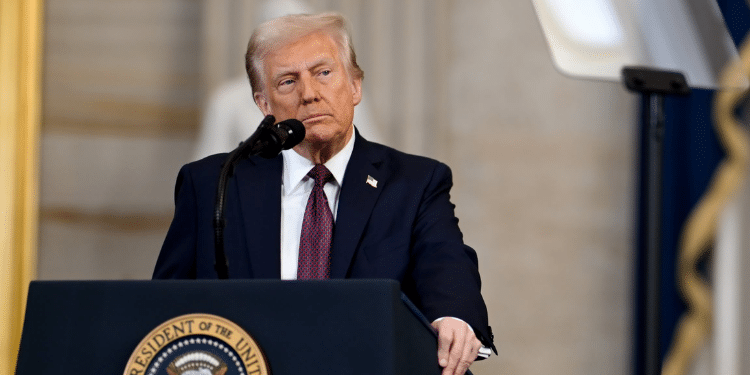
U.S Donald Trump has announced that he is considering sending a second aircraft carrier strike group to the Middle East, amid the ongoing negotiations with Iran.
Trump argued that Iran must either reach a deal or face U.S. military action expected in the coming week. He also indicated that a second round of negotiations with Iranian officials is anticipated next week, suggesting Tehran is now more seriously engaged.
“We have an armada that is heading there, and another one might be going. I am thinking of the additional deployment. Either we will make a deal, or we will have to do something very tough like last time,” Said Trump.
He added that if Tehran refuses to cooperate in a new round of negotiations with Washington next week, the U.S will have to act to initiate the decision-making process.
Additionally, the U.S military official later confirmed that internal discussions regarding a second-strike group were ongoing, and it would join the USS Abraham Lincoln, which is already stationed in the region.
Netanyahu Visits Trump Amid the Ongoing U.S Negotiations with Iran
Trump explained that the Islamic Republic is interested in making the deal while adding that he believes Prime Minister Benjamin Netanyahu is interested in reaching one.
Also Read: Iran Begins Sealing Nuclear Sites as Fears of U.S Strikes Grow
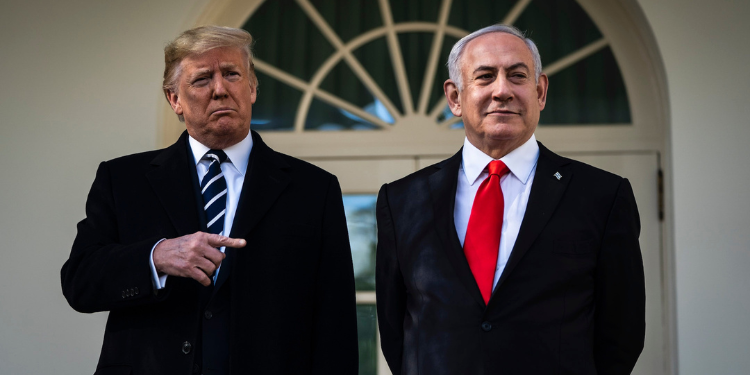
He announced the visit of the Israeli Prime Minister Benjamin Netanyahu to the White House, as tensions continue to rise across the Middle East and negotiations intensify over curbing Iran’s nuclear weapons programme.
Netanyahu’s visit will mark his sixth trip to the US since Trump’s return to office.
He is expected to press Trump to pursue a deal that would halt Iran’s uranium enrichment and rein in its support for proxy groups like Hamas and Hezbollah.
“I will present to the president our outlook regarding the principles of these negotiations,” Netanyahu told reporters before leaving for the US.
Netanyahu has long argued that Iran represents an existential security threat to Israel and has pushed the US to curb Tehran’s influence in the region.
However, Iran has said it will not limit uranium enrichment unless Western nations scale back sanctions that have severely strained its economy.
Iran on the Nuclear Focus and Its Stand on the Israel’s State Visit to the U.S.
Iran has argued that the date for the next round of US-Iran negotiations is still under review, despite commending recent talks.
Also Read: Russia Rejects Trump’s Trade-Based Approach to Resolving Ukraine War
Ali Larijani, head of Iran’s Supreme National Security Council, said the previous round of talks in Oman was positive, but cautioned against drawing conclusions from a single meeting, noting that the trajectory of diplomacy can only be assessed over time.
“The previous round of talks in Oman was ‘relatively good,’ but we cannot draw conclusions from a single meeting,”
Larijani added that the US decision to accept that negotiations should be limited to the nuclear file abandons earlier demands to include Tehran’s missile program and regional influence.
He also condemned the U.S. for allowing Israeli Prime Minister Benjamin Netanyahu to meet President Donald Trump at the White House to steer the negotiations, arguing that such movements would ultimately harm American interests.
Follow our WhatsApp Channel and X Account for real-time news updates.